Play store

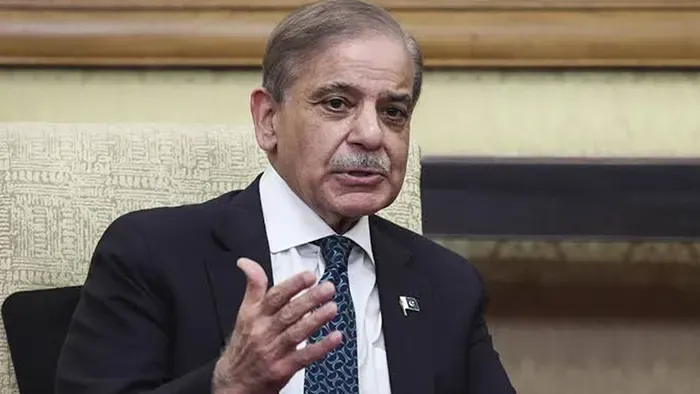
Pakistan Prime Minister Shehbaz Sharif has once again issued a stern warning to India over its decision to suspend the 1960 Indus Waters Treaty (IWT), saying any move to undermine Pakistan’s water rights will be met with a strong response.
He said “every drop” of Pakistan’s water is a “red line.”
Speaking at an event in Islamabad, Shehbaz said Pakistan remains committed to peace, but its position should not be mistaken for weakness. He warned that Pakistan would respond firmly to any challenge to its sovereignty.
“I clearly declare that every drop of Pakistan’s water is our red line. If India does not come to its senses, a direct response will be given,” Shehbaz said.
The Pakistani prime minister also described India as an “enemy of peace.” He accused New Delhi of unilaterally and “illegally” suspending the Indus Waters Treaty.
What is the Indus Waters Treaty?
The Indus River originates in Tibet and flows through Kashmir before passing across much of Pakistan. The sharing of water from the Indus River and its tributaries between India and Pakistan was governed by the ‘Indus Waters Treaty’, signed in 1960 under the mediation of the World Bank.
Under the treaty, India has rights over roughly 20 percent of the water from the Indus River system, while about 80 percent is allocated to Pakistan. The western rivers—the Indus, Jhelum and Chenab—are primarily allocated to Pakistan, while the eastern rivers—the Ravi, Beas and Sutlej—are allocated to India.
However, the treaty also allows each country to use the rivers allocated to the other country under certain specified conditions.
Why did India suspend the treaty?
In April 2025, India decided to suspend the Indus Waters Treaty following a terrorist attack in Pahalgam, Jammu and Kashmir, in which 26 civilians were killed.
India blamed Pakistan-backed militants for the attack and suspended the treaty as part of its retaliatory measures.
Following the suspension, India stopped sharing water-flow data on the Indus, Jhelum and Chenab rivers with Pakistan. During the monsoon season, such data and early warnings about rising water levels had helped Pakistan evacuate residents from low-lying areas of Punjab and Sindh in time.
As a result, the treaty’s suspension has become one of the major sources of tension between the two nuclear-armed neighbours.
Pakistan has repeatedly maintained that although India has announced the suspension, the treaty remains legally in force. Islamabad has also raised the issue at various international forums.