


 Play store

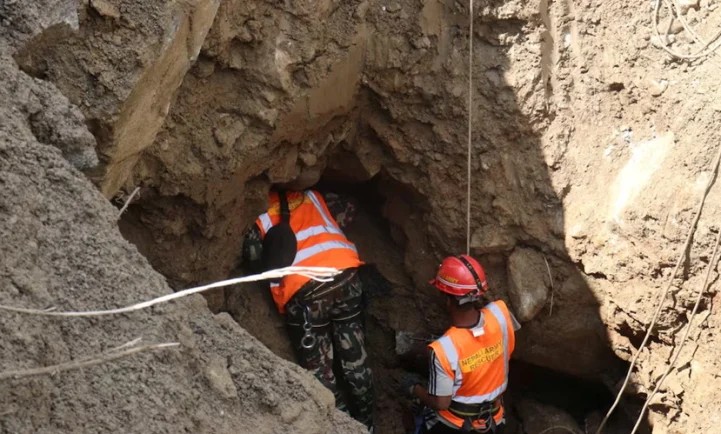
More than 900 workers are feared trapped inside tunnels at hydropower projects in Nepal following devastating floods and landslides triggered by a glacial collapse, with Nepali rescue teams stepping up efforts with assistance from Chinese and Indian experts.
According to Reuters, rescue teams intensified operations on Monday to locate workers trapped inside tunnels after they were buried under thick layers of mud and debris.
Rescuers have been using excavators to clear the tunnels, where more than 900 workers involved in various projects remain unaccounted for.
Controlled explosives used in search
Nepali officials said their main priority was to reach 933 workers trapped at 11 hydropower projects in the badly affected districts of Rasuwa and Nuwakot. Many of the workers were inside tunnels when the disaster struck.
Images and videos released by rescue teams showed excavators removing mud and rocks and workers clearing debris with shovels even after dark. In one tunnel, Nepali soldiers used flashlights to search a large hole they had dug in an attempt to locate an entrance.
The Nepal Army said search and rescue teams were using controlled explosions, excavators and searchlights to remove water and mud and reach those trapped inside. Teams entered two tunnels and recovered three bodies, while other sections remained buried under mud and continued to be searched.
Nepal Army spokesperson Raja Ram Basnet said the huge volume of debris had created a major challenge for rescuers.
“Large amounts of debris have accumulated, creating a major challenge for us in opening the tunnels. Our main priority is to open the tunnels,” he said.
Nepal has rapidly expanded its hydropower sector since the beginning of this century as the mountainous country seeks to harness its Himalayan water resources to address chronic domestic power shortages and tap the potential of exporting electricity to neighbouring India.
Hydropower projects in Nepal’s mountainous regions require tunnels to carry water through steep terrain, allowing developers to exploit the sharp elevation differences between Himalayan rivers and power plants to generate electricity.
The US Geological Survey said the disaster was triggered by a glacial collapse along the China-Nepal border on August 26, sending huge volumes of water and debris rushing downhill.
Prime Minister Balendra Shah described the floods as an “unprecedented and devastating natural disaster”, saying a full assessment of the damage remained difficult.
China said 261 foreign nationals from 23 countries were missing in Tibet near a key border crossing with Nepal.
Chinese Foreign Ministry spokesperson Guo Jiakun said on Monday that contact had been lost with around 100 Chinese nationals on the Nepal side.
State broadcaster CCTV reported that a meeting of China’s cabinet called for all-out efforts to locate missing people, the release of reliable information, measures to address risks and hidden dangers, and improvements in emergency response capabilities.
Nepali authorities said on Monday that 903 people had been confirmed dead and 4,247 remained missing following the floods, including the 933 workers at hydropower projects.
Chinese authorities, meanwhile, said 16 people had died and 546 were missing in Gyirong County.
Nepal’s Foreign Ministry said nearly 590 foreign nationals from 39 countries remained missing. It added that more than 10,000 people, including 323 foreign nationals, had been rescued from the flood-hit areas.
The Red Cross estimates that more than 90,000 people may have been affected by the disaster.