


 Play store

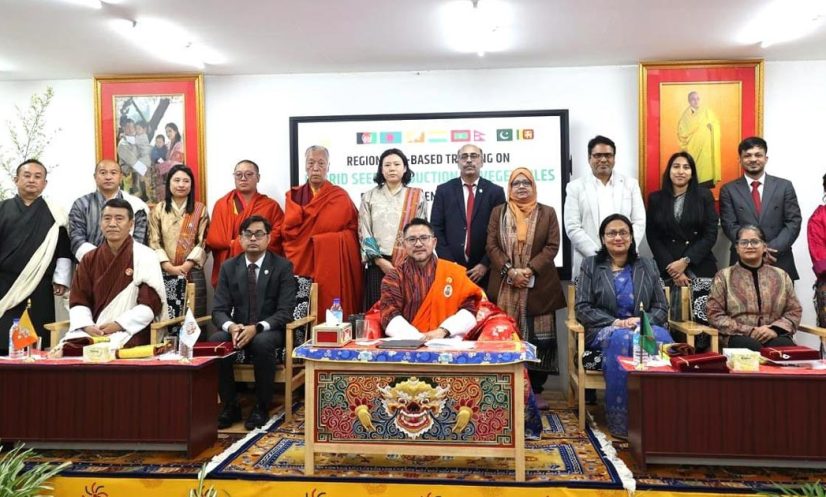
A three-day regional training programme on hybrid vegetable seed production began in Bhutan on Monday, aiming to strengthen technical capacity and regional cooperation in producing quality hybrid seeds.
The training, titled “Vegetable Hybrid Seed Production for SAARC Member States,” began at the National Centre for Organic Agriculture in Yusipang and will continue until October 7.
The programme is organised by the Agriculture Department under Bhutan’s Ministry of Agriculture and Livestock, with support from the SAARC Agriculture Centre in Dhaka.
Bhutan’s Agriculture and Livestock Minister Lyonpo Yonten Phuntsho attended the opening ceremony as the chief guest, while Tanvir Ahmed Tareq, director at the SAARC Secretariat, was present as a special guest.
Bangladesh Ambassador to Bhutan Maleka Parvin, First Secretary of the Indian Embassy in Bhutan Neha Yadav, and the director general of the Multilateral Affairs Department at Bhutan’s Ministry of Foreign Affairs and External Trade also attended.
Around 30 researchers from Bhutan are taking part in person, while representatives from Bangladesh, India, Nepal and Sri Lanka are participating virtually. Officials from Bhutan’s agriculture department, along with experts and trainees from other SAARC member states, are also attending.
In his opening remarks, Minister Phuntsho highlighted the importance of plant breeding, hybrid vigour and quality seed systems in boosting agricultural production. He said improved seed technologies could help ensure food and nutrition security while addressing risks posed by climate change, diseases and pests.
The minister stressed the need to ensure that investment in seed technology, research and human resource development benefits farmers through improved varieties, accessible technologies and reliable seed supply systems.
The training combines technical sessions with practical exercises, laboratory and field demonstrations, and group learning. Special emphasis is being placed on hybrid seed production for tomatoes and chillies, covering areas such as mother plant management, emasculation, pollination, genetic purity, seed harvesting and storage, and quality control.
Organisers said stronger regional capacity in hybrid seed production could improve the availability of quality seeds across South Asia, reduce dependence on imports and strengthen local seed systems.