


 Play store

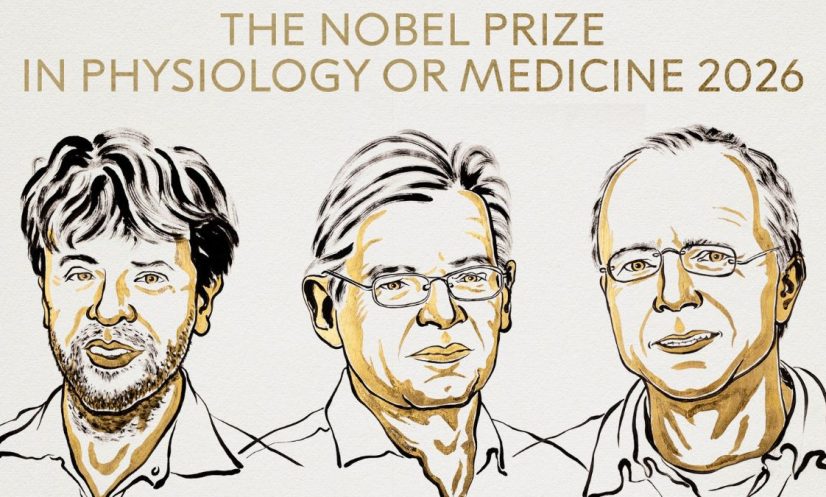
Two German scientists and an American scientist won the 2026 Nobel Prize in Physiology or Medicine on Monday for discoveries that led to optogenetics, a technique that allows researchers to control nerve cells using light.
Peter Hegemann and Georg Nagel of Germany and Karl Deisseroth of the United States were honoured for their discoveries concerning light-gated ion channels.
The Nobel Assembly at Sweden’s Karolinska Institute announced the award, opening this year’s Nobel Prize week.
Hegemann and Nagel made key discoveries involving light-sensitive proteins known as channelrhodopsins. Deisseroth later helped develop the discoveries into optogenetics, a powerful technique for controlling the activity of specific nerve cells with light.
The method has become an important tool in neuroscience. It allows researchers to activate or silence individual groups of neurons and study how the brain controls behaviour and other functions.
The Nobel committee said optogenetics has transformed research into the nervous system and is now widely used by scientists around the world.
The award came after Nobel watchers had speculated that the medicine prize could recognise research behind weight-loss drugs such as Ozempic and Mounjaro, particularly discoveries related to the hormone GLP-1.
Instead, the committee chose fundamental neuroscience research that has opened new ways of studying the brain.
Deisseroth is a professor at Stanford University in the United States. Hegemann is a professor at Humboldt University of Berlin, while Nagel is a professor at Julius-Maximilians-Universität Würzburg.
The laureates will share the Nobel prize money of 12 million Swedish kronor.
The medicine prize is the first of this year’s Nobel awards. The physics prize will be announced on October 6, followed by chemistry on October 7, literature on October 8, the Peace Prize on October 9 and the Economic Sciences prize on October 12.