


 Play store

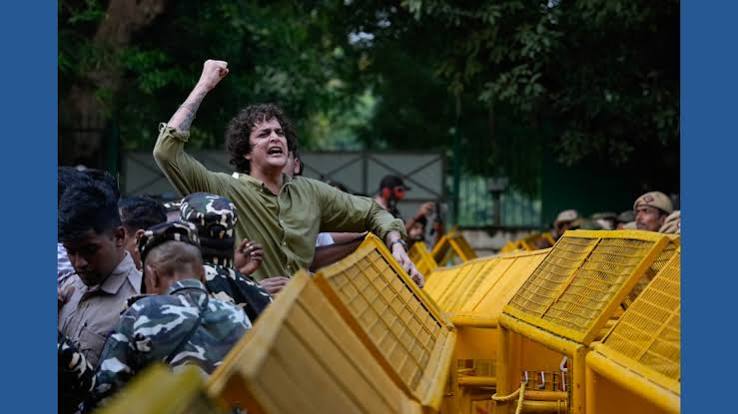
A growing youth movement in India is taking to the streets to protest against a voter-list revision that critics say could disenfranchise millions and benefit Prime Minister Narendra Modi’s ruling party.
The protests, led by the “Cockroach” youth movement, have intensified amid an ongoing review of electoral rolls that has removed more than 130 million names since last year. Critics allege that the exercise is politically motivated and have demanded the resignation of Election Commissioner Gyanesh Kumar.
The Election Commission maintains that the revision is necessary to remove duplicate and ineligible entries.
Kashish Rawat, a 22-year-old economics student, travelled to New Delhi on Saturday to join the protests without informing her parents.
On arriving in the capital, she found streets blocked by metal barricades as police moved against demonstrators, beating some, dragging others into buses and chasing away the rest. Videos of the clashes, recorded by protesters on their mobile phones, quickly spread across social media.
Despite the police crackdown, Rawat remained on the streets until evening, avoiding officers.
“We are not going anywhere. We will come back again and make our voices heard,” she said.
The demonstrations have placed the right to vote at the centre of a wider debate over the state of Indian democracy. They are also testing whether a generation raised under Modi, who has been prime minister for more than 12 years, can turn growing disillusionment into a sustained challenge to his Hindu nationalist government.
“I don’t see him as almighty,” Rawat said of Modi. “I see him as someone who we have elected. So I don’t understand the reason why we should be scared of questioning that guy.”
A test of India’s democratic institutions
India’s democratic institutions have faced growing scrutiny under Modi. Critics accuse his government of weakening checks on executive power, restricting dissent and targeting religious minorities, particularly Muslims. Press freedom organisations have also expressed concern about pressure on independent media.
The government rejects these allegations, maintaining that the country’s institutions remain robust and that law enforcement agencies act against violations of the law rather than dissent.
For many young Indians, however, institutions they once trusted appear to be falling short of their promises. They describe a political environment in which challenging those in power can carry personal risks. The dispute over voter lists has brought these frustrations into sharper focus, giving a generation of discontented young people a common cause.
Earlier this summer, protesters forced the resignation of Modi’s education minister, providing a rare example of street demonstrations leading to political change. The mobilisation has also echoed youth