Play store

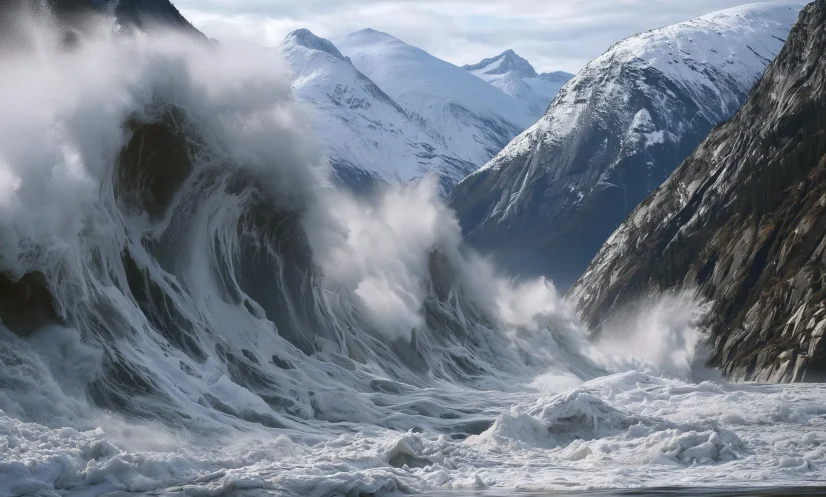
A massive landslide in Alaska in August 2025 triggered a tsunami that sent water and debris 1,580 feet (481 metres) up the opposite side of a fjord, stripping its walls down to bare rock, according to a new study.
The wave reached a height greater than the top of Taipei 101, one of the world’s tallest skyscrapers, before surging down Tracy Arm, a fjord in southeastern Alaska.
The disaster occurred shortly after 5:00 am on a gloomy morning, when no ships were nearby, averting a potentially catastrophic loss of life. However, some cruise lines began avoiding Tracy Arm in the months following the incident.
Researchers at the Alaska Earthquake Center said the event highlights a growing hazard in mountainous coastal regions where retreating glaciers can leave slopes unstable and vulnerable to collapse.
Landslides are common in Alaska’s coastal mountains, where tectonic uplift, the long-term loss of ice, heavy precipitation and glacial erosion interact. Scientists have increasingly observed major landslides occurring near the ends of retreating glaciers, although the mechanisms behind the failures remain incompletely understood.
When millions of tonnes of rock plunge into a fjord, their momentum can displace enormous volumes of water, generating powerful tsunami waves.
Similar hazards have been observed in Greenland and Norway, sometimes with deadly consequences, raising concerns about the safety of communities, vessels and other activities along Arctic coastlines.
The researchers said the Tracy Arm disaster offered important clues about how such events might be anticipated. The glacier beneath the landslide area had retreated more than a third of a mile during the two months before the collapse, while rapid ice calving and heavy rainfall further destabilised the mountainside.
Rainwater can seep into fractures in rock, increasing water pressure and weakening the slope. Researchers also identified thousands of small seismic tremors in the days before the landslide.
The scientists believe that combining information about heavy rainfall, rapid glacier retreat and increasing seismic activity could help authorities issue advance warnings when landslide risks rise.
They proposed a progressive alert system using yellow, orange and red levels to communicate increasing danger.
A yellow alert could indicate elevated risk associated with weather conditions and glacier retreat. An orange alert could be issued when seismic activity intensifies and changes into continuous ground vibrations, known as seismic tremor, indicating an immediate concern.
Such a warning could advise ships to leave or avoid vulnerable fjords. A red alert would signal that a landslide was occurring or had already begun.
Researchers said seismic monitoring could help scientists detect a major landslide and estimate its size and proximity to open water within minutes of its initiation.
Although such a system might not provide sufficient time for vessels close to the impact zone to escape, it could give those farther away several minutes to respond. In the Tracy Arm event, the researchers suggested that a warning system might have provided around 10 minutes of notice to some vessels farther down the fjord.
The researchers stressed that an effective warning programme would require a better understanding of where and when glacier-related landslides are likely to occur, alongside rapid communication systems capable of delivering alerts to ships and coastal communities.
They said the growing threat posed by glacier retreat makes improved monitoring and early-warning systems increasingly important across vulnerable Arctic coastlines.