


 Play store

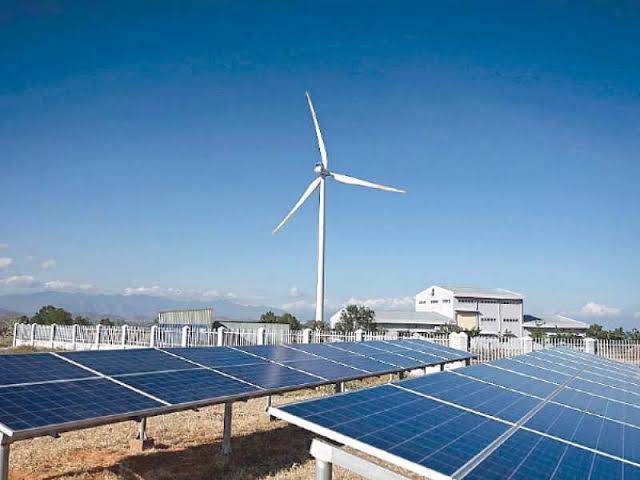
Pakistan plans to add 15,206 megawatts (MW) of renewable energy capacity, including hydropower, to its national electricity system by 2035, accounting for about 93 per cent of the total planned capacity expansion over the next decade.
According to official documents, the National Electric Power Regulatory Authority (NEPRA) has approved the Integrated System Plan (ISP) 2025–35, which envisages adding 16,406MW of electricity generation capacity during the period.
Renewable energy projects will contribute 15,206MW of the planned additions, while the remaining 1,200MW will come from nuclear power.
Hydropower projects are expected to add 4,505MW, while solar photovoltaic projects under net-metering arrangements will contribute 8,120MW. Wind power projects will account for another 2,581MW.
Of the planned wind capacity, 1,190MW will be connected through the National Grid Company/National Transmission and Despatch Company network, while K-Electric will facilitate the addition of 1,391MW.
Pakistan’s total installed electricity generation capacity is projected to reach around 62,383MW by 2035, with renewable sources, including hydropower, accounting for more than 60 per cent.
The planned expansion will be guided by the Indicative Generation Capacity Expansion Plan (IGCEP), which follows least-cost system planning and the applicable policy and procurement framework.
The National Electricity Policy 2021 and National Electricity Plan 2023–27 set a target of increasing the share of renewable energy in installed generation capacity to 60 per cent by 2030.
At present, utility-scale renewable energy sources, including hydropower, account for around 35 per cent of Pakistan’s installed generation capacity. The share rises to more than 45 per cent when distributed solar power connected through net-metering arrangements is included.
The ISP 2025–35 has also assessed the potential need for battery energy storage systems (BESS) to improve grid reliability and support the integration of renewable energy.
It identified an indicative requirement for 600MW of battery inverter capacity, backed by around 1,500 megawatt-hours of storage, at an estimated investment of $900 million to $910 million.
However, NEPRA has not approved the proposed investment and excluded battery storage from its approved Revised Base/Recommended Case.
The regulator has directed the Independent System and Market Operator to conduct a comprehensive technical and economic assessment before considering battery storage in future plans.