Play store

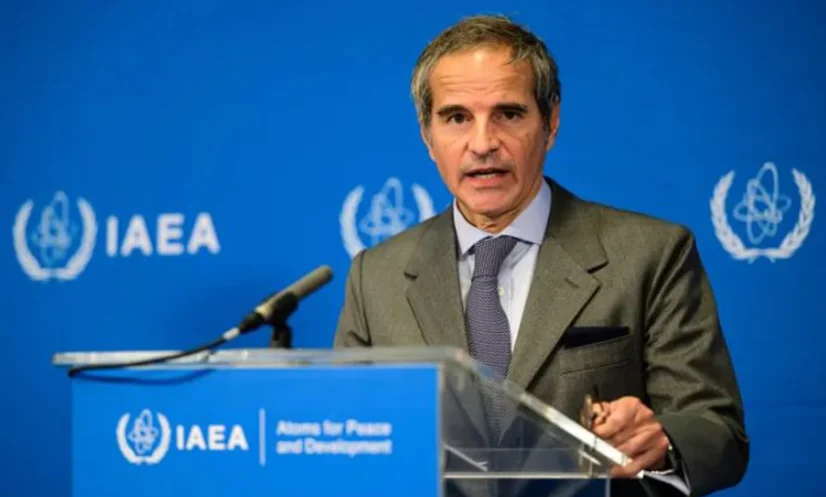
International Atomic Energy Agency (IAEA) chief Rafael Grossi is emerging as a strong contender to become the next secretary-general of the United Nations, but his close ties with US President Donald Trump and Argentine President Javier Milei could complicate his bid.
In particular, uncertainty remains over whether he can secure the backing of China and Russia, two permanent members of the UN Security Council whose support is crucial to his candidacy.
In the latest informal poll for the position, Grossi finished second behind Costa Rica’s Rebeca Grynspan in the race to succeed current UN Secretary-General Antonio Guterres. The 65-year-old Argentine diplomat received nine encouraging votes and four discouraging votes. Eight candidates remain in the contest.
Grossi has earned international recognition for his active diplomatic role in addressing major global crises since becoming director-general of the IAEA in 2019.
Following Russia’s full-scale invasion of Ukraine in 2022, he personally led inspection missions to the Zaporizhzhia and Chornobyl nuclear power plants to assess safety risks and protect critical nuclear facilities amid the conflict.
He also helped secure eight local ceasefires between Russia and Ukraine, allowing repair and maintenance work to continue at nuclear installations despite the ongoing fighting.
However, his assertive diplomatic approach has also attracted criticism. Iran, in particular, has accused him of bias, arguing that IAEA reports on its nuclear programme have been influenced by the United States and European countries.
Under the UN selection process, a candidate for secretary-general must secure at least nine votes from the 15-member Security Council. The candidate must also avoid a veto from any of the five permanent members — the United States, the United Kingdom, China, Russia and France.
The Security Council then recommends a candidate for approval by the UN General Assembly.
Analysts believe Grossi’s perceived closeness to Washington could create obstacles in securing the support of Beijing and Moscow. Both countries have considerable influence over the selection process and could block his candidacy through their veto powers.
At the same time, the position of the Trump administration towards the United Nations could create another complication. The US administration has taken steps to withdraw from several UN agencies, reduce funding and limit the role of international institutions.
Argentine President Milei, one of Trump’s close allies, has also been a vocal critic of the United Nations, adding another political dimension to Grossi’s candidacy.
Meanwhile, growing calls for the appointment of a woman as UN secretary-general for the first time in the organisation’s 81-year history could strengthen the prospects of Grynspan.
The principle of geographical rotation also favours Latin America for the next secretary-general, making the Costa Rican candidate a potentially strong contender.
Guterres’ second term is scheduled to end on December 31, 2026, prompting diplomatic manoeuvring among member states as the selection process gathers momentum.
The contest is therefore shaping up as a complex diplomatic exercise, with candidates needing not only broad international support but also the approval of all five permanent members of the Security Council.