


 Play store

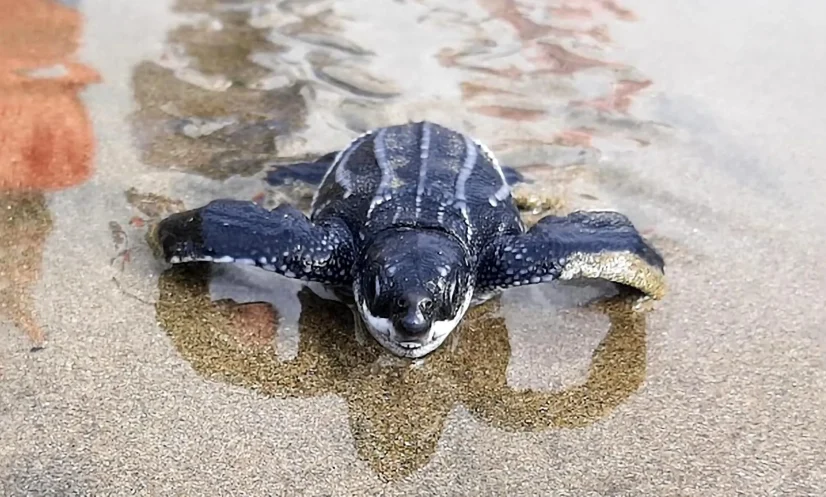
Ecuador’s sandy beaches are emerging as a potential refuge for the world’s largest sea turtle, the critically endangered eastern Pacific leatherback, as rising ocean temperatures appear to be influencing its nesting patterns.
Researchers recorded an unprecedented number of leatherback turtle nests along several Ecuadorian beaches during the 2025-2026 nesting season, more than 1,000 miles from the species’ traditional nesting grounds in Mexico and Costa Rica.
The increase suggests the turtles may be shifting their nesting activities towards cooler coastal environments in response to changing ocean temperatures, according to researchers.
“Historically, observing female Eastern Pacific leatherbacks on Ecuador’s beaches was a rare or unusual event, but our findings suggest they are adapting their reproductive cycle to thrive and survive in coastal Ecuador,” said Juan José Alava, an adjunct professor at Simon Fraser University’s School of Resource and Environmental Management and a leading co-author of the study.
The findings, published in the journal Chelonian Conservation and Biology, offer fresh hope for a population that has declined sharply over recent decades and faces the risk of extinction in the eastern Pacific.
For the study, researchers examined more than 45 years of historical records from Ecuador’s coastline, including sightings of mature females, nesting attempts, nest numbers, hatching success and turtle strandings.
They compared the data with El Niño and La Niña climate patterns, which bring warmer and cooler sea surface temperatures, respectively.
Over the past decade, leatherback sightings and nesting activity along Ecuador’s coast have increased during La Niña events, when waters in the southeastern tropical Pacific become cooler.
The researchers also found that the number of eggs laid per nest and hatching success rates were comparable to those recorded at established nesting sites farther north. Some Ecuadorian nests even produced more hatchlings than typically observed elsewhere.
Eastern Pacific leatherbacks are capable of surviving in both warm and cold waters. They travel thousands of miles between tropical nesting beaches and feeding grounds in subpolar Pacific waters, where jellyfish provide an abundant food source during summer.
The turtles have also been recorded off Canada’s west coast in British Columbia, with more than 150 documented sightings between 1931 and 2024.
Despite their adaptability, the eastern Pacific leatherback population has declined by more than 90 per cent since the 1980s.
Scientists attribute the decline partly to environmental pressures, including warmer El Niño conditions intensified by human-induced climate change. The turtles also face threats from accidental capture in fishing gear, plastic pollution, vessel collisions, egg harvesting and the destruction of nesting habitats.
Alava said long-term survival would require continuous monitoring, coordinated conservation programmes, measures to reduce accidental capture in fisheries and better protection of Ecuador’s coastal nesting areas.
He also stressed the importance of involving local communities and incorporating traditional ecological knowledge into conservation initiatives.
A remarkable nesting success involving a turtle researchers named Bella provided further evidence of the potential of Ecuador’s beaches.
In January 2026, Bella emerged from the sea at Playa de Crucita under artificial lights from nearby streetlamps. Confused by the lighting, she crossed a rocky breakwater and reached a sidewalk before returning to the ocean without laying her eggs.
Two nights later, she emerged along a quieter stretch of beach, dug a nest and laid 47 eggs.
Several weeks later, 44 hatchlings emerged and made their way towards the sea.
Researchers had attached a tracking tag to Bella during her initial nesting attempt, allowing them to establish that she nested four to five times during 2026.
One of her nests was left undisturbed at its original location, while the others were transferred to the San Jacinto hatchery.
By the end of the nesting season, 134 of Bella’s 146 eggs had produced hatchlings, representing a hatching success rate of 91.8 per cent.
Researchers say the growing nesting activity in Ecuador highlights the importance of protecting emerging nesting habitats as climate change reshapes the conditions on which endangered marine species depend.