


 Play store

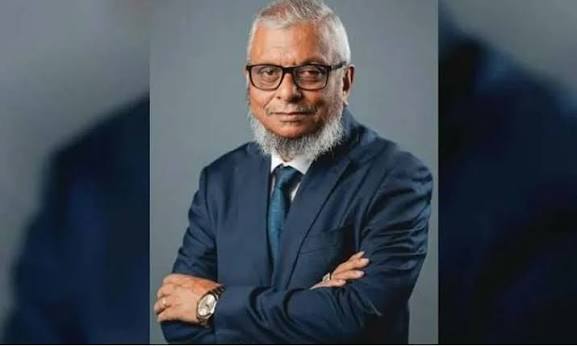
Bangladesh and Malaysia are poised to make another push to revive their long-stalled labour market as Expatriates’ Welfare and Overseas Employment Minister Ariful Haque Chowdhury begins a fresh visit to Malaysia, where he is expected to hold high-level talks on a new labour recruitment framework.
The minister, accompanied by Prime Minister’s Adviser Mahdi Amin, is scheduled to leave Dhaka late Monday for what will be his third visit to Malaysia since assuming office. The four-member delegation is expected to focus on finalising a long-awaited Memorandum of Understanding (MoU) that could pave the way for the resumption of Bangladeshi worker recruitment.
Officials familiar with the visit said the delegation is expected to arrive in Malaysia ahead of a crucial meeting with Malaysian Human Resources Minister Steven Sim Chee Keong in Putrajaya on Tuesday.
Although Bangladesh’s Ministry of Expatriates’ Welfare and Overseas Employment has yet to issue an official announcement, multiple ministry sources confirmed the visit and said the ministry’s Secretary, Md Mokhter Ahmed, may also join discussions in Malaysia.
Diplomatic and government sources in Putrajaya said both countries are expected to sign an MoU aimed at reopening the Malaysian labour market through a limited number of authorised recruiting agencies, replacing the recruitment mechanism that has remained suspended for more than two years.
The expected agreement comes at a time when Malaysia is facing mounting labour shortages in several sectors, particularly restaurants, construction and other labour-intensive industries.
The issue gained fresh urgency after Malaysian Prime Minister Datuk Seri Anwar Ibrahim recently directed the relevant ministries and agencies to resolve foreign worker employment applications in sectors facing acute manpower shortages within one month.
Speaking at the launch of the Indian Muslim Transformational Framework (IMTF) 2030 in Butterworth, Penang, on Friday, Anwar acknowledged that industries, especially the restaurant sector, are struggling because of an insufficient workforce.
“We cannot simply open the door completely to foreign workers, particularly unskilled labour, just to fill vacancies. However, sectors facing urgent labour shortages must be addressed, and I have given the relevant ministries and departments a maximum of one month to resolve these issues,” he said.
His remarks have fuelled optimism among Bangladeshi officials and recruiting agencies that Malaysia may soon resume worker intake under a more structured and transparent framework.
Earlier, Malaysia’s Communications Minister and government spokesperson Datuk Seri Fahmi Fadzil said the Cabinet had agreed to review the country’s foreign labour requirements after several ministries highlighted workforce shortages in key economic sectors, including restaurants and construction.
Malaysia remains one of the most important overseas employment destinations for Bangladeshi workers, but recruitment has been repeatedly disrupted because of concerns over irregularities, excessive migration costs and recruitment syndicates.
The Malaysian government currently maintains strict controls on the employment of foreign workers. Under the 12th Malaysia Plan (12MP), foreign workers are capped at 15 percent of the country’s total workforce, while the 13th Malaysia Plan (13MP) aims to reduce that figure to 10 percent by 2030.
Despite those restrictions, labour market analysts say Malaysia’s economic recovery and persistent workforce shortages make a carefully managed reopening of the Bangladeshi labour market increasingly likely.
The anticipated visit of Malaysia’s Human Resources Minister to Bangladesh on August 4 is also being viewed as a positive sign that negotiations are entering their final stage.
Observers believe the combination of Prime Minister Anwar’s directive, the Bangladesh minister’s latest visit to Kuala Lumpur and the planned reciprocal ministerial visit next week reflects renewed political commitment on both sides to restore labour mobility.
If the proposed MoU is signed as expected, it could mark a significant breakthrough in efforts to reopen one of Bangladesh’s largest overseas employment markets, offering new opportunities for thousands of aspiring migrant workers while helping Malaysian industries address chronic labour shortages.