Play store

By Ashraful Islam Joy
Once hailed as the backbone of Bangladesh’s economy, jute—widely known as the “golden fibre”—is making a remarkable comeback in Sirajganj after years of decline. Rising global demand for eco-friendly products, improved market prices, and strong support from agricultural authorities have encouraged farmers to return to jute cultivation, reviving both rural livelihoods and a long-lost farming tradition.
For decades, jute farming had steadily declined across the country due to the widespread use of synthetic fibres, rising production costs, and poor prices that discouraged growers. In many parts of Sirajganj, jute cultivation virtually disappeared, with some areas abandoning the crop for nearly 30 years.
That trend is now reversing. This season, farmers across several upazilas have reported better-than-expected yields, particularly in Shahjadpur and parts of the Chalan Beel region, where jute has returned to fields after a three-decade absence.
Farmer Mahidul Islam from Paikosha village in Kamarkhand Upazila said he had stopped growing jute years ago because it was no longer profitable. Encouraged by local agricultural officials, he decided to cultivate the crop again this year.
“We never imagined the harvest would be this good,” he said. “The plants reached 12 to 14 feet in height, and we harvested around 15 maunds per bigha. With the current market prices, we’re covering our costs and earning a good profit.”
Farmers across the district have shared similar experiences, with many planning to expand jute cultivation next season after seeing higher returns compared with production costs.
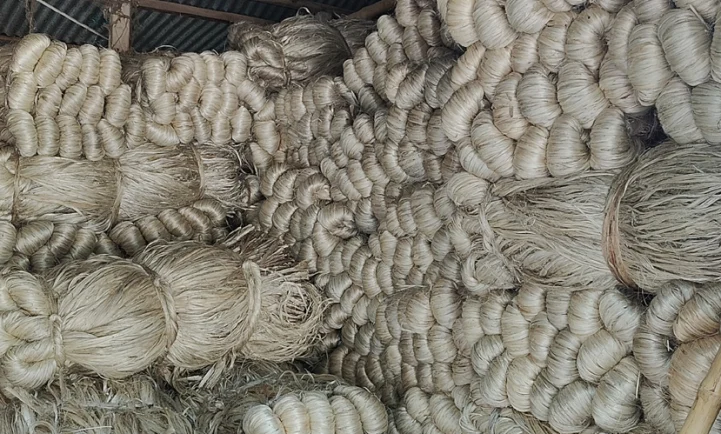
Trading of newly harvested jute has also gathered momentum in local markets. Mesta jute is currently selling for between Tk 4,600 and Tk 5,900 per maund, while Tosha jute is fetching Tk 3,300 to Tk 3,600 per maund. These prices are significantly more attractive than in previous years.
Rahmat Ali, a jute trader from Porabari in Sirajganj Sadar, said the quality of this year’s crop has drawn wholesalers from different districts, creating strong competition in local markets and ensuring farmers receive fair prices.
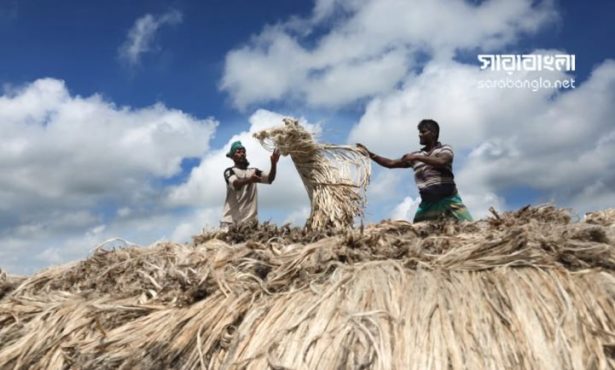
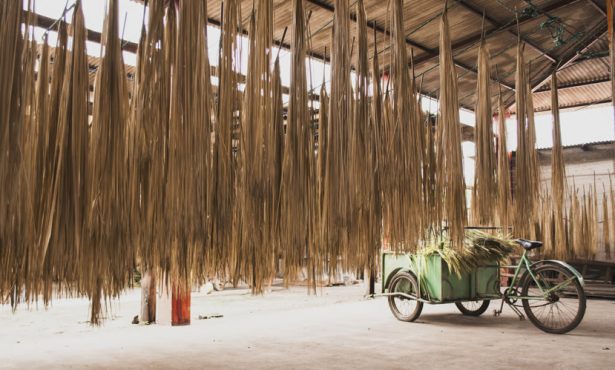
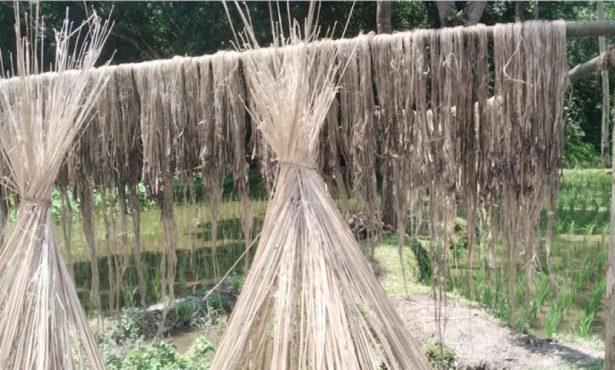
Across the district, the monsoon season has brought back familiar scenes of harvesting, retting, washing and fibre extraction in canals, rivers and floodwaters. Rows of soaking jute bundles and freshly dried fibre lining village roads have revived memories of Bangladesh’s golden agricultural heritage.
The revival has also created seasonal employment opportunities for rural workers involved in harvesting, transporting, retting, fibre extraction, drying and marketing the crop.
According to the District Department of Agricultural Extension, jute has been cultivated on 14,610 hectares of land in Sirajganj this season. The district grows several varieties, including Deshi, Tosha, Mesta, Kenaf, JRO-524, Sabuj Sona and BARI-1.
While average production stands at 10 to 12 maunds per bigha, some areas have recorded yields of up to 15 maunds. Production costs range from Tk 12,000 to Tk 14,000 per bigha, allowing most farmers to earn satisfactory profits due to favourable market prices.
Agricultural experts say global demand for environmentally friendly jute products is rising as countries seek alternatives to plastic. Jute is increasingly used in shopping bags, geotextiles, carpets, handicrafts, furniture materials, fashion products and industrial applications, creating new export opportunities and boosting demand for the natural fibre.
AKM Manzure Mawla, Deputy Director of the District Department of Agricultural Extension, attributed this year’s success to regular technical guidance from agricultural officers and the adoption of improved farming practices.
He said the relatively low production costs and strong market prices have renewed farmers’ interest in the crop, adding that the department will continue supporting efforts to expand jute cultivation in the coming years.
The return of lush green jute fields to Sirajganj marks more than just a successful harvest—it signals the revival of a crop that once defined Bangladesh’s economy. If prices remain stable, quality seeds become more accessible and the jute industry continues to expand, the country’s “golden fibre” could once again play a major role in strengthening both rural livelihoods and the national economy.