


 Play store

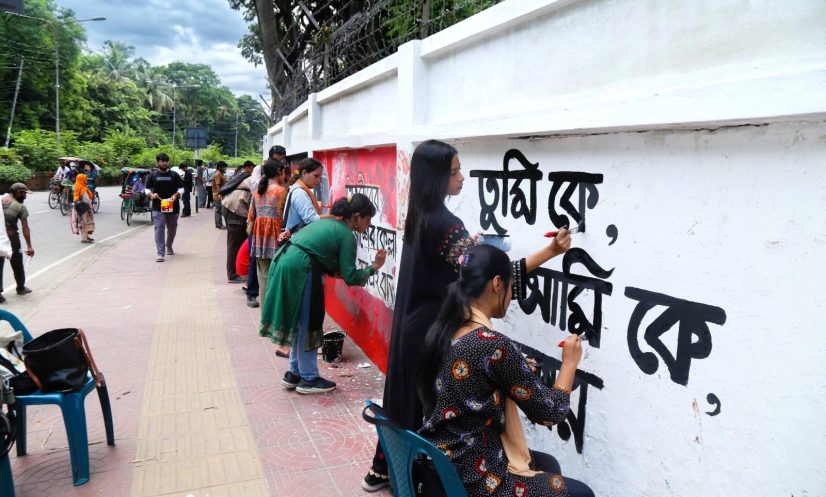
Dhaka University (DU) on Saturday launched a three-day campaign to restore and repaint the “July graffiti” created during the 2024 July Uprising, aiming to preserve the artworks as an enduring record of one of the country’s most significant political movements.
The restoration programme was inaugurated by DU Vice-Chancellor Prof Dr A.B.M. Obaidul Islam at the main gate of the Vice-Chancellor’s residence. The initiative will continue until August 3, covering graffiti displayed along the route from the Vice-Chancellor’s residence to Rokeya Hall.
According to the university authorities, the campaign seeks to preserve the original appearance, message and historical significance of the graffiti, which were painted by students and artists during the July-August 2024 movement. Registered students from the Faculty of Fine Arts and volunteer artists are participating in the restoration work.
Among those present at the inauguration were Pro-Vice Chancellor (Education) Prof Dr Abdus Salam, Pro-Vice Chancellor (Administration) Prof Dr Mohammed Almujaddede Alfasane, Treasurer Prof Dr M. Jahangir Alam Chowdhury, Dean of the Faculty of Fine Arts Prof Dr Md Azharul Islam Sheikh, Proctor Md Israfil Prang and Director of the Arbory Culture Centre Prof Dr Mohammad Jasim Uddin, alongside teachers and students.
Addressing the gathering, the Vice-Chancellor described the July graffiti as important historical documents reflecting the experiences and sentiments of the 2024 mass uprising.
He said the artworks bear witness to what he described as the repression and misrule of the ousted Awami League government and should be preserved so future generations can learn about the events that unfolded during the movement.
Recalling the protests of July and August 2024, Prof Obaidul Islam said students and ordinary citizens had taken to the streets to protest against discrimination and injustice. He alleged that security forces responded with violence in an attempt to suppress the demonstrations.
Referring to the political change that followed the movement, he claimed that former Prime Minister Sheikh Hasina left the country only after more than a thousand people had been killed during the protests.
The Vice-Chancellor said graffiti created on walls across the country during the movement had become a powerful visual expression of resistance and now formed an integral part of Bangladesh’s contemporary history.
“Bangladesh will remain for centuries. Through these graffiti, future generations will remember those blood-stained days and uphold the spirit of the July movement,” he said.
He urged citizens to remain vigilant against the return of authoritarianism and called on all sections of society to contribute to building a discrimination-free Bangladesh.
The restoration initiative comes as universities, cultural organisations and artists continue efforts to document and preserve materials associated with the July-August 2024 uprising, including murals, graffiti, photographs and other public artworks. Historians and cultural activists have argued that preserving such works is essential for documenting the country’s political and social history, as many of the original paintings have faded due to weather, construction and the passage of time.
The Vice-Chancellor also expressed appreciation to the students and artists who created the graffiti during the movement and those now working to restore them, saying their efforts would help ensure that an important chapter of Bangladesh’s history is preserved for future generations.