Play store

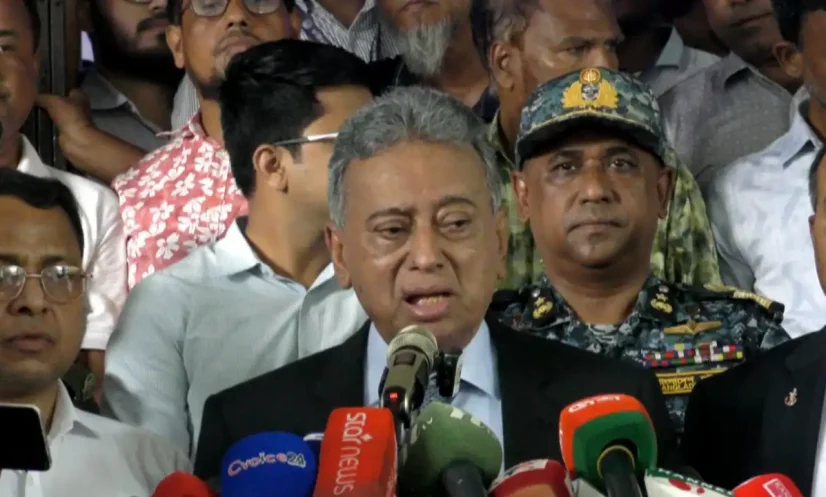
Finance Minister Amir Khosru Mahmud Chowdhury has said there will be no room for cronyism or patronage-based business under the current government.
“No matter how powerful a minister or influential a person is, there will be no scope for patronage-based business under this government,” he said.
The finance minister made the remarks while responding to journalists’ questions on Tuesday (August 11) about freeing Chattogram Customs from the influence of powerful syndicates at Chattogram Port.
He said the elected government has taken a number of steps since assuming office to stabilise the country’s fragile economy and support its recovery. Reviving economic activity is one of the key measures.
The government’s goal is to boost economic activity, create jobs, increase exports and industrialisation, and establish a business-friendly environment where entrepreneurs can operate without unnecessary obstacles, he said. He noted that business activities had previously been hindered in various ways, including through excessive regulations.
The government has pledged in the national budget to pursue deregulation to address these obstacles. Tuesday’s meeting was part of several initiatives to make deregulation more effective and implement it in practice, he added.
The finance minister said the government wants to simplify port and customs services so that businesses can operate without unnecessary delays. This would help reduce business costs, he said.
“Higher costs at ports are one of the reasons behind rising prices of everyday commodities. Delays in customs services have also been raised repeatedly,” he said. Chattogram Port Chairman Rear Admiral M Moniruzzaman and senior port officials were present.
Earlier, the finance minister held a closed-door meeting at the port building with representatives of the National Board of Revenue, Customs, Chattogram Chamber, BGMEA, BKMEA, shipping agents and other port stakeholders.
The meeting reportedly discussed resolving existing complications between the port and customs authorities, improving the efficiency of port management, removing obstacles to customs services and reducing business costs.