


 Play store

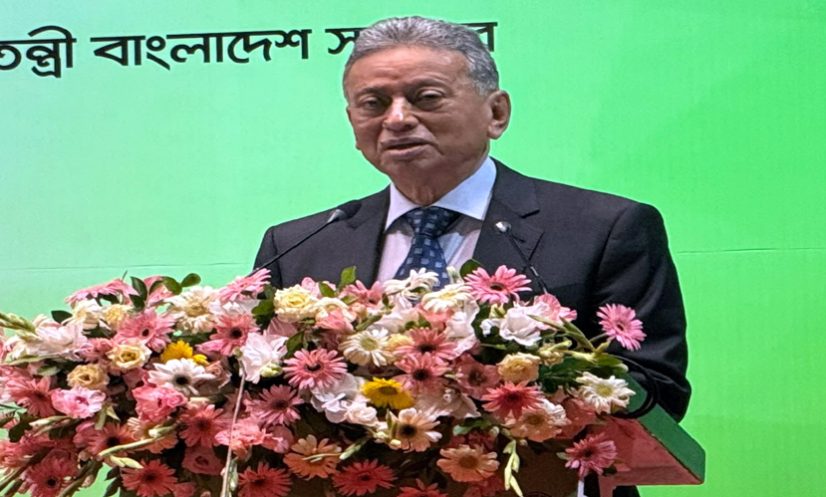
Finance Minister Amir Khosru Mahmud Chowdhury on Monday called for bringing small, cottage and rural entrepreneurs under formal lending facilities to help integrate them into the mainstream economy.
He said financing alone would not be enough. Entrepreneurs should also receive support for skills development, product quality improvement, design, branding and marketing to create jobs and make a greater contribution to the national economy.
The minister made the remarks as the chief guest at a programme marking the launch of the Microfinance and Micro Enterprise Fund and the distribution of loans.
He said the fund had been launched as a pilot project with Tk 50 crore, primarily to tap the creativity and entrepreneurial potential of educated, less-educated and extremely poor people.
“Many people are afraid of going to banks or do not have access to banking services. The main objective of this initiative is to create financing opportunities for them,” he said.
The minister noted that NGOs had long been providing microcredit to such people, but the new initiative would operate through banking channels, allowing entrepreneurs to access financing using bank capital and funds allocated under various government programmes.
He said grants did not always produce the desired results because the absence of a repayment obligation could reduce investment discipline.
“If money has no cost, there is no incentive. Once there is a cost, the incentive comes,” he said.
Identifying the right people and ensuring that financing reaches them remain major challenges, he said, stressing the need to provide training alongside loans.
“Financing alone does not create an entrepreneur. Those who have never received training must be given training. In other words, entrepreneurs need the necessary support alongside financing,” he said.
The minister said multiple programmes would have to work together to achieve the government’s target of creating 10 million jobs, with the Microfinance and Micro Enterprise Fund being one of those initiatives.
He said the Karmasangsthan Bank had already contributed to creating employment for 1.3 million people, while the new initiative aimed to create another 900,000 jobs. This could create employment opportunities for a total of 2.2 million people, he added.
According to the minister, such employment would not only increase people’s incomes but also strengthen the rural economy and contribute to overall economic growth.
He stressed that while large industries and major projects were important, small, medium and cottage industries also generated employment for large numbers of people and therefore deserved greater attention.
Focus on the creative economy
Chowdhury called for greater attention to the creative economy, saying many families involved in rural pottery, handloom, brassware and other traditional occupations had been engaged in the same work for three or four generations but lacked the capacity to upgrade their products.
“These people need not only loans but also support in skills development, design and branding,” he said.
Improving a product’s design and quality could significantly increase its market value, he said. A product worth Tk 100 could potentially be sold for Tk 200 to Tk 300 through better skills, quality raw materials, design and branding.
He said there was also considerable scope for taking such products to international markets through online platforms such as Amazon, Alibaba and eBay.
“This is why the government is working on the creative economy,” he said, adding that entrepreneurs were being provided with support for skills development, design and branding alongside financing. A pool of designers had also been created, he said.
Music, culture and freelancing
The minister said the creative economy should not be limited to traditional handicrafts. Music, theatre, films, over-the-top (OTT) platforms, food and the culinary industry could also become important components of the economy.
“Music has no boundaries,” he said, pointing to the global popularity of music from different countries, including Korean pop.
Bangladeshi artists and creative professionals could also be supported to turn their work into products for global markets, he said.
He also called for greater commercial use of the country’s rural music and folk culture, saying these resources had not been adequately monetised in the past.
The minister also stressed the need to bring young people involved in information and communications technology and freelancing under such initiatives and connect their talent to domestic and international value chains.
Lessons from Thailand
Sharing his experience from a visit to Thailand, Chowdhury cited the country’s “One Village, One Product” model, under which locally made products are developed and marketed internationally.
He said villagers produce goods at home while receiving government support in areas such as raw materials, skills development, design and branding. The finished products are then collected and sent directly to international markets.
Bangladesh should also develop an integrated support system of this kind, he said, urging banks to connect small entrepreneurs receiving loans with the government’s creative economy programmes.
The minister stressed that a strong relationship between banks and borrowers was essential for the long-term success of small enterprises.
“Financing is not enough. The person you are financing must have a relationship with you. You have to support that person,” he said.
He also called for reducing the bank’s non-performing loan ratio, which he put at around 4.84 percent, suggesting that it should be brought down to 1-2 percent to further strengthen the bank’s credibility.
Fund may be expanded if successful
The minister said the Tk 50 crore pilot fund could receive additional financing if the initiative proved successful.
He said the programme would be expanded in the future, which could increase the bank’s operations and profitability while allowing it to finance more entrepreneurs.
Developing small entrepreneurs would not only improve their living standards but also boost employment, economic growth and foreign-exchange earnings, Chowdhury said.
“Bringing small entrepreneurs into the mainstream economy should therefore be considered one of the government’s important priorities,” he added.