Play store


British Prime Minister Andy Burnham will chair a meeting of the government’s emergency response committee on Wednesday to discuss measures to tackle extreme heat, wildfires and drought, his office said, as the country faces its fifth heatwave of the year.
Temperatures are expected to reach around 37 degrees Celsius (98.6 degrees Fahrenheit) from Thursday across southern and eastern England and parts of the Midlands, the Met Office warned on Tuesday.
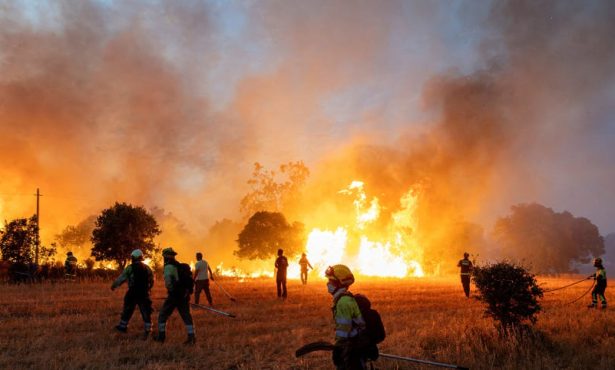
Fire chiefs have responded to 966 wildfires across England and Wales so far this year, including 185 during the first 10 days of August alone. The farming industry has also warned that the extreme weather could hit agricultural production.
“We will continue to take the action needed to keep communities safe, protect water supplies, support farming communities and safeguard the environment,” a Downing Street spokesperson said.
Most of Britain is experiencing a flash drought caused by a combination of exceptionally low rainfall and above-average temperatures. England and Wales recorded their driest July in 190 years, according to the Met Office.
Government figures show that around 45 million people are living in drought-affected areas, while 27 million are facing restrictions on water use.
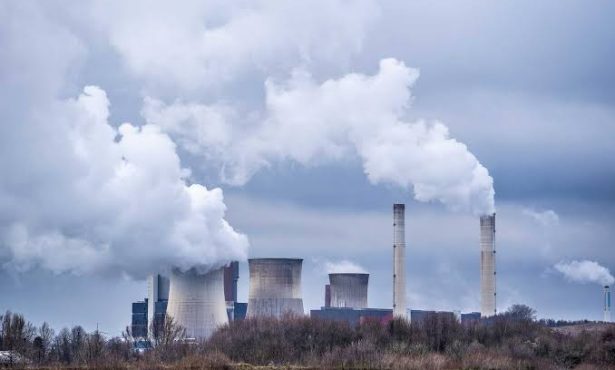
The world is getting hotter as carbon emissions from burning fossil fuels trap increasing amounts of heat in the atmosphere. Europe, however, is warming at roughly twice the global average rate.
The effects are becoming increasingly severe, with tens of thousands of heat-related deaths reported across Europe this summer.
Land warms faster than the vast and deep oceans, meaning continents generally experience more rapid warming than the seas. Europe is particularly vulnerable because of changes in weather patterns, its proximity to the Arctic, declining snow cover and reductions in air pollution.
Changes in atmospheric circulation over Europe have contributed to more frequent and intense summer heatwaves. The trend was highlighted by the continent’s worst-ever heatwave in June 2026, when a vast mass of hot air became trapped beneath a stationary “heat dome”.
Scientists are still studying how global warming is influencing changes in atmospheric circulation, but evidence increasingly points to a connection between rising temperatures and the growing frequency and intensity of extreme heat events.