Play store

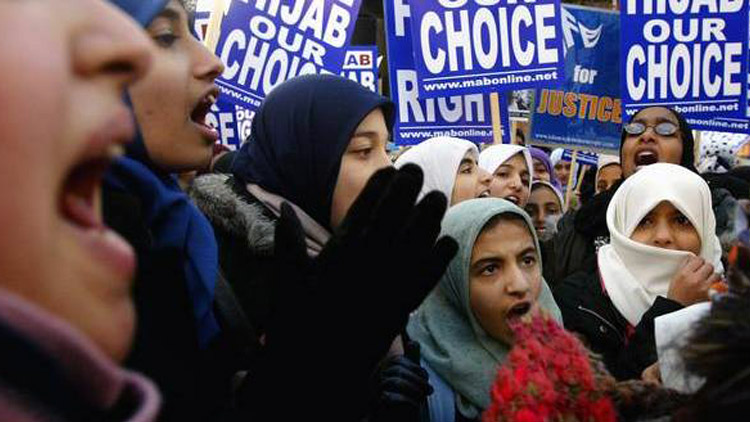
Protests have erupted across Azerbaijan over new school dress code rules that have effectively barred some hijab-wearing students and teachers from classrooms, while demonstrations and criticism have also emerged in neighbouring Türkiye.
The controversy followed amendments to school uniform regulations adopted by Azerbaijan’s Cabinet of Ministers on September 21.
Although the rules do not explicitly ban the Islamic headscarf, they prohibit clothing considered inconsistent with official school uniforms or the principle of secular education.
Reports from several schools indicate that girls wearing hijabs have been denied entry to classrooms, prompting students to boycott classes in solidarity with their classmates.
Protests have been reported in Baku and other areas, including Masalli and Jalilabad. Parents have also voiced opposition to the restrictions.
At a school in Baku’s Balakhani settlement, protesters displayed a banner reading, “The hijab is not a barrier to education.”
Azerbaijan’s Interior Ministry said 37 people had been detained in connection with incidents related to the enforcement of school uniform regulations.
Authorities have defended the rules as necessary to maintain a uniform dress code and uphold secular education.
The dispute has also drawn criticism from Turkish officials. Oktay Saral, an adviser to Turkish President Recep Tayyip Erdogan, described the restrictions as unacceptable and called on Baku to reverse the decision, arguing that wearing a headscarf should not prevent students from receiving an education.
However, Azerbaijan’s ruling New Azerbaijan Party criticised the Turkish officials’ comments, urging Ankara not to interfere in its domestic affairs.
The party said the regulations were based on secularism, equality and the rule of law.
The controversy has exposed tensions between the two close allies, whose relationship is often described by the phrase “one nation, two states”.
Azerbaijan is a predominantly Muslim country, with its constitution defining the state as secular while guaranteeing freedom of religion.
The new rules have reignited debate over the balance between secular education, religious freedom and students’ right to attend school.
The restrictions on teachers’ clothing have added another dimension to the dispute, with reports that some female teachers have also been instructed to remove their headscarves.
The protests continue to raise questions about how Azerbaijan will enforce its school dress code without restricting access to education for students who wear religious clothing.