Play store

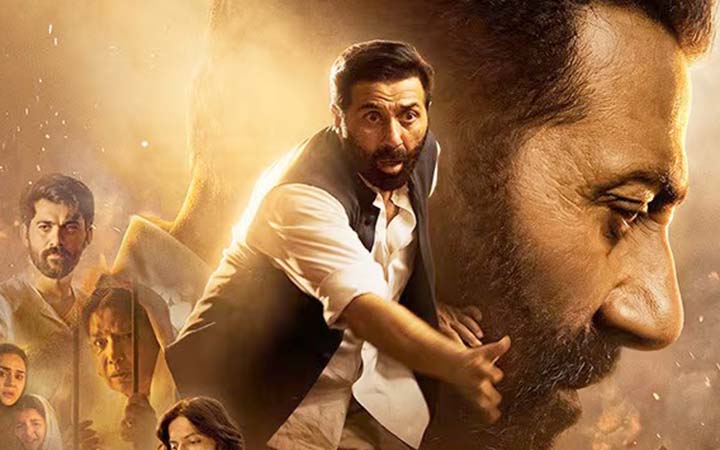
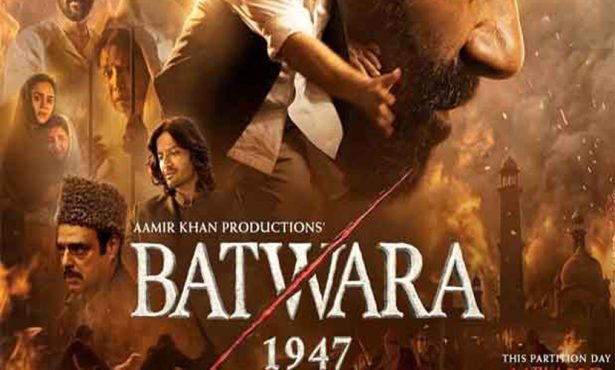
Batwara 1947, directed by Rajkumar Santoshi, tells an emotional story set against the backdrop of India’s Partition and explores the human cost of communal violence.
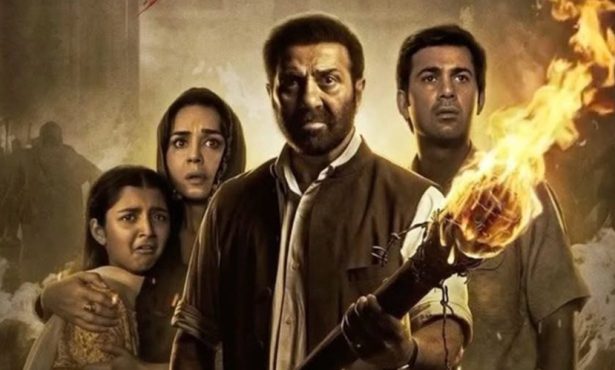
The film follows Sikandar Mirza, played by Sunny Deol, a man from Meerut who initially believes that the communal violence surrounding India’s Independence will soon end. But as the country gains freedom at midnight, the situation deteriorates, forcing Sikandar to leave for Lahore with his wife Hamida, played by Preity G Zinta, and their children.
After a difficult journey, the family reaches Lahore and settles in a relief camp. They are eventually given a haveli called Durga Nivas, but their relief is short-lived when they discover an elderly woman, played by Shabana Azmi, living on the top floor.
The woman tells them that she is the original owner of the house and refuses to leave. What begins as a dispute over a home gradually develops into a larger story about compassion, acceptance and humanity during one of the darkest periods in the subcontinent’s history.
Adapted from Asghar Wajahat’s acclaimed play Jis Lahore Nahin Dekhya, the film has a strong emotional foundation. Santoshi’s screenplay, along with Wajahat’s story, effectively highlights the importance of humanity beyond religious divisions. The dialogues are sharp and meaningful, although they do not always have the punch associated with Santoshi’s earlier collaborations with Sunny Deol.
Santoshi keeps the direction relatively simple and gives the human story centre stage. The film handles religious sentiments with sensitivity and avoids portraying the conflict in a one-sided manner. The relationship that develops between the Mirza family and the elderly woman is among the film’s strongest elements.
The action sequences are limited but are likely to appeal to mass audiences, while the climax provides the film with an emotional high point.
However, Batwara 1947 may disappoint viewers expecting a full-fledged Sunny Deol action vehicle. Despite being promoted partly as a mass entertainer, the film contains relatively few action sequences, particularly in the first half.
This is a noticeable drawback given Santoshi and Deol’s previous collaborations, including Ghayal, Damini and Ghatak, which successfully combined action, emotion and powerful dialogue.
The film also loses momentum in the middle of the second half, where its lengthy runtime becomes noticeable.
Overall, Batwara 1947 works best as an emotional Partition drama about humanity and communal harmony rather than as a conventional action film. Its strong performances, sensitive treatment of religious themes and moving climax give it considerable emotional appeal, although a slower second half and lack of sustained action keep it from reaching the impact of Santoshi and Deol’s earlier classics.