


 Play store

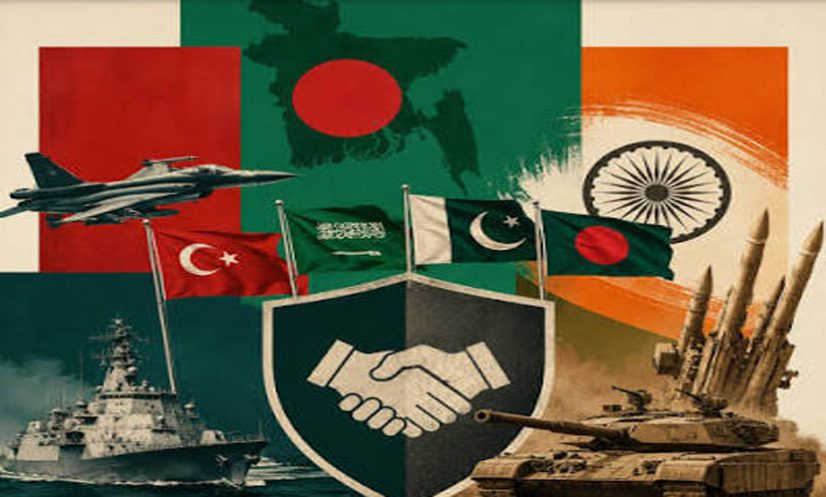
Bangladesh has signalled its interest in joining the Mecca Joint Defence Pact involving Pakistan, Saudi Arabia and Türkiye, as Dhaka reviews its foreign policy options amid shifting global economic, trade and security dynamics.
Prime Minister’s Foreign Affairs Adviser Humayun Kabir said Bangladesh was taking a positive view of the possibility of joining the three-country economic or defence grouping, while keeping the country’s national interests at the centre of its decision-making.
“We are looking at the matter positively, considering our national interests as well as the changing global economic and trade situation,” Kabir told Bangladesh Sangbad Sangstha (BSS) in an interview.
He said the government was pursuing a balanced foreign policy under its “Bangladesh First” approach, with national interests remaining the priority.
The remarks come after Pakistan, Saudi Arabia and Türkiye signed the Mecca Joint Defence Pact on August 7 amid heightened tensions in the Middle East.
Under the agreement, an armed attack against any one of the three signatories will be treated as an attack against all three, establishing a collective defence commitment among the members.
The pact was signed during the Mecca Al-Mukarramah Summit for Joint Defence, attended by Saudi Crown Prince and Prime Minister Mohammed bin Salman, Turkish President Recep Tayyip Erdogan and Pakistani Prime Minister Shehbaz Sharif.
The agreement is expected to deepen defence cooperation among the three countries and reflects their commitment to strengthening collective security and promoting peace, security and stability both within and beyond the region.
The development comes amid heightened geopolitical tensions in the Middle East. The conflict involving Iran, the United States and Israel has increased regional security concerns and disrupted maritime trade through the strategically important Strait of Hormuz.
Turkish Foreign Minister Hakan Fidan said the day after the pact was signed that, technically, the agreement resembled NATO’s collective defence mechanism under Article 5. He stressed, however, that the pact was not directed against Iran or any other country.
Fidan described the agreement as a common commitment to ensuring the security of the three allied countries. He also said President Erdogan wanted to expand the grouping and identified Egypt as a potential future member.
Pakistan has also indicated that the pact could be expanded beyond its three founding members.
On August 9, Pakistani Deputy Prime Minister and Foreign Minister Senator Ishaq Dar said the Mecca Pact was open to countries willing to adhere to its core principles.
Dar described the agreement as defensive in nature and said it would neither replace nor override any existing bilateral or multilateral agreements of the three countries.
He said the framework would remain open to countries committed to cooperation, mutual respect and the peaceful settlement of disputes.
The Pakistani foreign minister said the pact was consistent with the fundamental principles of Islamabad’s foreign policy and reaffirmed Pakistan’s commitment to working with regional partners to resolve disputes peacefully and build a safer and more prosperous future.
For Bangladesh, any move towards the grouping would represent a significant development in its evolving diplomatic and strategic engagement with Pakistan, Saudi Arabia and Türkiye.
Humayun Kabir said Dhaka was also seeking to strengthen practical relations with Pakistan, particularly through expanded trade and greater people-to-people contacts.
He stressed that Bangladesh’s engagement with Pakistan was part of normal diplomatic relations and aimed at increasing economic and bilateral cooperation.
The possibility of Bangladesh joining the Mecca defence framework is therefore likely to attract attention not only in South Asia but also in the wider Muslim world, particularly as Dhaka seeks to balance traditional diplomatic relationships with emerging economic and strategic partnerships.