


 Play store

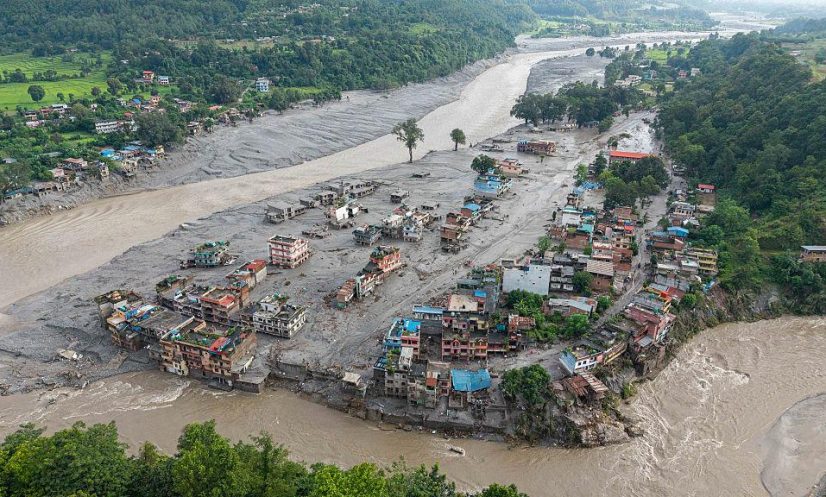
Nepal’s death toll from catastrophic flash floods along its border with China has risen to 626, while 2,426 people remain missing as search-and-rescue operations entered their fourth day on Saturday (August 29).
The latest figures released by Nepal’s disaster management authorities represent a sharp increase from the previous toll of 579 deaths and 1,924 missing people.
China has separately reported seven deaths and 554 people missing in Tibet.
Poor weather disrupted rescue efforts on Saturday, forcing the Nepal Army to suspend helicopter operations until conditions improve, spokesperson Brig Gen Raja Ram Basnet said.
Rescue workers and security personnel have been conducting round-the-clock operations since Wednesday (August 26), searching flood-hit areas along the Nepal-China border. More than 3,700 people have so far been rescued in Nepal.
Search operations continued at several locations, including the Upper Trishuli-1 Hydropower Project in Nepal’s Rasuwa district and the heavily damaged Gyirong border crossing on the Chinese side.
At the hydropower project, authorities believe more than 100 people could be trapped inside a tunnel buried under thick mud. Basnet said rescuers had managed to reach some people using ropes and baskets, but the operation remained extremely difficult because the tunnel was covered by 1.2 to 1.5 metres of mud and there were few suitable areas for helicopters to land.
Rescue teams were also temporarily moved to safer locations following warnings of possible additional flooding.
Authorities remained on high alert over the possibility of another flood from a newly formed lake high in the Himalayas. Experts had warned that the lake, formed after a glacier collapse triggered Wednesday’s floods, could overflow.
However, monitoring data from China’s Ministry of Water Resources showed the lake had shrunk significantly by Friday (August 28). Chinese state broadcaster CCTV reported that its water level had fallen by about 10 metres from its peak on Thursday morning.
Meanwhile, aid trucks were seen leaving Kathmandu for some of the worst-affected areas as relief operations continued.
In Nuwakot, one of the hardest-hit districts, families gathered at relief centres seeking information about missing relatives. Military personnel posted lists containing dozens of names as anxious families photographed the lists and waited for updates.
Rescue operations were also continuing at Gyirong Port, a key China-Nepal border crossing that suffered extensive damage. Chinese state media showed rescuers reaching the area on foot and by raft, while some were lowered from drones. Rescuers could be heard calling out to possible survivors.
Authorities had yet to determine how many people were inside the border checkpoint building when the floods struck.
The disaster has caused widespread destruction on both sides of the border. Nepal’s official death toll stood at 579 on Friday, although police reported a lower figure of 553. On the Chinese side, seven deaths and 554 missing people have been reported.
Hundreds of those still missing are foreigners who had travelled to the region for work, trekking or religious pilgrimages to a sacred Himalayan peak.