Play store

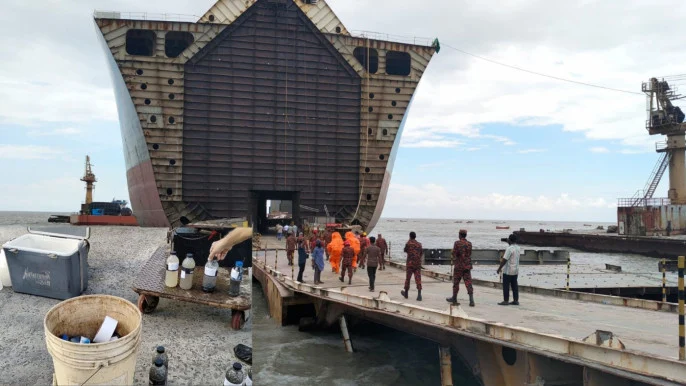
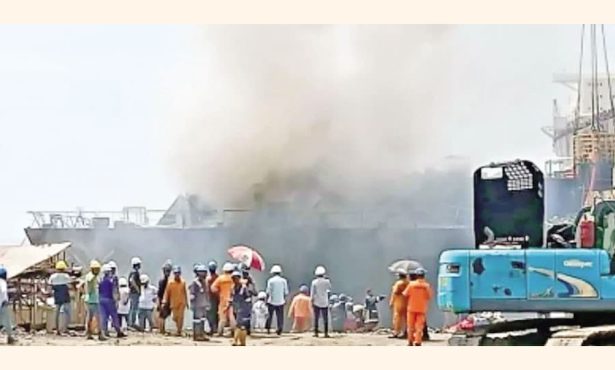
A government investigation has found “serious deficiencies and negligence” in safety management at Ferdous Steel Ship Recycling Industries in Sitakunda, Chattogram, where 10 workers died after being exposed to toxic gas while dismantling a ship.
The investigation committee formed by the Ministry of Industries has recommended punitive action against the shipyard owner under the Ship Breaking and Ship Recycling Rules, 2011.
According to the report, the workers were not using gas masks or self-contained breathing apparatus (SCBA) while puncturing a ballast tank of the vessel.
The high-risk operation was carried out on a weekly holiday, when no safety manager, ambulance, doctor or emergency rescue team was present at the yard.
The accident occurred on August 14 when toxic hydrogen sulfide (H2S) gas leaked from the ballast tank of the scrap vessel MT Rasi. Nine workers died at the scene, while another died later in hospital.
One of the deceased was a helper from an oxygen supply vehicle who was not a regular worker at the yard.
Following the incident, the Ministry of Industries formed an 11-member investigation committee headed by Additional Secretary AKM Benjamin Riazi.
The committee conducted an on-site inspection, recorded statements and analysed relevant data before submitting its report.
Industries Minister Khandaker Abdul Muktadir released the report at the ministry on Monday afternoon and said action would be taken under existing laws if negligence or dereliction of duty was found.
How the Toxic Gas Was Generated
The investigation found that seawater, mud, sediment and organic matter had accumulated at the bottom of the ballast tank for a long period. As the water remained stagnant, oxygen levels gradually fell.
In the oxygen-depleted environment, microorganisms broke down the organic matter in the sediment, generating toxic hydrogen sulfide gas.
On August 14, workers punctured the bottom of the tank to drain the water. The accumulated gas escaped along with the water, causing gas levels near the tank opening to rise rapidly. The workers became unconscious within a short time and later died.
Serious Safety Failures
The committee found that the accident occurred on a Friday, a weekly holiday when regular cutting operations were suspended.
However, workers were instructed to puncture the tank as part of preparations for the following day’s work, without informing senior management.
Despite the high-risk operation, no safety manager, ambulance, doctor or emergency rescue team was present at the yard.
Workers were not provided with gas masks or SCBA during the operation. Even some workers involved in the rescue operation entered the site without adequate SCBA, which the committee said may have contributed to the higher death toll.
Although general safety equipment was available in the yard’s PPE store, it was not properly supplied or used for high-risk operations.
The committee also found that there was a delay in informing the Fire Service and Civil Defence about the accident.
A new NVR-based CCTV system was being installed at the yard but was not operational at the time, leaving investigators without any CCTV footage of the incident.
Discrepancies in Worker Records
The investigation committee also found significant discrepancies between the list of workers present at the yard on the day of the accident and the approved manpower list submitted to the Bangladesh Ship Recycling Board.
According to the report, all but one of the five main deceased workers were absent from the approved manpower list. The yard authorities also failed to produce the actual attendance sheet for the day of the accident, claiming that documents relating to outside workers had been destroyed after the incident.
The committee said the yard management had treated the decision to puncture the ballast tank as a routine task that normally did not require notification to senior management.
It identified this practice as a significant weakness in the yard’s safety management and supervision.