


 Play store

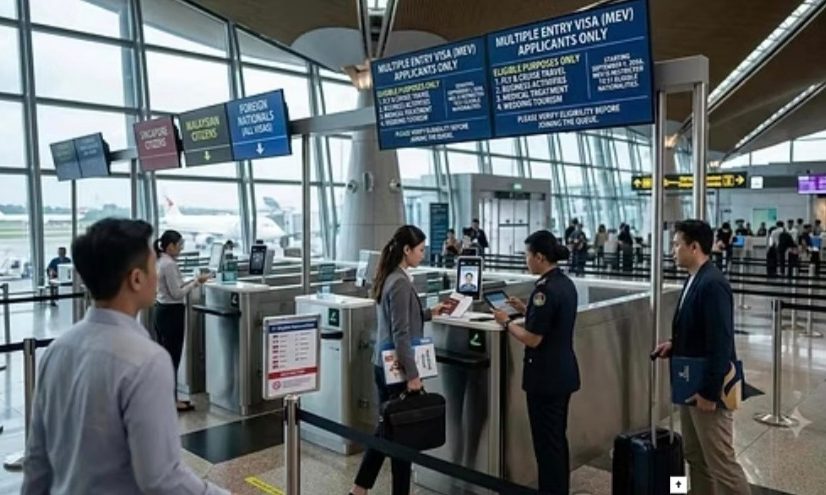
Ahmadul Kobir, Malaysia: Malaysia has tightened its Multiple Entry Visa (MEV) rules for Bangladeshi travellers, restricting the facility for ordinary tourism and social visits.
Under the revised policy, citizens of 31 countries, including Bangladesh, will no longer have broad access to Multiple Entry Visas. Instead, applicants will be eligible for an MEV only if their travel falls within one of four approved categories.
The Malaysian Immigration Department introduced the revised policy with effect from September 1 and formally announced the changes on September 2.
Bangladeshi passport holders require visas to enter Malaysia and are therefore directly affected by the new guidelines.
Under the revised framework, the purpose of travel will play a central role in determining whether an applicant qualifies for a Multiple Entry Visa.
Multiple Entry Visas will primarily be available for four categories of travel: fly-and-cruise tourism, business activities, medical purposes and wedding tourism.
Bangladeshi nationals travelling to Malaysia for business, requiring multiple visits for medical treatment, participating in fly-and-cruise tourism or travelling for wedding-related tourism may apply for an MEV, subject to the applicable requirements.
However, those travelling for ordinary holidays, sightseeing, visiting relatives or general social purposes that do not fall within the four approved categories will generally have to apply for a Single Entry Visa (SEV).
The revised rules are expected to have the greatest impact on frequent tourists.
Previously, eligible travellers could use a Multiple Entry Visa to enter Malaysia several times during the validity period of the visa. That facility has now been significantly restricted for ordinary tourism.
As a result, a Bangladeshi traveller who enters Malaysia, leaves the country and later wishes to return for another ordinary holiday may need to apply for a new Single Entry Visa.
This could mean additional time, expense and administrative procedures for frequent travellers.
Under Malaysia’s previous e-Visa arrangements, the MEV facility was available on a broader basis to nationals of various visa-required countries. Travellers could enter Malaysia multiple times, with a maximum stay of up to 30 days for each entry.
The revised policy has considerably narrowed access to the facility.
The change is particularly significant for Bangladeshi travellers because Bangladesh is among the countries whose citizens require visas to enter Malaysia.
Under the new MEV framework, holding a valid Bangladeshi passport will no longer by itself be sufficient to qualify for a Multiple Entry Visa.
The applicant’s purpose of travel must fall within one of the four approved categories.
For Bangladeshis who regularly travel to Malaysia for business, medical treatment or the specific tourism activities covered by the policy, the revised arrangement will continue to provide an option for multiple-entry travel, subject to the relevant conditions.
For ordinary tourists, however, the new system could result in additional costs and inconvenience.
The revised policy effectively shifts the Multiple Entry Visa away from being a broadly available facility for repeat tourism and links eligibility more closely to specific economic, medical and tourism activities.
While access to MEVs has been restricted for ordinary tourism and social visits, priority has been retained for business travel, medical purposes, fly-and-cruise tourism and wedding tourism.
The move indicates a shift towards a more purpose-based visa system, under which both an applicant’s nationality and the reason for travel play an important role in determining eligibility for multiple entry.
The new policy may cause confusion among Bangladeshis living and working in Malaysia. However, the changes primarily concern visitor and tourism-related travel.
The revised MEV rules do not directly affect work permits, Visit Passes (Temporary Employment) or other employment-related immigration arrangements for Bangladeshi or other foreign workers.
Employment-related immigration procedures and visitor visa arrangements are governed under separate frameworks.
The changes to the visa system come as Malaysia continues efforts to modernise its immigration and border-management system and make it more technology-driven and tightly regulated.
The country is also moving forward with the implementation of its new digital immigration system, MyNIISe, as part of broader efforts to modernise immigration services.
Overall, the revised Multiple Entry Visa policy represents a significant change in Malaysia’s approach to repeat-entry travel.
For Bangladeshi travellers, the practical implication is straightforward: those travelling to Malaysia for ordinary holidays, sightseeing or social visits will generally need a Single Entry Visa.
Those travelling for business, medical treatment, fly-and-cruise tourism or wedding tourism may still qualify for a Multiple Entry Visa, subject to the conditions set by Malaysian immigration authorities.