Play store

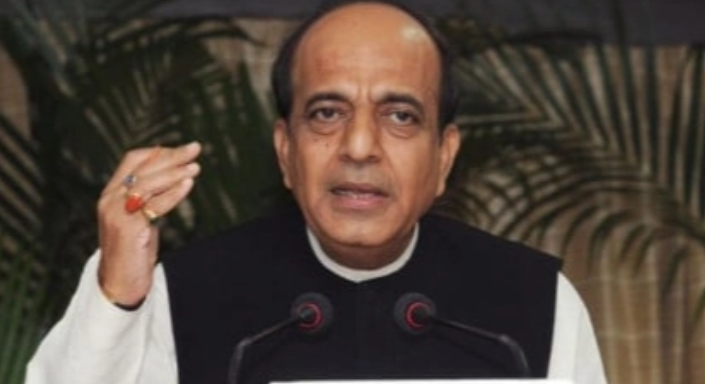
Indian High Commissioner to Bangladesh Dinesh Trivedi has called for keeping trade, cultural exchanges and people-to-people connectivity between Bangladesh and India moving forward, saying such issues should not be held back by political developments.
Talking to reporters after a cultural programme in Dhaka on Friday evening, he said the two countries would continue discussions on various issues, but matters such as the Maitree Express, the Ganges Water Treaty, trade and cultural exchanges should not be allowed to get stuck.
“These are the things of ordinary people,” Trivedi said, stressing the importance of keeping people at the centre of bilateral relations.
The High Commissioner said trade restrictions imposed by both sides should be liberalised, warning that people would otherwise suffer.
“There is no need to rush and the political process will take its own course. But the work that concerns ordinary people must continue,” he said.
Trivedi was speaking about the importance of peace and harmony in the region and beyond, referring to the teachings of Lalon Fakir and the traditions of Buddhism and Sufism.
“The world is facing a lot of unrest at this moment. When I talk about the lamp and the lighthouse, I am not talking only about Bangladesh or India; I am talking about the entire subcontinent,” he said.
He said the region’s diverse religious and spiritual traditions could contribute to global peace.
“There is Buddhism here, there is Sufism, and all religions are the same. We can all live together and work together for peace in the world,” Trivedi said.
Expressing optimism about the future, he said positive change might take time, but there must be a beginning.
“I have a lot of optimism, and I am absolutely confident. It will take time, but we have to make a good beginning,” he said.
On political issues between Bangladesh and India, Trivedi said there was no need to repeatedly discuss matters that were already under consideration at the highest level.
“I am completely confident that the Prime Minister of Bangladesh knows what has to be done, where and when. It is his prerogative, and we should leave it to him to decide when he considers it appropriate,” he said.
Trivedi said India would continue to focus on areas that could move forward without being affected by political considerations.
“My responsibility is to ensure that the work does not stop, but I cannot do it alone,” he said.
He stressed the need for the relevant technical committees of the two countries to work towards easing trade restrictions and improving economic exchanges.
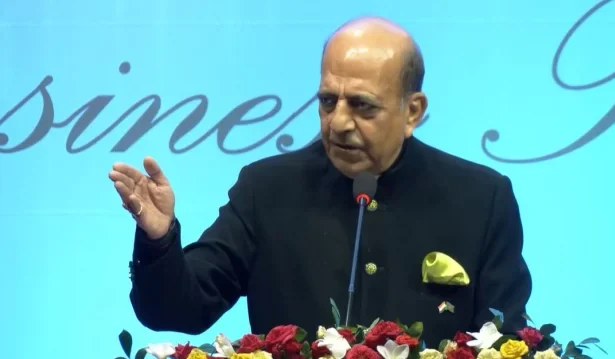
The High Commissioner attended the inaugural ceremony of the Kabir-Lalon Bhabsangeet Utsav, organised by the Ministry of Cultural Affairs, as the special guest. The event was held at Bangladesh Shilpakala Academy.
Meanwhile, State Minister for Foreign Affairs Humaiun Kobir on Thursday said Prime Minister Tarique Rahman’s first visit to India could not be a multilateral visit, and the government was working to arrange a bilateral visit when the timing was conducive.
He said Bangladesh was placing greater emphasis on a bilateral visit by the Prime Minister and discussions between the two countries.
“Such a bilateral visit will take place when the environment is conducive and mutual respect is maintained. There is no need to rush things,” Kobir said.
Responding to a question about the renewal of the Ganges Water Treaty, the state minister said Bangladesh would act with importance and competence wherever its national interests were involved.
“Wherever our national interest is involved, we will act with importance and competence. We will prioritise the interests and well-being of our country,” he said.
Kobir also ruled out the possibility of Bangladesh sending a government representative to the BRICS Summit, saying Prime Minister Tarique Rahman had not been invited to the summit.
He said the invitation had instead been extended to the BIMSTEC Chair.
“How shall we go? Has anyone from the Bangladesh government been invited? Our Prime Minister was not invited. Who told you that our Prime Minister was invited? The BIMSTEC Chair was invited. Then why are you asking this question?” he told reporters.