


 Play store

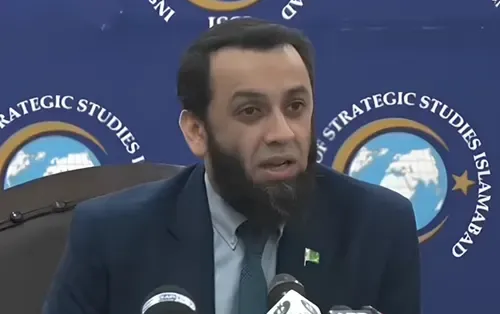
ISLAMABAD: Pakistan will not allow India to use water as a weapon, Information Minister Attaullah Tarar said on Wednesday, asserting that neither side can unilaterally alter, revoke or suspend the Indus Waters Treaty.
Speaking at a seminar organised by the Institute of Strategic Studies Islamabad, Tarar said any dispute over the treaty must be addressed while both sides continue to abide by its terms and provisions.
Referring to India’s position on the treaty, Tarar said the situation had reached a point where India’s stance could only be described, in his words, as “ignorance of the law” and, if one were to go further, “moral bankruptcy”.
He referred to an August 2025 decision by the Court of Arbitration, saying it supported Pakistan’s position and strengthened the argument that no unilateral action could be taken to change the status of the treaty.
Tarar said Pakistan had addressed the issue through diplomatic channels and had engaged with the international community to present its legal and diplomatic position.
Referring to Prime Minister Shehbaz Sharif’s address to the 81st session of the UN General Assembly, Tarar said the prime minister had described the waters of the Indus River as central to the lives and livelihoods of Pakistan’s people and the region.
He said Sharif had also warned that any attempt to deprive Pakistan of its water rights would be considered an act of war.
Tarar said Pakistan’s position on the Indus Waters Treaty was “completely clear”.
He added that the Foreign Ministry and the Ministry of Information and Broadcasting were engaging with international organisations and countries in the region on the issue.
He described the treaty as an instrument of peace and stability in the region.
The minister accused India of using allegations of cross-border terrorism as a pretext to justify what he called unlawful actions. He said Pakistan had lost 100,000 people and suffered more than US$150 billion in economic losses during decades of fighting terrorism.
Tarar described attempts to “weaponise water” and create disputes over the Indus Waters Treaty as highly condemnable, saying they had no justification from legal, diplomatic or moral perspectives.
He also said several countries had supported Pakistan’s position and that international legal forums had clarified provisions concerning any attempt to modify or revoke the treaty.