Play store



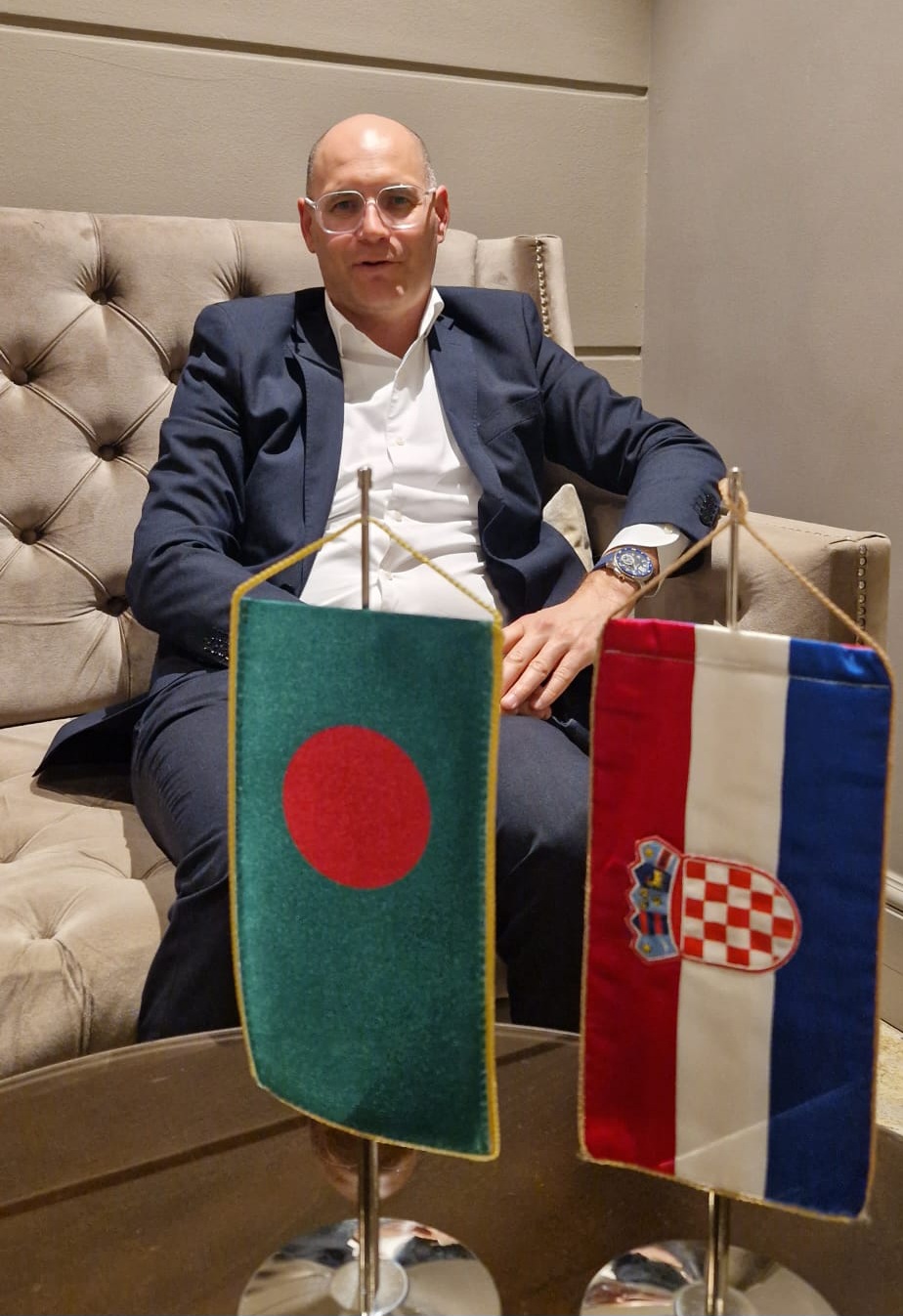
Croatia has consistently supported Bangladesh’s stability, economic development and efforts to strengthen trade and economic ties with Europe, according to Nenad Črnac, Honorary Consul of Bangladesh in Croatia. In an interview with Rafiqul Islam Azad of Sarabangla.net, Črnac said Bangladesh had made remarkable economic progress since independence, particularly through export-oriented industries such as textiles and garments, rising GDP per capita and poverty reduction.
He said Bangladesh’s graduation to the middle-income group reflected the results of long-term reforms, demographic advantages and deeper integration into global value chains.
Discussing the prospects for Bangladesh-Croatia relations, Črnac highlighted opportunities in trade, investment, migration, education, football, energy and logistics. He also pointed to Croatia’s Port of Rijeka as a potential gateway for Bangladeshi products to European markets.
He said several thousand Bangladeshis were already working in Croatia and that there was considerable scope for skilled Bangladeshi professionals to contribute to Croatia’s economy. He also expressed support for expanding scholarship opportunities for Bangladeshi students and cooperation in renewable energy and energy security. The full interview is given below:
Q: The Bangladesh Nationalist Party (BNP) secured a two-thirds majority in the parliamentary election held on February 12, 2026, and Tarique Rahman is now Prime Minister. How do you see Bangladesh-Croatia relations developing in the coming days?
Nenad Črnac: Croatia and Bangladesh have maintained diplomatic relations since 1997, and the opening of Bangladesh’s Honorary Consulate in Zagreb in 2023 marked a new phase of practical cooperation. It is particularly encouraging that during the recent UN General Assembly in New York, Croatian Prime Minister Andrej Plenković held a bilateral meeting with Bangladesh’s Prime Minister Tarique Rahman. This demonstrates goodwill on both sides and a shared interest in developing long-term and stable cooperation.
Regardless of Bangladesh’s internal political changes, Croatia consistently supports stability, economic development and stronger trade ties with Asian partners. I expect that, with continuity in foreign policy, cooperation in trade, logistics, information technology, agriculture and education will intensify. The Port of Rijeka could also play an important role as a potential distribution hub for Bangladeshi goods entering the European market and the wider region.
Q: Bangladesh has entered the middle-income group this year. How do you assess Bangladesh’s economic development over the past 54 years?
Nenad Črnac: Bangladesh has achieved remarkable economic progress since independence, particularly through export-oriented industries, especially textiles and garments, rising GDP per capita and significant poverty reduction. Its progress towards middle-income status is the result of long-term reforms, a demographic dividend and successful integration into global value chains.
Since my appointment and the more active work of the consulate, considerable progress has already been made in bringing the two economies closer. This is not limited to Croatia and Bangladesh, but also forms part of a broader rapprochement between Bangladesh and the European Union.
The trade gap, which was negligible before my arrival, has now grown by tens of millions of euros. Our objective is to use Croatia as a gateway to facilitate the entry of Bangladeshi products into the European Union. Through projects we are advancing jointly with chambers of commerce and businesses, I believe bilateral trade can increase significantly over the next five years.
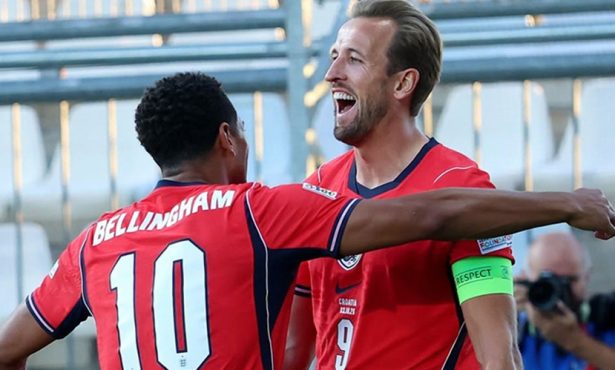
Q: Croatia has achieved remarkable success in world football. How can Croatia help Bangladesh improve football in the country?
Nenad Črnac: Croatia has a well-established football system, from youth academies and coaching to infrastructure and player development. It also has extensive experience in organising major competitions. There are several practical areas where Croatia can assist Bangladesh. These include exchanges of coaches and fitness experts, summer training camps for young Bangladeshi players in Croatia, and training programmes for coaches and referees.
Croatian experts could also provide advisory support for developing football academies and improving league structures. There is further potential for cooperation between clubs, friendly matches and joint projects involving the football federations of the two countries.
Q: What is the current volume of trade between Bangladesh and Croatia? What target do you have for bilateral trade over the next five years?
Nenad Črnac: According to available data, Bangladesh’s annual exports to Croatia are currently worth approximately US$15-20 million, mainly consisting of garments and textiles. Croatia’s exports to Bangladesh are estimated at around US$5-7 million, including chemicals, machinery and electrical equipment. Other sources indicate a similar level of overall trade, at around €30 million, although there remains considerable untapped potential.
Our goal over the next five years should be to multiply bilateral trade. Bangladesh has strong potential to increase exports of garments, pharmaceuticals, leather goods and jute products to Croatia and the wider European region. At the same time, Croatia can expand exports of food products, chemicals, machinery, IT solutions and other services to Bangladesh. Better logistical connectivity, particularly through the Port of Rijeka, could significantly support this process.
Q: The BNP government is working to improve the business environment in Bangladesh. What are your observations in this regard?
Nenad Črnac: Bangladesh continues to make efforts to improve its business environment by simplifying procedures, providing incentives for exporters, developing special economic zones and expanding digital services. As someone who regularly speaks with Croatian entrepreneurs, I see growing interest in Bangladesh, particularly in information technology, food processing, logistics and renewable energy.
To attract more foreign investment, however, it will be important to ensure predictable regulations, faster customs procedures and greater transparency. These factors are crucial for businesses when making long-term investment decisions.
Q: Croatia has a population of fewer than four million. Do you see prospects for skilled Bangladeshis to migrate to Croatia in the coming days?
Nenad Črnac: Croatia has fewer than four million inhabitants and faces significant demographic challenges. This creates opportunities for attracting foreign workers, particularly skilled professionals. Several thousand Bangladeshi workers already live and work in Croatia. Diplomatic sources estimate that their number could be as high as 10,000.
I believe the most promising area for future migration is the skilled workforce, particularly in information technology and other knowledge-based sectors. Bangladesh has a large pool of young and capable professionals who can contribute to Croatia’s economy.
Q: The European Union, the United States and Canada have imposed sanctions on Russia, while Russia has imposed counter-sanctions on Western countries. How do you see the impact of the Russia-Ukraine war on Bangladesh-Croatia business relations?
Nenad Črnac: The war in Ukraine and the resulting sanctions have affected energy prices, logistics costs and supply chains across Europe. Bangladesh has also been indirectly affected through higher import, transportation and insurance costs. As an EU member, Croatia has adapted its energy and logistics flows. The Port of Rijeka and the Adriatic transport corridor can provide alternative routes and help reduce dependence on more vulnerable or risky corridors.
For bilateral trade, the current environment makes supply-chain diversification increasingly important. Businesses will need more flexible contracts, diversified sourcing and greater use of euro-based transactions to reduce currency and sanctions-related risks.
Q: How many Bangladeshis are currently living in Croatia, and how do you evaluate their contribution to the Croatian economy?
Nenad Črnac: Available information indicates that several thousand Bangladeshis live and work in Croatia, with some estimates putting the number at around 10,000. They make an important contribution to the Croatian labour market, particularly in hospitality, construction, logistics and manufacturing. They help address labour shortages and support economic activity in several sectors.
It is important, however, to continue strengthening integration measures, language education and protection of workers’ rights. Ensuring decent working and living conditions will be essential to securing their long-term contribution to Croatian society and the economy.
Q: Croatia offers scholarships to students from developing countries. Can the Croatian government provide scholarships specifically for Bangladeshi students?
Nenad Črnac: Croatia already offers scholarships to students from developing countries through state programmes and university initiatives, while the number of English-taught study programmes is also increasing. I support establishing, in cooperation with the Ministry of Science and Education and Croatian universities, a dedicated quota or scholarship programme for Bangladeshi students.
Priority could be given to fields such as engineering, information technology, maritime studies, tourism and agriculture. Such a programme would contribute to the development of Bangladesh’s human capital while creating lasting educational and people-to-people links between the two countries.
Q: The US-Israel war against Iran and the Russia-Ukraine war have created uncertainty in the global energy market. Bangladesh has also faced the risk of an energy crisis. How can Bangladesh and Croatia cooperate to improve Bangladesh’s energy security?
Nenad Črnac: Global energy insecurity, driven by conflicts, geopolitical tensions and market disruptions, highlights the need for diversification of energy sources and greater investment in renewable energy. Croatia has valuable experience in developing solar and wind power, modernising electricity grids and improving energy efficiency. This experience could benefit Bangladesh through technical assistance, joint projects and exchanges between experts and institutions.
Croatia’s port and logistics infrastructure could also help facilitate the import of energy-related equipment and other essential supplies into Bangladesh. There may also be opportunities for cooperation in areas such as LNG, energy storage and related infrastructure. More broadly, cooperation in renewable energy and energy efficiency could help Bangladesh strengthen its energy security while supporting its long-term transition towards a more sustainable energy system.