Play store

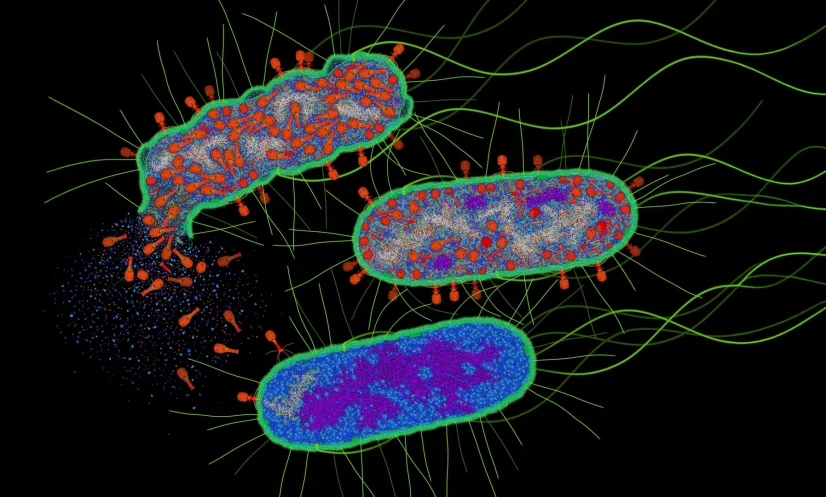
Scientists have discovered how bacteria detect attacks by viruses, a finding that could help researchers develop more effective treatments for antibiotic-resistant infections.
The study, published in the journal Science, found that certain viruses use an enzyme to cut a key protein inside bacterial cells, triggering an immune response that can stop the infection from spreading.
The research focused on bacteriophages, or phages, which are viruses that specifically infect bacteria. Scientists are exploring phage therapy as an alternative treatment for bacterial infections, particularly those resistant to antibiotics.
However, bacteria have their own defence systems that can block viral attacks, making it important for researchers to understand how these mechanisms work.
The team studied a bacterial immune system known as CBASS, which can cause an infected bacterial cell to destroy itself before the virus spreads to nearby cells.
Researchers found that some phages produce an enzyme called a protease, which breaks down proteins. When the enzyme cuts a specific protein in the bacterial cell, it acts as an alarm, activating the CBASS defence system.
“This is one of the most common forms of bacterial immunity, so when we finally figured it out, it was a total eureka moment,” said Sam Hobbs, an assistant professor of biochemistry at the University of Utah Health and the study’s lead author.
Unlike some immune systems that detect viral genetic material directly, CBASS can recognise an attack through the activity of a viral enzyme on a bacterial protein.
The discovery provides new insight into how bacteria defend themselves against viruses and could help scientists design therapeutic phages that better overcome bacterial defences.
The findings may also have implications for human immunity. CBASS is related to an immune pathway found in humans, suggesting that similar defence mechanisms have been preserved throughout billions of years of evolution.
Researchers say studying bacterial immune systems could help them better understand fundamental biological processes and guide future investigations into human immunity.
The study was supported by several scientific research organisations and funding bodies, including the US National Institutes of Health.