


 Play store

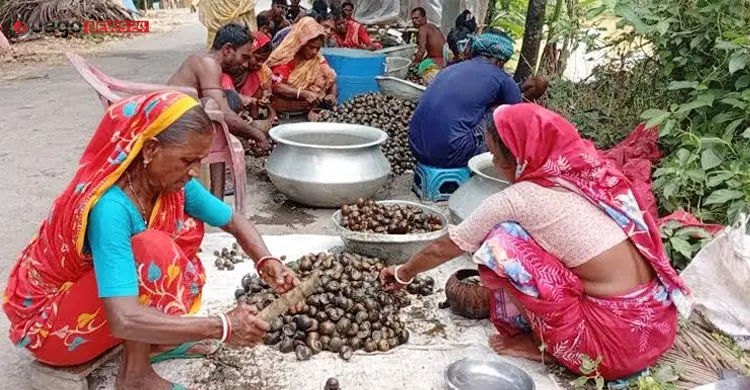
More than 300 impoverished families in Sharsha upazila of Jashore have turned to collecting snails from wetlands for a living amid a shortage of jobs and alternative employment opportunities.
Women, men and even children are wading into water bodies to collect snails throughout the day, earning just Tk7 per kilogram. The indiscriminate harvesting, however, is raising concerns over aquatic biodiversity and ecological balance.
A visit to different areas of Sharsha found low-income people collecting snails from canals, ponds and other wetlands in Dihi, Lakshmanpur, Bahadurpur, Sharsha Sadar and Nizampur unions. Some collect them on foot, while others use small boats. They gather the snails at designated local points in the afternoon and sell them to traders.
Collectors said an individual can gather between 30kg and 70kg of snails a day. Despite the effort, their earnings are barely enough to cover household expenses amid rising living costs. With few opportunities for agricultural work or other employment, many have little choice but to continue the work.
Joydeb Chakrabarty, a local collector, said the lack of agricultural work and other jobs during the rainy season had forced them to take up snail collection with the help of local traders. He said a collector could earn Tk400–500 a day.
Other collectors from Tebaria fishing village in Dihi Union and Potapara in Nizampur Union said they spent the morning collecting snails from nearby water bodies. The money they earned was often barely enough to provide food for their families.
Snail traders Kamal Hossain, Akram Ali and Nitya Mondal, from Swarupdaha in Sharsha, said two separate trader groups operating in northern and southern Sharsha were purchasing an average of around 200 maunds of snails daily from collectors in several unions. The purchase price is Tk7 per kilogram.
Trader Abdul Momin said around 20–25 traders of different sizes were involved in the business in the area. The wholesale trade typically continues for three to four months during the rainy season, with traders supplying collected snails to large wholesale markets in different districts.
He said the snails were sold to traders in Chenchuri-Kapalia in Khulna, where they were processed by machines and used as feed for shrimp and pangasius fish.
Traders said fewer families were collecting snails this year than in previous years because of lower water levels in canals and wetlands and skin irritation reportedly caused by contact with the water.
Sharsha Upazila Senior Fisheries Officer Palash Bala said snails played an important role in the natural purification of water bodies. By helping remove pollutants from water, they contributed to maintaining suitable habitats for aquatic organisms.
He warned that excessive snail harvesting or killing could seriously harm the environment and aquatic biodiversity. Authorities were working to discourage the practice and raise public awareness, he added.
Sharsha Upazila Nirbahi Officer Fazle Wahid said the administration was looking into reports of illegal snail and mussel collection in the area. Awareness campaigns would be conducted among residents and traders, and strict legal action could be taken against those involved if necessary, he said.
The growing dependence on snail collection highlights a difficult dilemma in Sharsha: impoverished families need income to survive, while excessive harvesting threatens the wetlands and aquatic resources on which the local environment depends.
Stakeholders say creating alternative employment opportunities for vulnerable families while protecting natural aquatic resources is essential to addressing the problem.