Play store

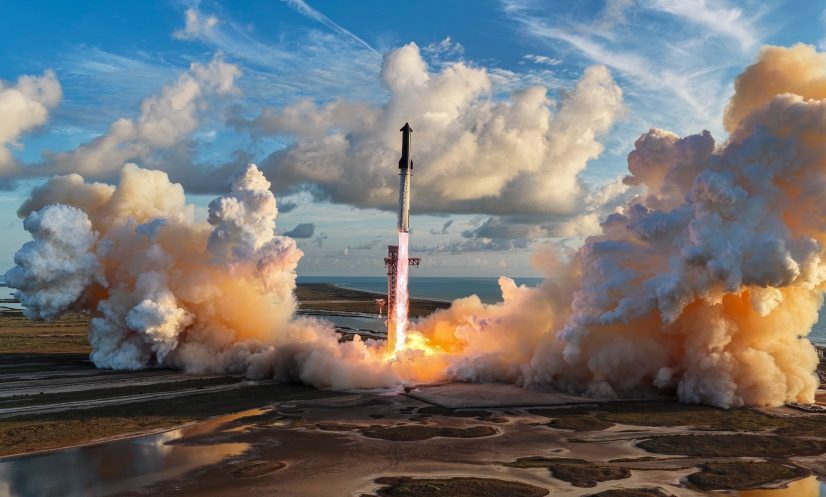
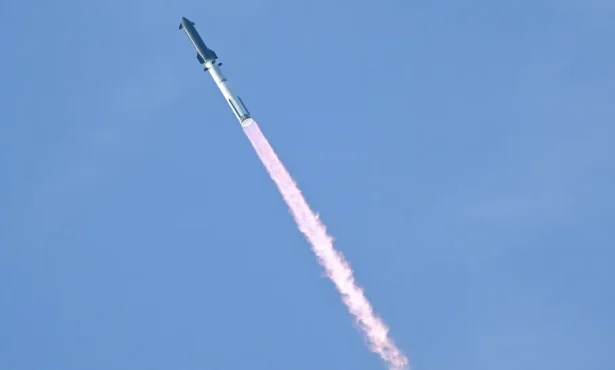
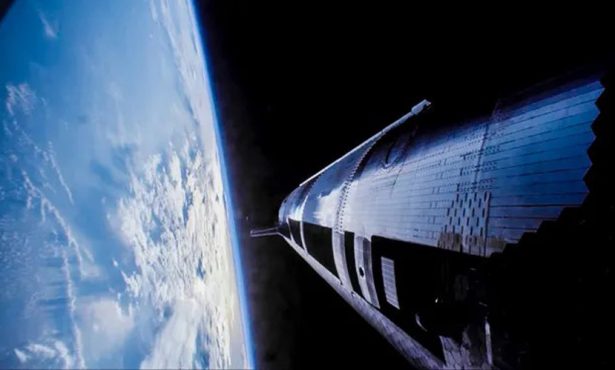
SpaceX’s Starship has reached orbit for the first time while carrying satellites for the company’s Starlink programme, marking a major milestone in the development of the world’s largest rocket system and raising questions about its future role in missions to Mars.
The milestone came on September 28, during Starship’s 14th test flight. The achievement came a decade after Elon Musk unveiled his vision of a giant spacecraft capable of transporting people to the Red Planet.
However, analysts remain divided over whether Starship’s growing role in deploying Starlink satellites is a stepping stone towards Mars exploration or could become a primary commercial purpose for the spacecraft.
Starship has undergone significant changes since Musk presented the Interplanetary Transport System (ITS) in 2016 at the International Astronautical Congress in Guadalajara, Mexico. The original design featured a carbon-fibre structure, which was later replaced by stainless steel.
SpaceX began testing early Starship prototypes in Texas in 2019, initially conducting short flights before moving on to high-altitude tests. Several prototypes were lost during testing, but the SN15 vehicle successfully landed in May 2021.
That same year, NASA selected Starship as the first crewed lunar lander for its Artemis programme, which aims to return astronauts to the Moon.
The complete Starship system, comprising the Super Heavy booster and the Ship upper stage, first flew in April 2023. The flight ended within minutes, but subsequent tests demonstrated steady progress.
Three more flights followed within a year. Although they reached space, the upper stages were lost during atmospheric re-entry.
In 2024, SpaceX demonstrated the transfer of liquid oxygen between tanks aboard a Starship vehicle, an important step towards developing the in-orbit propellant transfer technology needed for missions to the Moon and Mars.
The company also achieved controlled splashdowns of both rocket stages in June 2024. In October that year, it made another breakthrough by catching a returning Super Heavy booster with the mechanical arms of its launch tower.
Progress was not always smooth. Following a successful booster catch in January 2025, a series of upper-stage failures disrupted the programme, including an explosion during ground testing in June.
A successful test flight in August 2025 helped restore momentum. SpaceX subsequently completed flights using the older design before introducing the first Starship V3 vehicle in May 2026. Another V3 vehicle flew in July, followed by the September 28 mission.
Despite the latest achievement, major technical challenges remain before Starship can carry people to Mars. These include reliable re-entry and recovery, orbital refuelling and the development of systems capable of supporting astronauts on long-duration interplanetary journeys.
For now, the rocket’s role in deploying Starlink satellites could provide SpaceX with a practical use for Starship while the company continues to develop the technologies required for its longer-term lunar and Martian ambitions.