Play store

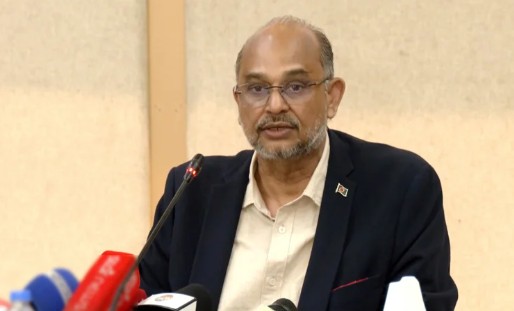
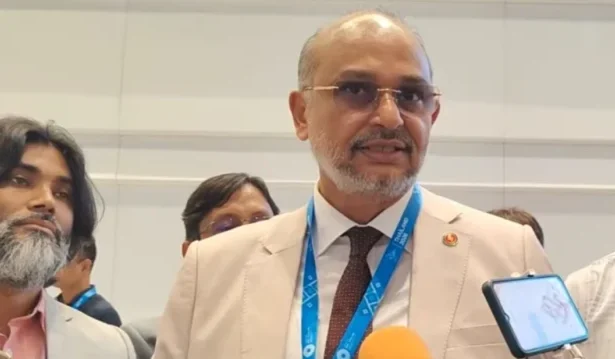
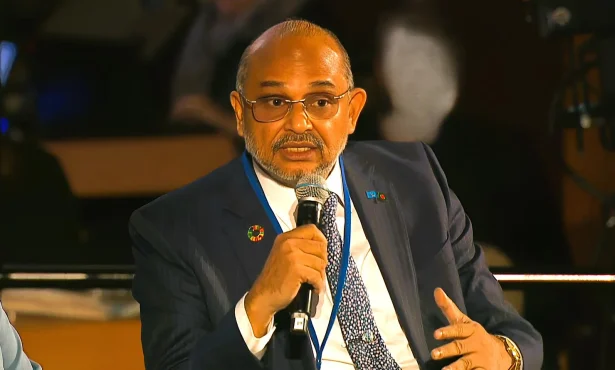
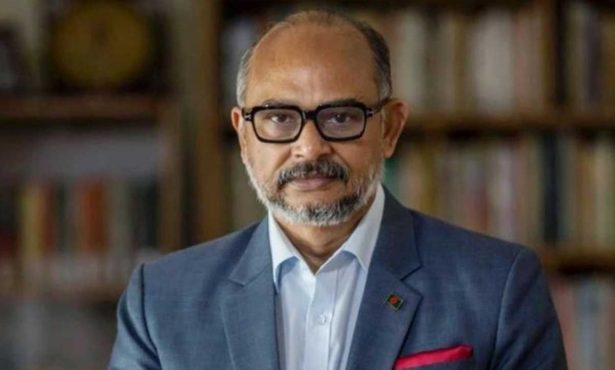
DHAKA: Job creation, poverty alleviation, stronger social protection and increased investment in productive sectors are at the centre of the government’s economic reform programme, Prime Minister’s Adviser on Finance and Planning Dr Rashed Al Mahmud Titumir said on Monday.
He said the government was working to move Bangladesh forward amid a fragile inherited economy, high inflation, unemployment and an energy crisis triggered by the conflict in the Middle East.
Titumir made the remarks as the chief guest at the inauguration of the Environmental, Social and Governance (ESG) Platform of the Bangladesh Garment Manufacturers and Exporters Association (BGMEA) in the capital.
BGMEA President Mahmud Hasan Khan chaired the programme, attended by Policy Exchange Bangladesh Chairman and Chief Executive Officer Dr M Masrur Reaz and Danish Ambassador to Bangladesh Christian Brix Møller as special guests.
Titumir said Bangladesh had overcome major economic crises at different points in its history by creating new sources of income and employment.
Referring to the period after 1975, he said Shaheed President Ziaur Rahman had taken initiatives to generate new sources of income and employment amid a war-ravaged economy, famine, high inflation and an energy crisis.
“Later, during the tenure of former prime minister Begum Khaleda Zia, greater participation of women in the formal labour market helped advance poverty alleviation,” he added.
The adviser said creating employment opportunities for the country’s young and educated population remained a major challenge.
Women account for a significant share of people who are outside employment, education and training, underscoring the need to create more jobs and expand the participation of women and young people in economic activities, he said.
Titumir said the government had taken initiatives to waive agricultural loans, introduce Family Cards and increase spending on education and healthcare since assuming office. These programmes would help ease the cost-of-living pressure on low-income people and strengthen social protection, he added.
Citing assessments by independent research institutions, he said implementing the Family Card programme over five years could significantly reduce poverty. He also referred to the large number of people who had fallen below the poverty line because of inadequate measures under the previous government.
On economic growth, Titumir said international organisations had issued differing forecasts for Bangladesh. The International Monetary Fund’s projections generally remained lower than those of the Asian Development Bank, while the World Bank’s forecasts tended to fall between the two.
However, the implementation of reforms would play a crucial role in determining the country’s growth trajectory, he said.
Regarding Bangladesh’s graduation from the least developed country (LDC) category, Titumir said discussions were progressing at relevant international forums on a proposal to extend the country’s preparation period.
He said the government was prioritising preparations by domestic industries and the wider economy, taking into account the lack of adequate preparation in the past. He thanked Denmark, the European Union and other development partners for their support on the issue.
The adviser identified five priorities for creating an investment-friendly environment: policy continuity, an improved business climate, greater access to finance, energy security and uninterrupted connectivity for transporting goods.
He said the government had taken steps to ensure continuity in tax policy for five years. It had also announced a Tk 60,000 crore support package to reopen closed industrial units, under which loans would be offered at interest rates below the inflation rate, he added.
To strengthen energy security, the government had undertaken initiatives to expand renewable power generation, explore new gas fields, increase supplies of liquefied natural gas (LNG) and liquefied petroleum gas (LPG), and install floating storage and regasification units (FSRUs), Titumir said.
On connectivity, he said the government was working to accelerate freight transportation, improve railway services and develop transport infrastructure between Chattogram and Dhaka. These initiatives were expected to be completed by 2029, he added.
Titumir said greater investment in productive sectors would create jobs and help increase domestic resource mobilisation without raising tax rates. This would also enable higher spending on education and healthcare, support the development of a skilled workforce and improve public health, he said.
Praising the BGMEA initiative, the adviser said adherence to environmental, social and governance standards would improve transparency, efficiency and competitiveness in the industrial sector.
“Such initiatives could also strengthen the global market acceptance and competitiveness of Bangladesh’s manufacturing sector,” he added.