Play store

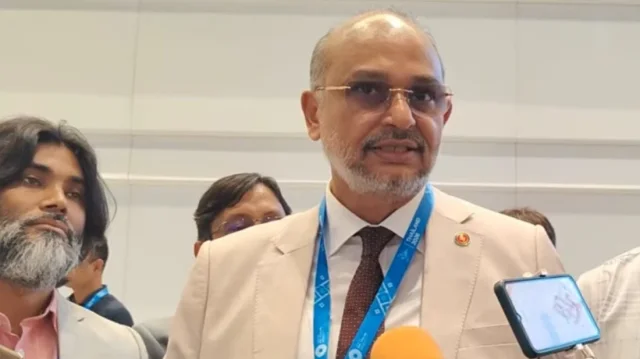
Md. Mohsin Hossain from Bangkok: The government’s Family Card programme could reduce Bangladesh’s poverty rate by five percentage points, Prime Minister’s Adviser on Finance and Planning Dr Rashed Al Mahmud Titumir has claimed, saying the initiative has received praise from the World Bank and the International Monetary Fund (IMF).
He said the Family Card and Farmer Card programmes would play an important role in protecting low-income households and workers struggling with prolonged inflation and the economic fallout from the Middle East crisis.
Titumir outlined Bangladesh’s economic situation during discussions with development partners on the sidelines of the annual meetings of the World Bank and the IMF in Bangkok, Thailand, on Friday. Inflation, rising energy costs, revenue mobilisation, banking sector reforms and employment generation featured prominently in the discussions.
He said ordinary people, particularly low-income households and wage earners, had been bearing the brunt of persistent inflation inherited from previous years and the ongoing crisis in the Middle East. The government was strengthening social protection measures to ease their hardship, he added.
Under the Family Card programme, the government aims to support poor households, while the Farmer Card initiative is intended to strengthen farmers’ productive capacity. The broader objective is to assist people who have fallen below the poverty line because of prolonged inflation and prevent more households from slipping into poverty, Titumir said.
Citing projections by independent research organisations, the adviser claimed that the Family Card programme could reduce poverty by five percentage points. However, he did not identify the research organisations or disclose the methodology behind the estimate. He also said the Asian Development Bank (ADB) viewed similar programmes as an effective approach.
Titumir criticised previous social safety net programmes, saying weaknesses in beneficiary selection had prevented assistance from reaching many people who genuinely needed it. At the same time, some people who did not require support had been included on beneficiary lists, he said.
He claimed that around eight million people had fallen below the poverty line under previous governments, describing the Family Card and Farmer Card programmes as important measures to address the situation.
On rising fuel and electricity costs, Titumir said the government had tried to exercise restraint in adjusting energy prices to prevent further increases in the cost of living. He said the government had to balance the cost of importing fuel, liquefied natural gas (LNG) and fertiliser against the potential impact on agriculture, transport and household expenditure.
Responding to the IMF’s recommendations on revenue reforms and increasing the tax-to-GDP ratio, Titumir said boosting revenue collection was already a commitment in the government’s election manifesto.
He attributed the historically weak revenue performance to tax exemptions, tax evasion and a culture of political patronage, which he said had prevented collections from rising to the desired level.
The government had formed a task force to strengthen revenue mobilisation, and progress was becoming visible, he claimed. Revenue growth stood at 3% during the last fiscal year under the interim government but rose to between 12% and 13% after the current government took office in mid-February, through June 30, he said.
“We are moving away from the culture of patronage. We are moving away from tax evasion and tax fraud. Trust is built through action,” Titumir said.
On banking sector reforms, he said Bangladesh might need around US$40 billion to address the crisis caused by the alleged looting of funds from banks in previous years. He questioned why ordinary citizens should have to bear the cost of resolving a crisis arising from such irregularities.
Referring to efforts to restore depositors’ confidence in Sammilito Islami Bank, Titumir claimed that depositors had been able to withdraw the money due to them since September 1. Measures were also being taken under the Resolution Act to address irregularities and alleged embezzlement at other banks, he said.
Restoring discipline in the banking sector and protecting depositors’ interests were among the government’s key reform priorities, he added. He also cited falling interest rates on treasury bonds as a possible sign that banks were gradually returning to normal operations.
Titumir said employment generation was another central component of the government’s economic strategy, alongside poverty reduction and efforts to address the banking sector crisis.
He said the prime minister wanted to transform Bangladesh into a manufacturing hub and an export gateway. Expanding production and exports would help create new employment opportunities, he added.
According to Titumir, the Family Card programme, efforts to improve agricultural productivity through the Farmer Card, measures to restore confidence in banks and initiatives to generate employment were interconnected elements of the government’s economic agenda.
“We must remember that no more people should fall below the poverty line,” he said.
He added that the government was working to ease public hardship amid global uncertainty and weaknesses inherited from previous years, while strengthening social protection and expanding production, exports and employment to support economic growth.