


 Play store

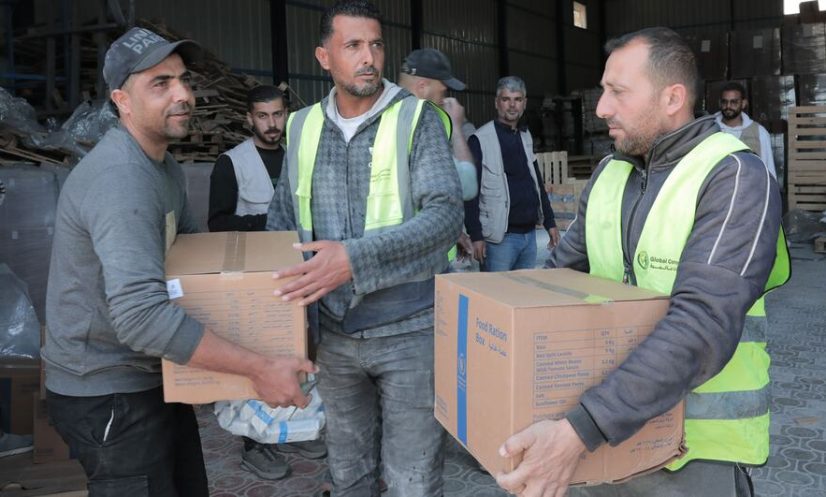
Funding shortages have forced the World Food Programme (WFP) to cut food assistance in the Gaza Strip by about one-third, affecting around 500,000 people as winter approaches and hunger remains widespread across the war-ravaged enclave.
The UN agency announced on Monday that it was reducing assistance because of dwindling resources, warning that progress in tackling food insecurity could quickly be reversed if humanitarian funding continued to decline.
WFP said its food assistance had provided a lifeline for up to 90 per cent of families in Gaza over the past three years.
Since the ceasefire agreement between Israel and Hamas in October 2025, its teams have reached around 1.6 million people each month with food parcels, wheat flour, bread, hot meals, nutrition support, school snacks and cash assistance.
“Improved humanitarian access and delivery of assistance since October 2025 have helped reduce food insecurity, but these gains remain fragile and could quickly be reversed if humanitarian funding continues to decline,” the agency warned.
This month, WFP is supporting 1.1 million of the most vulnerable people in Gaza, down from 1.6 million in September.
Food rations have been halved, with families receiving one food parcel instead of two, alongside a smaller bag of wheat flour. The value of cash assistance for 75,000 families has also been reduced.
The number of hot meals distributed daily across Gaza will fall from 250,000 to 150,000.
Families living in hard-to-reach areas, including locations near the “yellow line” marking Israeli military control, will receive a hot meal every other day instead of daily, WFP said.
Despite the cuts, the agency is continuing to support bakeries that meet about one-third of Gaza’s bread needs. It is also providing nutrition assistance to 300,000 women and children and healthy school snacks to 200,000 students.
The reductions come at a critical time for Gaza, where more than 80 per cent of the population is unemployed, leaving many families unable to afford fresh produce or protein-rich food even when supplies are available.
Around 67 per cent of Gaza’s population, an estimated 1.4 million people, are experiencing acute food insecurity at crisis levels or worse, according to WFP.
Although the proportion has fallen from 77 per cent at the end of 2025, the agency warned that the improvement remained modest and fragile.
Some 200,000 people remain in emergency conditions, requiring immediate food assistance to prevent deaths from hunger.
Child nutrition is also a major concern. Only one in five children consumes a sufficiently diverse diet, while access to healthcare and other essential services remains limited.
With winter approaching, WFP said additional funding was urgently needed to sustain emergency food assistance, provide critical engineering support and prevent malnutrition among young children and pregnant and breastfeeding women.
Funding for the agency’s operations in Palestine in 2026 has fallen to less than half the level received in previous years. WFP urgently needs US$450 million to maintain critical operations in Gaza and the West Bank through March.
The funding shortfall has also affected assistance in the West Bank, where the number of people receiving support was cut by half in September, from 400,000 to 200,000.
WFP warned that without additional resources, further reductions could undermine efforts to address hunger and protect vulnerable families across the Palestinian territories. Source: UN News