Play store

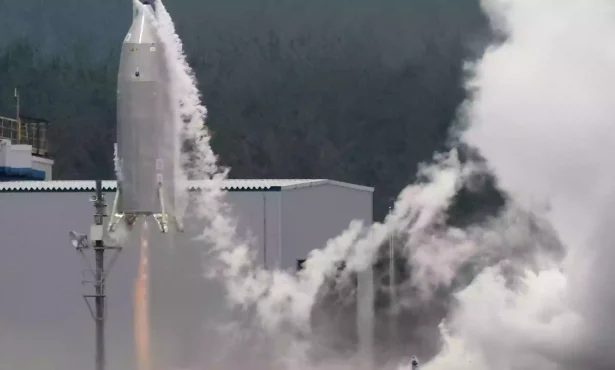
China has successfully tested a sea-based rocket booster recovery system, marking a major step toward developing reusable space launch technology and narrowing the gap with global leaders.
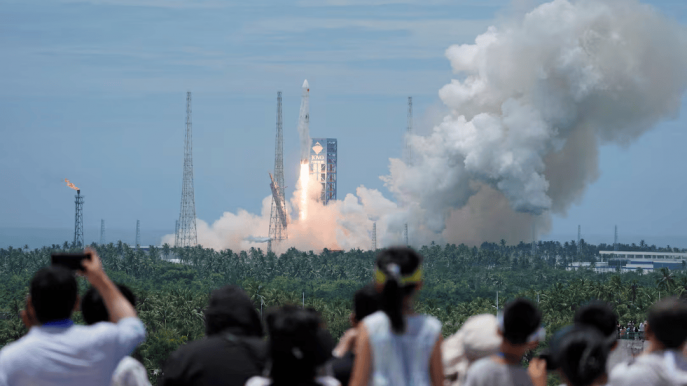
The Long March 10B rocket was launched on July 10 from the Hainan commercial space launch site in southern China.
About six minutes after liftoff, its booster separated from the upper stage and made a controlled vertical return, where it was successfully captured using a net mounted on an offshore platform, according to state broadcaster CCTV.
This is China’s first successful recovery of an orbital-class rocket booster, a breakthrough that could significantly reduce launch costs and improve efficiency in its rapidly expanding space programme.
The rocket also successfully placed a satellite into its designated orbit during the mission.
Unlike SpaceX’s Falcon 9, which lands autonomously on a pad or drone ship using landing legs, China’s system uses “landing hooks” to catch a suspended net.
Experts say this method reduces onboard weight and increases payload capacity, while also allowing greater flexibility in landing precision.
The Long March 10B, developed by the China Academy of Launch Vehicle Technology (CALT), is designed to carry payloads of at least 16 metric tons to low-Earth orbit and is being positioned as a competitor to leading reusable rockets.
China has spent nearly a decade developing reusable rocket capabilities, and this milestone is expected to accelerate its ambitions in commercial satellite deployment and future crewed lunar missions planned before 2030.
Authorities said the recovered booster could be reused for another launch by the end of this year, highlighting China’s growing focus on cost-effective and sustainable space operations.