


 Play store

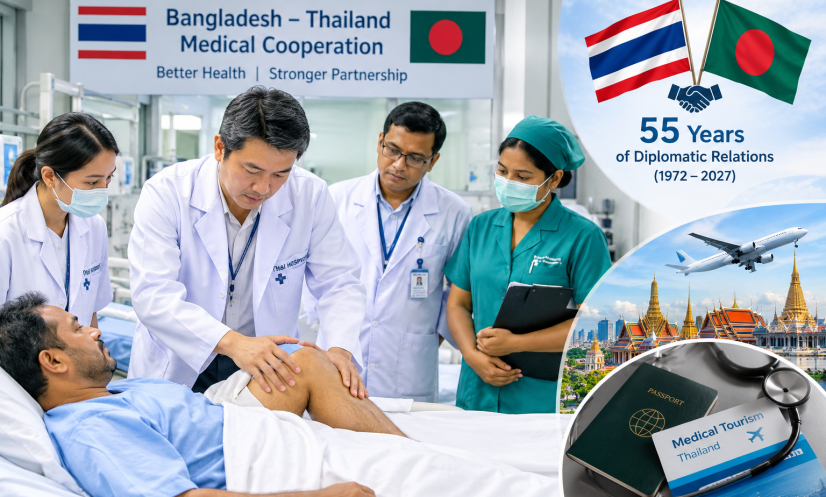
DHAKA: A team of Thai doctors from reputed hospitals will treat around 55 patients at the National Institute of Traumatology and Orthopaedic Rehabilitation (NITOR) in Dhaka next month as part of medical cooperation marking the 55th anniversary of diplomatic relations between Bangladesh and Thailand, Foreign Ministry officials said.
A preliminary delegation of Thai medical specialists is scheduled to arrive in Dhaka on November 2 to assess patients and review the situation at NITOR. The main medical team is expected to arrive on November 4 and perform surgeries in consultation with the institute’s doctors, sources said.
The initiative is expected to provide specialised orthopaedic treatment to patients while creating opportunities for Bangladeshi doctors and nurses to learn from Thai specialists and improve their clinical skills.
Bangladesh and Thailand established diplomatic relations on October 5, 1972, following Bangladesh’s independence on December 16, 1971. The upcoming anniversary in 2027 will mark 55 years of formal diplomatic ties between the two countries.
The medical initiative also follows Bangladesh’s experience of seeking specialised treatment abroad for people seriously injured during the July-August 2024 mass uprising. The interim government led by Professor Muhammad Yunus arranged treatment for a number of severely injured patients at hospitals in Thailand.
Thailand is widely known as a destination for specialised healthcare and medical tourism, attracting patients from Bangladesh and other countries. Cooperation between Thai surgeons and NITOR’s medical team is expected to support patient care and promote professional knowledge-sharing.
A professor at NITOR said the involvement of Thai orthopaedic surgeons could help Bangladeshi medical professionals improve their skills through collaboration and exposure to different treatment approaches. However, the names of the participating Thai hospitals and further details about the patients and planned procedures were not immediately available.
The planned initiative comes amid continuing demand among Bangladeshis for medical treatment overseas. Thailand, Malaysia and Singapore are among the destinations chosen by patients seeking specialised services, while India remains a major option because of its geographical proximity and range of hospitals.
An estimated 150,000 to 200,000 Bangladeshis visit Thailand annually, according to figures cited by sources familiar with travel to the country. The number travelling specifically for medical treatment, however, was not available.
Bangladeshis seek treatment abroad for a range of conditions, particularly complex heart disease, neurological disorders and eye problems. Patients may also travel for specialised surgery and treatment that they believe is unavailable or difficult to access at home.
The availability of Indian visas has become a concern for some Bangladeshi patients since former prime minister Sheikh Hasina left office in August 2024, prompting some to explore alternative destinations, including Thailand. The number of patients who have shifted from India to Thailand has not been independently established.
Medical treatment abroad can place a substantial financial burden on patients and their families. Hospital charges, travel, accommodation, visa fees and the expenses of accompanying relatives can significantly increase the total cost.
Treatment in Singapore, Thailand and Malaysia can be several times more expensive than comparable services in Bangladesh, although costs vary widely according to the hospital, medical condition and procedure. Treatment at major hospitals in Indian cities such as Mumbai, New Delhi, Hyderabad and Chennai can also be costly.
The growing demand for overseas healthcare has renewed questions about the quality, accessibility and capacity of Bangladesh’s own health services.
Dr Syed Abdul Hamid, a professor at the Institute of Health Economics at the University of Dhaka, said the country’s healthcare sector had long been neglected and required stronger management, better medical services and sustained investment in professional development.
“Health sector is neglected in Bangladesh, and better health management and Medicare, higher training of physicians, nurses and technicians and commitment on the part of the government can help improve health system in the country and rein in the tendency of patients going abroad,” he said.
Hamid has 23 years of experience in teaching and research in health economics and has published widely in peer-reviewed international journals.
He said improvements in healthcare management, medical training and service delivery could help strengthen the domestic health system and reduce the need for patients to seek treatment abroad.
The proposed treatment programme at NITOR offers an opportunity to combine immediate medical assistance with professional cooperation. Its longer-term value will depend not only on the treatment provided to the 55 patients but also on whether the exchange helps strengthen local expertise and improve access to specialised care.
As Bangladesh and Thailand approach the 55th anniversary of their diplomatic relations, cooperation in healthcare could become an important part of their bilateral engagement, benefiting patients while supporting the development of Bangladesh’s medical workforce.