Play store

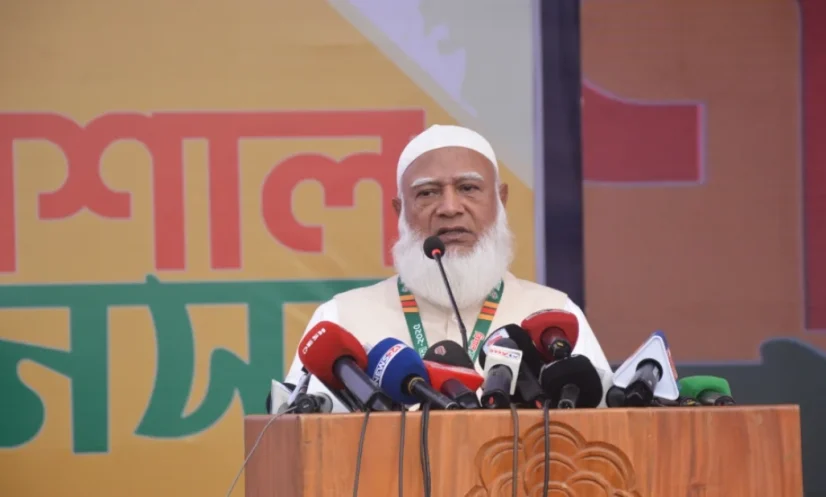
Opposition Leader and Bangladesh Jamaat-e-Islami Ameer Dr Shafiqur Rahman has accused the government of trying to divert public attention by shifting the blame for its administrative and political failures onto the opposition.
He made the remarks as the chief guest at a discussion organised by Bangladesh Jamaat-e-Islami at the Kazi Nazrul Islam Auditorium of the National Press Club on Sunday (October 25), marking the anniversary of the signing of the July Charter.
Dr Shafiqur Rahman said the government must take responsibility for its failure to curb extortion and land grabbing, rising pressure from commodity prices, deterioration in law and order, and its inability to meet public expectations.
He said the resignation of a lawmaker accused of extortion might be an attempt to regain public support, but resignation alone could not bring the matter to a close. The person concerned must be brought under the law, he added.
He said the expectations that emerged after the end of prolonged authoritarian rule on August 5, 2024, centred on building a Bangladesh free from discrimination and based on justice. However, those expectations remained unfulfilled, while shortcomings in ensuring justice persisted and inequality continued to grow.
The aspirations for which young people sacrificed their lives must be reflected in reality, he said.
On the July Charter and constitutional reform, the Jamaat chief said discussions involving political parties and civil society representatives over more than seven months had produced consensus on most issues. Although differences remained on some matters, an opportunity had emerged to implement the charter.
However, disagreements later arose over the sequencing of elections and reforms. Jamaat’s position was that necessary reforms should be completed before parliamentary elections. He alleged that the decision to hold two elections or processes on the same day had blurred the distinction between the issues.
Although constitutional amendments were being discussed, he said, there were attempts to sidestep essential reforms. If consensus was needed on constitutional amendments, the relevant committee should sit with opposition representatives to discuss the matter.
He stressed that the parties concerned must fulfil their commitments to the public. Citing instances in which constitutional amendments had later been struck down by courts, he warned against pursuing a process that could ultimately undermine reform through legal complications.
Dr Shafiqur Rahman also urged political parties not to forget the history of past movements and political change, recalling the struggles to secure the right to hold rallies, organise demonstrations and exercise political freedoms.
He alleged that the government was trying to create a new narrative against the opposition to conceal its own failures. Rather than ensuring accountability for shortcomings in governance, he said, the authorities were blaming opposition parties.
Questioning why the opposition should bear responsibility for the government’s failure to meet public expectations, he said responsible leadership required the government to acknowledge its mistakes and take corrective measures.
Commenting on the role of political parties, he accused the Bangladesh Nationalist Party (BNP) of placing leaders and activists of the Awami League and its affiliated organisations in important positions.
He also questioned the government’s ability to address allegations of money entering the country from across the border and attempts to create instability. If weapons and drugs were entering through the border, he said, it was the government’s responsibility to prevent their entry and take effective action to tackle such threats.