Play store

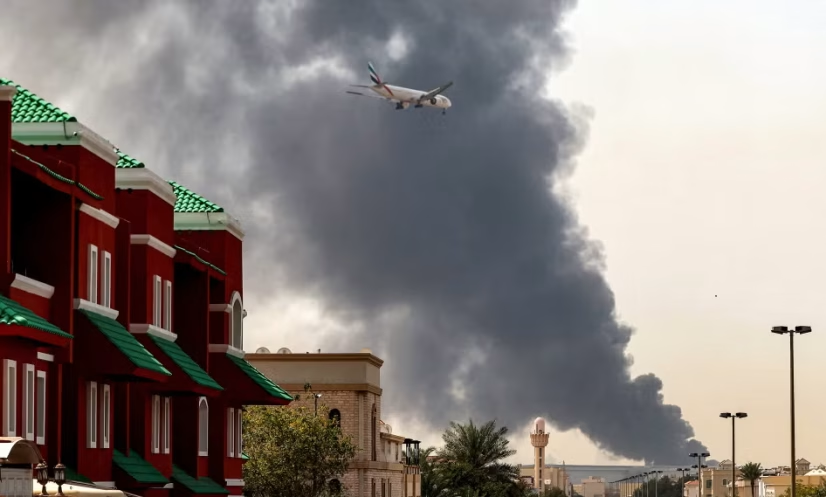
The United States and Iran exchanged fresh military strikes over the weekend, sharply escalating tensions in the Gulf and raising fears of a broader regional conflict after a fragile ceasefire collapsed.
The latest escalation began after the United States launched a new round of airstrikes against Iranian military targets, saying the operation was in response to attacks on international shipping and threats to freedom of navigation in the Strait of Hormuz. According to the US military, around 140 Iranian military targets have been struck in successive operations aimed at degrading Iran’s missile, drone and naval capabilities.
Iran retaliated by launching missile and drone attacks targeting US military facilities and allied positions across the Gulf region, including sites in Jordan, Qatar, Kuwait, Oman and Bahrain, according to Iranian state media and regional reports. Air defence systems were activated in several countries as authorities intercepted a number of incoming missiles and drones.
The Iranian Islamic Revolutionary Guard Corps (IRGC) also announced the closure of the Strait of Hormuz “until further notice,” describing the move as a response to what it called US aggression. The strategic waterway handles a significant share of the world’s seaborne oil exports, and the announcement has intensified concerns over global energy supplies and shipping security. While Tehran insists the strait is closed, the United States says commercial shipping continues to transit the waterway under close monitoring.
The renewed fighting follows the breakdown of a ceasefire agreement reached in June. Both Washington and Tehran have accused each other of violating the truce, while diplomatic efforts led by regional mediators have so far failed to restore calm.
The latest exchange has triggered renewed volatility in global oil markets, with analysts warning that prolonged disruption in the Gulf could affect energy prices and international trade. Governments across the region have urged restraint while stepping up security around critical infrastructure and military installations.