Play store

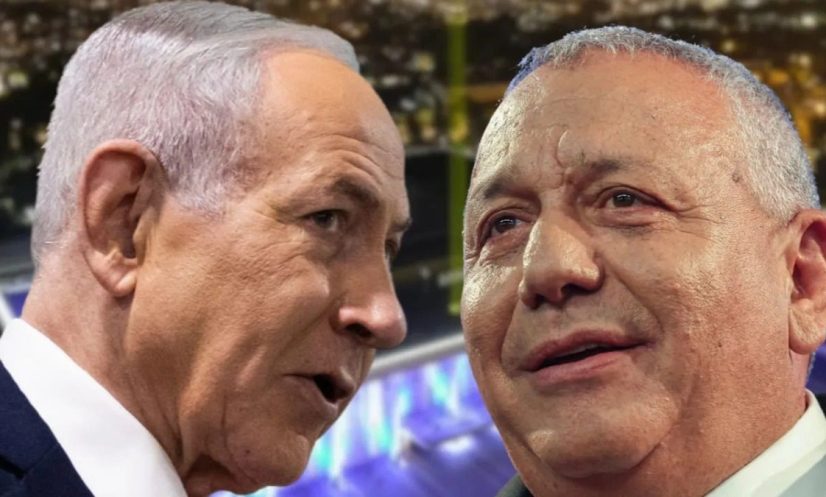
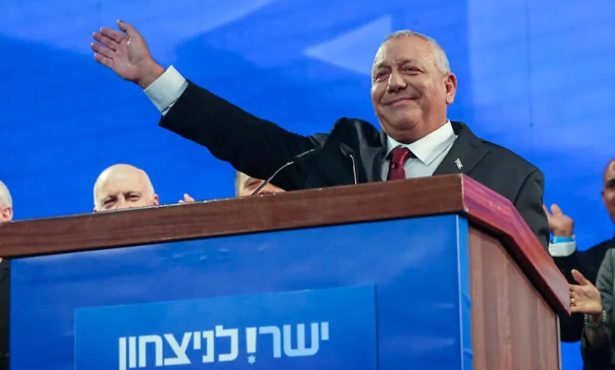
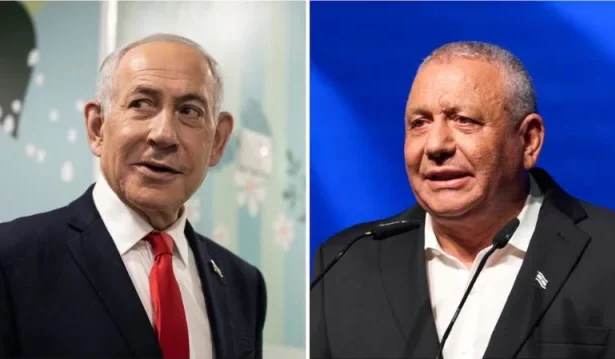
Israeli opposition leader Gadi Eisenkot is poised to receive a mandate to form a new government on Sunday, potentially ending Benjamin Netanyahu’s tenure as prime minister.
President Isaac Herzog announced the move after completing a week of consultations with parties expected to enter the new Knesset.
Eisenkot, leader of the Yashar party, secured 67 recommendations during the consultations, exceeding the 61 seats required for a parliamentary majority.
Herzog said he would formally assign the task to a candidate on Sunday. He also plans to hold additional meetings with party leaders over the weekend to ensure the formation of a stable government.
Eisenkot received recommendations from two Arab parties, Ra’am and the Joint List. However, their backing does not necessarily mean they will formally join his governing coalition.
When Herzog raised the possibility of a unity government including Netanyahu, representatives of Yashar said their priority would be to establish a national emergency government to address what they described as damage caused by the outgoing administration.
The political deadlock follows an election in which neither bloc secured the 61 seats needed for a parliamentary majority. Netanyahu’s coalition won 53 seats, while opposition parties secured 48. Arab parties Ra’am and the Joint List jointly won a record 19 seats.
All major opposition parties seeking to remove Netanyahu — Yashar, Naftali Bennett’s BeYachad, Yair Golan’s Democrats and Avigdor Lieberman’s Yisrael Beiteinu — recommended Eisenkot.
Netanyahu’s supporters included Likud, National Security Minister Itamar Ben-Gvir’s Otzma Yehudit, Finance Minister Bezalel Smotrich’s Religious Zionist Party, Moshe Feiglin’s Zehut and Aryeh Deri’s Shas.
However, Netanyahu’s longtime ultra-Orthodox ally, United Torah Judaism, declined to recommend any candidate, potentially weakening his position.
During consultations with Herzog, Ra’am leader Mansour Abbas said his party supported the complete disarmament of Hamas, one of four conditions Eisenkot has set for joining his coalition.
Responding to a question about whether Hamas should be designated a terrorist organisation, Abbas urged Israeli leaders not to portray Arab citizens as supporters of terrorism or traitors, saying they could serve as a bridge between communities.
The Arab party is seeking to establish itself as an acceptable partner in a future government. However, opposition leaders remain divided over cooperation with Arab parties.
Democrats leader Yair Golan has urged the opposition bloc to work with Arab parties to secure a 67-seat majority. Some other opposition figures, however, have maintained firm objections to forming a government with them.
During Thursday’s consultations, BeYachad lawmaker Merav Cohen ruled out a unity government with Netanyahu, telling Herzog, “You cannot do business with scorpions.”
Other opposition representatives also rejected cooperation with Netanyahu’s allies, citing ideological differences and the damage they believe his administration has caused.
During the final consultation with Herzog, Likud representatives argued that Netanyahu, as leader of the largest individual party, should receive the mandate to form the government.
Transport Minister Miri Regev also warned against forming a coalition dependent on the Joint List, accusing the party of supporting terrorism. Likud parliamentary whip Ofir Katz described the opposition’s proposed political change as one based on support for terrorism.
The mother of hostage Ran Gvili, who was killed during the conflict, also criticised opposition parties for seeking support from Arab lawmakers.
Meanwhile, Netanyahu’s allies and representatives of the outgoing coalition alleged that the election had been manipulated through foreign interference, including funding from Qatar and Turkey to influence voting in Arab-majority areas.
However, Israel’s Central Elections Committee has officially approved the election results and said there was no breach of electoral integrity.
Under Israeli law, the candidate nominated by the president will have 28 days to form a government, with a possible extension of up to 14 days.
If the first candidate fails, the president may assign the task to another lawmaker, who will receive 28 days without an extension.
If that attempt also fails, a 21-day period will begin during which at least 61 lawmakers can jointly recommend another candidate. That candidate will then have 14 days to form a government.
If all attempts fail, the Knesset will be dissolved and fresh elections will be held. The outgoing government will remain in a caretaker capacity until a new administration takes office.
President Herzog is expected to announce his decision on Sunday, but Eisenkot’s 67 recommendations do not automatically guarantee that he can assemble a functioning governing coalition.