Play store


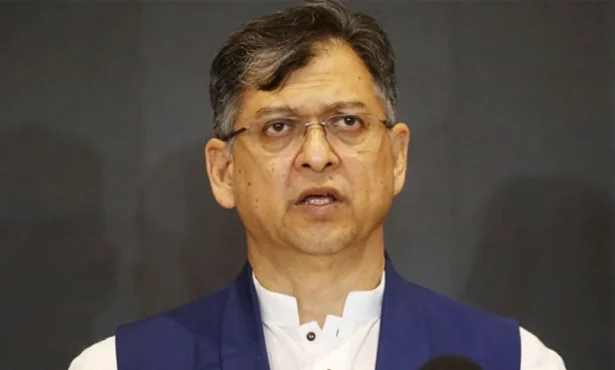
Home Minister Salahuddin Ahmed has said that isolated incidents such as cocktail explosions targeting a Dhaka University vehicle or arson attacks on a few abandoned vehicles should not be taken as evidence of a deterioration in the country’s law and order situation.
He said the situation should be assessed by comparing crime statistics with those recorded during the corresponding period of the previous year.
The minister made the remarks on Tuesday (November 10) in response to statements by Leader of the Opposition Dr Shafiqur Rahman and Opposition Chief Whip Nahid Islam during the second day of the fourth session of the 13th parliament.
Salahuddin said several incidents of cocktail explosions, vehicle arson and sabotage had taken place in different parts of the country over the past few days. Law enforcement agencies were taking action against those involved, he added.
He said seven cocktail explosion incidents had been reported across the country, with several suspects caught red-handed. In an incident near the Dhaka Chief Metropolitan Magistrate (CMM) Court, two of the three suspects were apprehended and handed over to police, while another managed to flee.
Referring to a cocktail explosion near the Business Faculty area of Dhaka University, the minister said such an isolated incident could not establish that the country’s law and order situation had deteriorated.
“Similarly, setting fire to an abandoned bus or a vehicle without a driver or helper under cover of darkness or in the early hours does not make the country’s political situation unstable,” he said.
He added that it would be unreasonable to portray the overall law and order situation as extremely alarming by combining a handful of such symbolic incidents.
Responding to the opposition leaders, Salahuddin welcomed their willingness to play an active role and said the government also wanted cooperation from the opposition.
However, he alleged that ousted fascist forces were conspiring to destabilise the country. Their associates operating from within the country were attempting to regroup, while possible support from across the border was also being examined, he said.
The government was investigating who was involved in the alleged activities and who was providing support, the minister added.
He also responded to an allegation by the opposition leader that a lawmaker had received a phone call from someone identifying himself as an intelligence agency official and advising him to leave his party. Salahuddin urged the opposition leader to provide the phone number and details of the message, saying the matter would be investigated.
The home minister further alleged that a blueprint had been prepared abroad to create unrest in the country’s garment sector, with investments also made by vested interests within Bangladesh. He said the government had successfully foiled the attempt.
According to him, law enforcement agencies handled the situation with restraint and avoided excessive force, despite provocation. Some members of the forces were themselves injured, he added.
Salahuddin said industrial police, regular police, Border Guard Bangladesh (BGB) and other agencies were working together in industrial areas, including Gazipur, Savar, Ashulia, Hemayetpur, Narayanganj and parts of Mymensingh.
The government was working to ensure uninterrupted industrial production and exports and prevent workers from becoming unemployed, he said.
He added that the government had held several rounds of discussions with factory owners, labour organisations and federation leaders, who had extended their cooperation. However, some miscreants and associates of the ousted regime had attempted to create unrest in industrial areas, allegedly with support from a number of factory owners.
Addressing factory owners, investors and international buyers in parliament, the minister assured them that the government would ensure a business-friendly environment and take firm action against any attempt to create instability.
On crime statistics, Salahuddin said the number of murders this year had declined by around 300 compared with the corresponding period last year, citing data published on the police website.
He referred to a newspaper report presented in parliament that mentioned 2,929 murders, although he said the figure might be 2,938. However, he argued that crime figures must be assessed against the previous year’s data to determine whether the situation had improved or deteriorated.
The minister said he would present detailed statistics in parliament the following day under Rule 300, using information published on the police website so that the figures could be independently verified.
Concluding his remarks, Salahuddin assured the nation that the government would not allow any conspiracy or blueprint, whether originating inside or outside the country, to be implemented.
He said the fall of fascism had resulted from a mass uprising and warned that any attempt to recreate conditions for its return would be exposed.