


 Play store

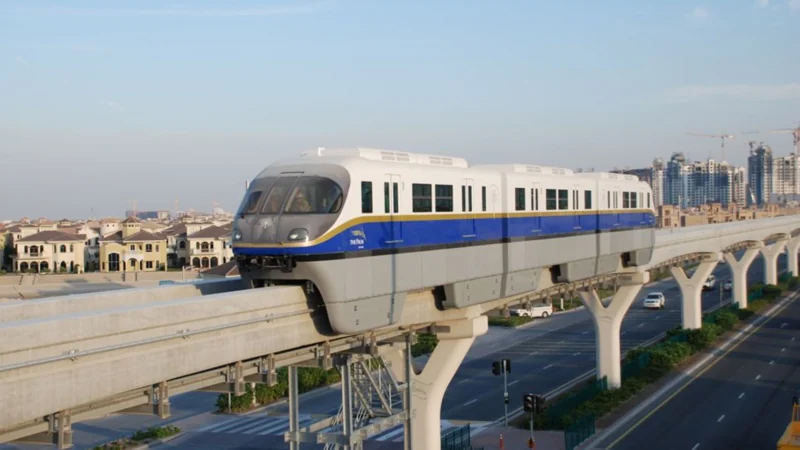
The government is moving ahead with plans to construct two monorail routes in Dhaka by 2030. A pre-feasibility study has already been completed, and detailed designs for the proposed routes are now being prepared.
Dr Md Mashiur Rahman, additional executive director of the Dhaka Transport Coordination Authority (DTCA), said the proposed monorail system would play an important role in expanding the capital’s public transport network.
As an environment-friendly, sustainable and efficient mode of transport, it would make commuting easier, particularly in areas with high passenger demand, he said.
He added that the proposed monorail routes would be integrated with existing and planned metro rail lines and other public transport systems. Such connections could be particularly important in facilitating last-mile connectivity for metro rail passengers.
Consultants from the Bangladesh University of Engineering and Technology (BUET) have already completed the pre-feasibility study, while work on the detailed designs is currently underway. The authorities plan to complete the work within the stipulated timeframe.
The final two routes will be selected based on technical, economic and environmental assessments, with particular consideration given to passenger demand, potential benefits and financial viability.
The DTCA has assessed passenger demand in different parts of the capital through model-based traffic surveys. The data have been handed over to BUET consultants for analysis, Mashiur Rahman said.
He said the DTCA had signed a consultancy agreement titled “Consultancy Service for Pre-Feasibility Study of Monorail Alignment Integration with Mass Transit Networks in Dhaka Metropolitan Region” to assess the feasibility of monorail routes and their integration with the public transport network across the Dhaka metropolitan area.
The Bureau of Research, Testing and Consultation (BRTC) of BUET has completed the pre-feasibility study. Under the agreement, the detailed designs are expected to be submitted within the next six months.
According to project-related documents, the government has allocated Tk 7.57 crore from the revenue budget for the pre-feasibility study and preparation of detailed designs for the two proposed monorail routes.
The main objective of the study is to assess the feasibility of introducing a monorail-based public transport system in Dhaka and identify ways to ensure its effective integration with existing and planned metro rail lines and other public transport networks.
The updated Revised Strategic Transport Plan (RSTP) has proposed five monorail routes spanning approximately 79.4 kilometres. The plan envisages selecting one priority route within three months and completing the overall study within six months.
Five routes have initially been identified, particularly in areas where bus feeder services connecting passengers to the mass rapid transit (MRT) lines are limited.
The proposed routes are:
– Airport-Bashundhara via Purbachal and Jolshiri: 25.2 kilometres
– Madhya Badda-Bhulata: 14.6 kilometres
– Rampura-Demra: 10.3 kilometres
– Mohammadpur-Postogola: 11.7 kilometres
– Airport-Savar via Uttara Centre: 17.6 kilometres
The proposal also mentions Monorail-8, running from TSC of Dhaka University to Kamrangirchar with nine stations; Monorail-10, from Alubdi to either West Agargaon or Shyamoli with 10 stations; and Monorail-13, from Paltan to either Sadarghat or Jhilmil, with six or 11 stations.
A BUET consultant said the team had examined population distribution in different parts of the metropolitan area, potential catchment areas of stations, gaps in public transport services, traffic congestion, land availability for depot construction and opportunities for future expansion as part of the pre-feasibility study.
The proposed monorail system would help develop an integrated, efficient and sustainable public transport network in the capital, the consultant said.
The government-funded study will assess the alignment of the proposed routes, potential locations of stations and depots, passenger demand, technical and structural suitability, economic feasibility, and environmental and social impacts.
Road space is limited in Dhaka’s densely populated areas. Moreover, infrastructural constraints could make it difficult to develop conventional public transport infrastructure in some locations. Against this backdrop, the DTCA is also examining how effective a monorail system would be under such conditions.
The study will evaluate construction costs, passenger carrying capacity, operating expenses and the overall economic and social viability of the proposed system.
Both local and expatriate Bangladeshi experts have been engaged as consultants for the exercise.