Play store

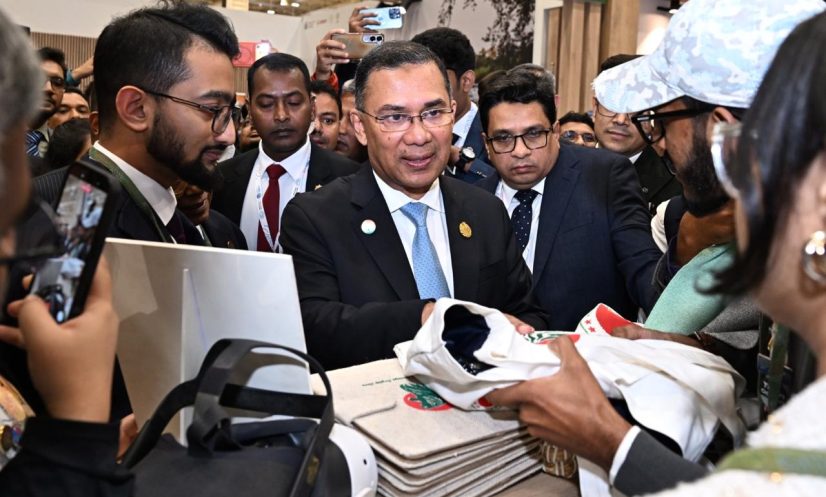
Md. Mohsin Hossain from Antalya, Türkiye: Prime Minister Tarique Rahman visited the Bangladesh pavilion at the United Nations Climate Change Conference (COP31) in Antalya, Türkiye, on Wednesday, where he explored a display of environment-friendly jute products and reviewed the country’s initiatives to protect the environment and address the impacts of climate change.
The prime minister visited the pavilion at the conference venue at 4:50pm local time, taking an interest in the exhibits showcasing Bangladesh’s efforts towards environmental conservation, sustainable development and climate resilience.
Environment, Forest and Climate Change Minister Abdul Awal Mintoo, State Minister Sheikh Faridul Islam and the prime minister’s Special Assistant for Environment, Forest and Climate Change Dr Saimum Parvez welcomed him to the pavilion.
During the visit, Tarique Rahman went around the exhibition and observed various initiatives undertaken by Bangladesh to protect the environment, including tree plantation programmes, conservation activities and measures to tackle the adverse effects of climate change.
He also viewed the display of environment-friendly products made from jute, one of Bangladesh’s traditional and versatile natural resources. The exhibition highlighted the potential of jute-based products as sustainable alternatives to environmentally harmful materials, reflecting the country’s efforts to promote eco-friendly production and consumption.
The prime minister also spoke with officials and staff members working at the pavilion, seeking to know about its activities, the products on display and the ways Bangladesh’s climate-related initiatives were being presented to the international community.
The officials briefed him on the exhibits, the pavilion’s activities and the various aspects of Bangladesh’s participation in the global climate conference.
The visit provided an opportunity to showcase Bangladesh’s environmental initiatives, particularly its efforts to promote sustainable practices, expand tree plantation, protect natural resources and strengthen resilience against climate-related challenges.
Bangladesh, one of the countries most vulnerable to climate change, has consistently highlighted the need for stronger international cooperation, adequate climate finance and effective adaptation measures to address the growing threats posed by global warming.