Play store

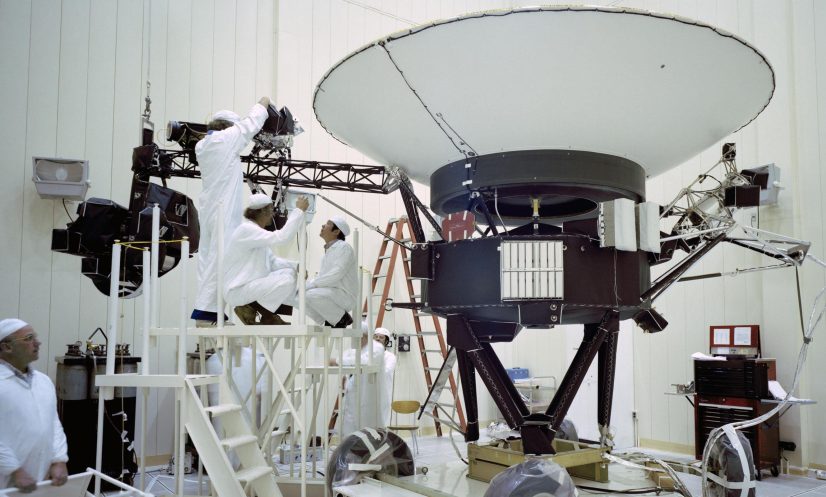
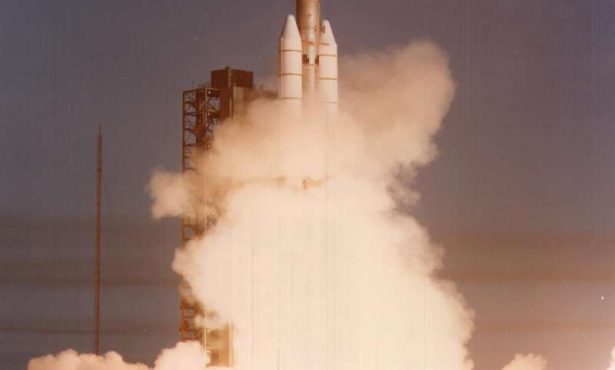
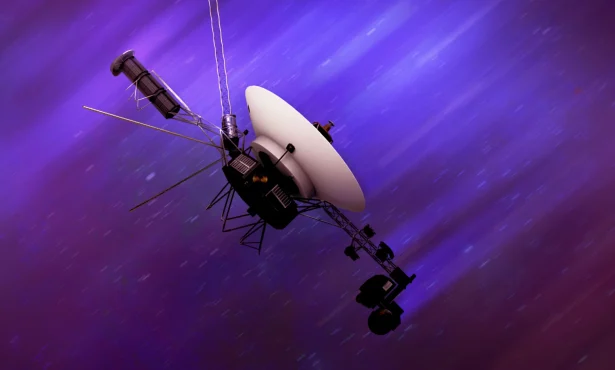
NASA’s Voyager 1 spacecraft is set to make history on Wednesday by becoming the first human-made object to travel one light-day away from Earth, nearly 50 years after its launch.
The spacecraft is expected to reach the milestone at 5:16:07 am US Eastern time on November 18, when it will be approximately 16.1 billion miles (25.9 billion kilometres) from Earth, according to NASA.
A light-day is the distance light travels in 24 hours. At that enormous distance, even a radio signal travelling at the speed of light will take a full day to reach Voyager 1. A response from the spacecraft will require another 24 hours to return to Earth.
The achievement highlights the extraordinary journey of the spacecraft, which has travelled through the outer solar system and continued into interstellar space since its launch in 1977.
” The numbers are just wild,” said Joe Westlake, director of NASA’s heliophysics division, who works with the Voyager missions.
The spacecraft has been travelling at more than 30,000 miles per hour for decades, covering a distance that is difficult to comprehend, he said.
Voyager 1 was launched on September 5, 1977, to explore the outer planets. Its mission transformed scientists’ understanding of Jupiter and Saturn, sending back detailed images and scientific information about their moons, rings and magnetic environments.
Among its most remarkable discoveries was evidence of active volcanoes on Io, one of Jupiter’s moons. The discovery demonstrated that volcanic activity was not limited to Earth.
” I never imagined that Voyager would continue and last as long as 50 years,” said Linda Spilker, the mission’s project scientist, who was involved in the programme from its early days.
The probe crossed the heliopause, the outer boundary of the Sun’s protective bubble of particles and magnetic fields, on August 25, 2012, becoming the first human-made spacecraft to enter interstellar space. Its twin, Voyager 2, followed in November 2018.
NASA Science+1
Despite its age, Voyager 1 continues to communicate with Earth and transmit scientific information about the environment beyond the solar system. NASA says four of its scientific instruments remain operational, measuring cosmic rays, charged particles, magnetic fields and plasma waves.
NASA Science+1
Another remarkable feature of the spacecraft is the Golden Record, a 12-inch gold-plated copper disc carrying sounds and images intended to represent Earth to any extraterrestrial civilisation that might encounter it.
The record contains 115 images, natural sounds, music from different cultures and greetings in 55 languages. It also includes messages from former US President Jimmy Carter and then UN Secretary-General Kurt Waldheim.
NASA Science+1
Jon Lomberg, the Golden Record’s design director and co-author of an upcoming book about the project, said the milestone offered a striking reminder of the vastness of the universe.
He noted that it had taken nearly half a century for Voyager 1 to travel one light-day, while reaching a distance of one light-year could take roughly 18,000 years at its current speed.
NASA has invited people around the world to celebrate the achievement through a campaign called “Shine Bright for Voyager’s Light-Day”. Participants were encouraged to use their phones, flashlights and buildings to display the letters VGR in Morse code, symbolically sending a message to the distant spacecraft.
NASA+1
Voyager 1’s next great milestone may be even more distant, but its journey has already transformed humanity’s understanding of the solar system and opened a window into the space between the stars.