Play store

NASA will launch a yearlong study in January to explore new ways of bringing rock and soil samples collected by its Perseverance rover on Mars back to Earth, following the cancellation of its earlier Mars Sample Return (MSR) mission over cost concerns.
The new study, known as the Perseverance Sample Retrieval Architecture (PSRA), will review previous recommendations, assess existing capabilities within NASA and the space industry, and explore alternative approaches to returning the samples.
George Tahu, NASA’s Mars Exploration programme executive, outlined the plan at a virtual town hall meeting for the planetary science community, according to SpacePolicyOnline.
The team will also examine whether some of the constraints associated with the previous mission can be relaxed and whether new procurement strategies could help reduce costs.
“The goal is to develop a high-level architecture approach and recommendations by the end of next year,” Tahu said.
A NASA spokesperson told SpacePolicyOnline that the team would consist of three engineers and scientists currently serving as agency civil servants, each taking part in a yearlong assignment.
NASA and the European Space Agency (ESA) had jointly developed the original Mars Sample Return mission. However, its estimated cost rose to around $11 billion, raising concerns about its financial viability.
In January 2025, then NASA Administrator Bill Nelson left the decision on the mission’s future to the incoming Trump administration. The administration’s fiscal 2026 budget proposal subsequently called for cancelling the programme.
Although Congress allocated $110 million for Mars Future Missions, the funding was not specifically designated for Mars Sample Return.
NASA Administrator Jared Isaacman has repeatedly described returning samples from Mars as one of the most important scientific achievements in history.
The new study comes amid growing efforts by scientists and lawmakers to preserve the technological capabilities developed for the mission.
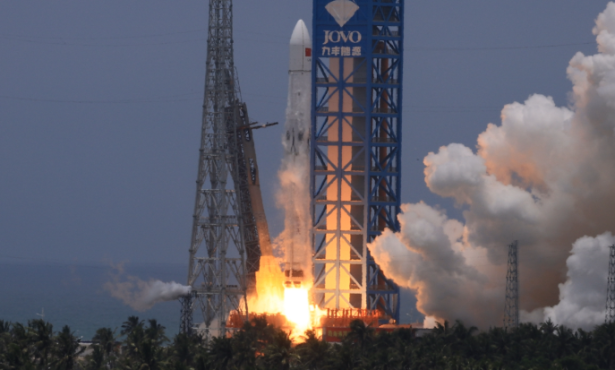
Meanwhile, China is preparing its Tianwen-3 mission, which is scheduled to launch in 2028 and bring Martian samples back to Earth in 2031.
NASA’s new study is expected to provide a broad technical roadmap by the end of 2027. However, any proposed mission architecture would still require funding, development and a launch schedule before the samples can reach Earth.