Play store

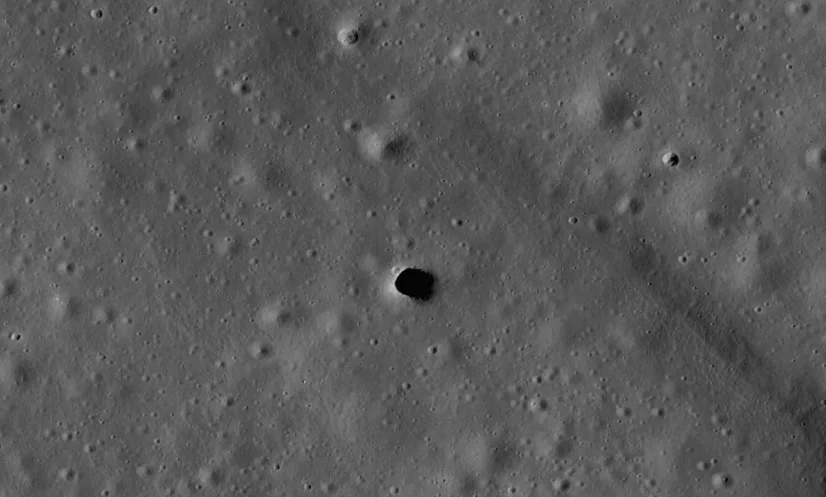
NASA has selected a project led by the Planetary Science Institute (PSI) to investigate whether a potentially large underground cave extends from a pit on the Moon.
The project, called the Geophysical Instruments for Marius Lunar pit Investigation (GIMLI), will receive funding through NASA’s Payloads and Research Investigations on the Surface of the Moon (PRISM) programme.
GIMLI will focus on the Marius Hill Pit, a large opening in the Marius Hills region, one of the Moon’s most geologically diverse areas. Scientists believe the pit could provide access to a lava tube or other underground structure formed by ancient volcanic activity.
The mission will use a combination of ground-penetrating radar, seismic sensors and a gravimeter to investigate the area beneath the lunar surface. Cameras will also record the pit and its exposed walls.
The instruments will be delivered to the Moon aboard a lander and rover provided through NASA’s Commercial Lunar Payload Services (CLPS) initiative.
The project is led by Than Putzig, associate director and senior scientist at PSI, in partnership with Honeybee Robotics and the Norwegian Space Agency.
Putzig said the mission would revive active-source seismic investigations on the Moon, a technique used during the Apollo era. Combining seismic measurements with radar and gravity data could help scientists determine whether a lava tube extends from the Marius Hill Pit and estimate its size.
If a substantial lava tube is confirmed, it could provide important clues about how volcanic activity shaped the Moon. Underground caves could also have potential value for future human exploration because they may offer natural protection from radiation and the extreme temperature changes on the lunar surface.
However, the mission could produce important scientific results even if no cave is found.
Scientists will study the structure and material surrounding the pit to better understand how it formed. The exposed walls of the Marius Hill Pit also reveal layers of lunar soil and ancient lava flows that are normally hidden underground.
These layers could provide new information about the history of volcanic eruptions in the region, including how lava moved across and beneath the lunar surface.
PSI scientist Gareth Morgan, deputy principal investigator of GIMLI, said confirming a large lava tube would provide new insight into lunar volcanism and allow scientists to compare lunar underground structures with similar features formed by volcanic activity on Earth.