


 Play store

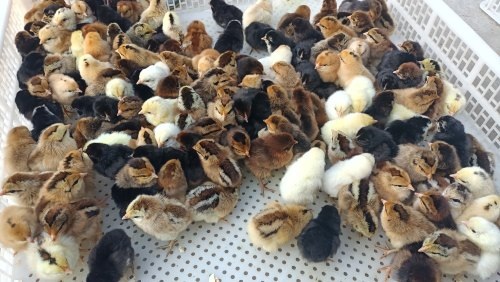
A team of researchers at Bangladesh Agricultural University (BAU) has successfully developed a locally bred chicken that combines the flavour and firm texture preferred by Bangladeshi consumers with the rapid growth and commercial potential sought by poultry farmers, marking a significant milestone in the country’s livestock research.
The breakthrough comes after more than 15 years of dedicated research aimed at developing a high-performing indigenous chicken line. Their efforts have culminated in a new subtype that produces naturally coloured meat, an innovation researchers believe has the potential to reshape Bangladesh’s poultry industry by reducing dependence on imported breeding stock, improving farmers’ incomes and offering consumers a premium-quality product.
Developed by the Department of Poultry Science under the Livestock and Dairy Development Project (LDDP), the new subtype features firm, reddish-colored meat similar to that of native chickens while achieving significantly faster growth rates.
Scientists say the innovation not only addresses consumer preferences but could also reduce Bangladesh’s dependence on imported breeding stock and strengthen food security.
The final findings of the long-running research project were unveiled at a seminar at BAU on Tuesday, attended by Vice-Chancellor Professor Dr. A K Fazlul Haque Bhuiyan, Poultry Science Department Head Professor Dr. Md. Shawkat Ali, researchers, academics and poultry entrepreneurs.
Leading the research team, Professor Dr. Bazlur Rahman Mollah described the achievement as the result of years of careful preservation, genetic selection and crossbreeding of different parent lines.
“The objective was to develop a high-performing chicken suited to local conditions while meeting the tastes of Bangladeshi consumers and improving farmers’ profitability,” he said.
According to the research team, the newly developed line is capable of reaching around 950 grams in just 45 days while producing meat that has a firmer texture and natural reddish appearance, characteristics that consumers often associate with indigenous chickens.
Scientists say the breeding programme focused on improving a sex-linked white line, increasing its homozygosity to between 89 and 93.11 percent, an important milestone in establishing a stable commercial breeding line.
Another major scientific achievement of the project was the development of a simple Polymerase Chain Reaction (PCR) method to detect deletion in the SOX-10 gene, which determines feather colour. Researchers believe this genetic tool will simplify future breeding programmes by enabling rapid identification of desirable traits.
The project’s data also indicate significant improvements in productivity. Some parent lines laid as many as 205 eggs over a 62-week period. Newly hatched chicks weighed about 38 grams compared with the conventional Sonali chick weight of 26 to 28 grams.
Researchers estimate that every additional gram of weight in a day-old chick can result in roughly 50 grams of extra market weight at maturity, creating substantial economic gains for poultry farmers.
Agricultural economists say such improvements could have important implications for Bangladesh’s poultry industry, which supplies a major share of the country’s animal protein needs and supports millions of rural livelihoods.
They note that developing indigenous breeding technologies has become increasingly important as the country seeks to reduce reliance on imported genetic material, which exposes producers to currency fluctuations and global supply disruptions.
Dr. Mollah said locally developed breeding stock could save valuable foreign exchange while making the poultry sector more resilient. Beyond laboratory research, one of the project’s distinguishing features was its emphasis on field-level technology transfer.
Instead of relying solely on classroom-based training, researchers worked directly with village-based groups of 15 to 25 women farmers, providing practical instruction on chick management, feeding, vaccination and disease prevention.
Field trials demonstrated encouraging results. Farmers who received the improved chicks together with continuous technical support recorded better growth rates, improved feed conversion efficiency and lower mortality than conventional flocks.
The project also produced an unexpected market outcome.
Although researchers initially expected farmers to sell the birds after around 50 days, many producers chose to rear them for 10 to 12 weeks because consumers were willing to pay premium prices for the larger birds.
According to project officials, some farmers are now selling the birds for as much as Tk 700 per kilogram, substantially increasing household income.
Poultry industry analysts say this reflects a growing consumer demand for meat that resembles traditional indigenous chicken while remaining more affordable than genuine native breeds, which require much longer growing periods.
Food safety was another important aspect of the research. Responding to concerns over antibiotic use, Dr. Mollah said laboratory analyses conducted at a modern testing facility in Dhaka detected no antibiotic residues in the meat.
He also rejected suggestions that the product was intended to imitate native chicken.
“Our objective is not to market it as indigenous chicken,” he explained. “We want to establish it as a distinct branded colored-meat chicken with better taste, nutritional quality and verified safety.”
Experts believe such branding could open new opportunities in Bangladesh’s premium poultry market, where consumers are increasingly seeking healthier and traceable food products.
Professor Dr. A K Fazlul Haque Bhuiyan said innovations developed in university laboratories can only create meaningful national impact when they reach farmers and consumers.
He stressed that expanding the technology beyond research farms should now become the priority.
“Developing technology alone is not enough,” he said. “Its real success lies in ensuring that farmers can use it to improve their livelihoods and increase the country’s production of safe animal protein.”
He also directed the reopening of BAU’s livestock faculty sales centre, which has remained closed, so that dairy, meat and poultry products developed through university research can be sold directly to consumers at affordable prices.
Researchers believe the colored-meat chicken represents more than a new poultry variety. It demonstrates Bangladesh’s growing scientific capacity in animal breeding and biotechnology and highlights the role universities can play in developing locally adapted agricultural innovations.
If commercial production expands successfully, experts say the new subtype could offer a rare combination of scientific achievement and practical impact by increasing farm incomes, reducing import dependence, improving food safety and providing consumers with a high-quality poultry product tailored to local preferences.
The breakthrough may mark the beginning of a new chapter for Bangladesh’s poultry industry, which has become one of the country’s fastest-growing agricultural sectors.