Play store

Yemen’s Houthi movement on Monday announced a maritime blockade against Saudi Arabia, dramatically escalating regional tensions and threatening to disrupt shipping in one of the world’s most strategically important waterways.
The announcement came as fighting across the Middle East intensified, with the Iran-US conflict widening and fears growing over the security of regional energy supplies and international shipping routes.
In a televised statement from the Yemeni capital, Houthi military spokesman Yahya Saree declared that the group was imposing a maritime embargo on Saudi Arabia under what he described as the principle of “an eye for an eye,” accusing Riyadh of maintaining an unjust blockade on Yemen.
“A blockade will be answered with a blockade,” Saree said, warning that Houthi forces were fully prepared for further escalation if restrictions on Yemen’s ports and airspace continued.
The Iran-backed movement said the decision was a direct response to what it described as years of Saudi-led efforts to isolate Yemen through air and sea restrictions, preventing the free movement of people and goods into Houthi-controlled areas.
The latest development marks the most serious confrontation between the Houthis and Saudi Arabia in years, threatening to undermine a period of relative calm that had followed months of diplomatic engagement aimed at ending Yemen’s long-running civil war.
The immediate trigger for the announcement appears to have been a recent attack on Sanaa International Airport, which the Houthis said prevented an Iranian aircraft from landing. The group accused Saudi Arabia and its allies of tightening their blockade despite repeated warnings that such actions would provoke retaliation.
Over the past week, hostilities between the two sides have intensified, with both exchanging strikes for the first time in several years.
The maritime blockade now raises fresh concerns over the safety of commercial shipping in the Red Sea and surrounding waters, through which a significant share of global trade and energy supplies passes.
Although the Houthis did not immediately specify how the blockade would be enforced, previous operations have included missile launches, drone attacks and the seizure of commercial vessels linked to countries they consider hostile.
The announcement comes against the backdrop of a rapidly expanding regional conflict.
The Gulf has witnessed several consecutive nights of US military strikes against Iran, while Tehran has responded with attacks targeting American military facilities in Bahrain and Kuwait, according to Iranian officials.
The escalating confrontation has also renewed uncertainty over the Strait of Hormuz, one of the world’s most critical oil transit routes, through which roughly one-fifth of global crude oil supplies pass. Continued instability has fuelled fears of prolonged disruptions to international energy markets and pushed oil prices higher.
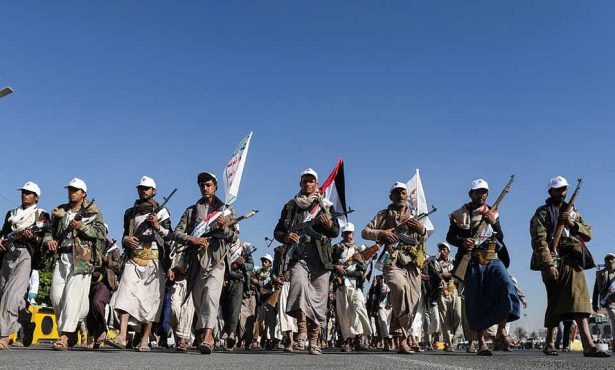
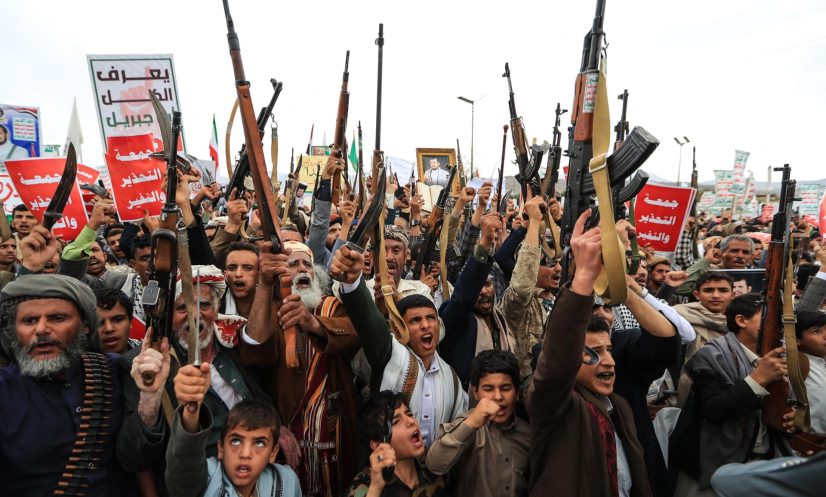
Inside Yemen, Houthi leaders have called for nationwide mobilisation, urging supporters to prepare for what they describe as a new phase of confrontation.
The group said it remains ready for “all options” if what it calls the siege on Yemen is not lifted.
Diplomatic efforts to prevent a broader regional conflict have so far failed to produce a breakthrough, with mediation initiatives struggling to keep pace with the rapidly evolving military situation.
Analysts warn that the Houthi decision to target Saudi maritime interests could significantly widen the conflict, drawing additional regional and international actors into an already volatile crisis.
With tensions continuing to rise across the Middle East, the Houthis’ maritime blockade represents another dangerous turning point, heightening concerns over regional security, global trade routes and the stability of international energy supplies.