Play store

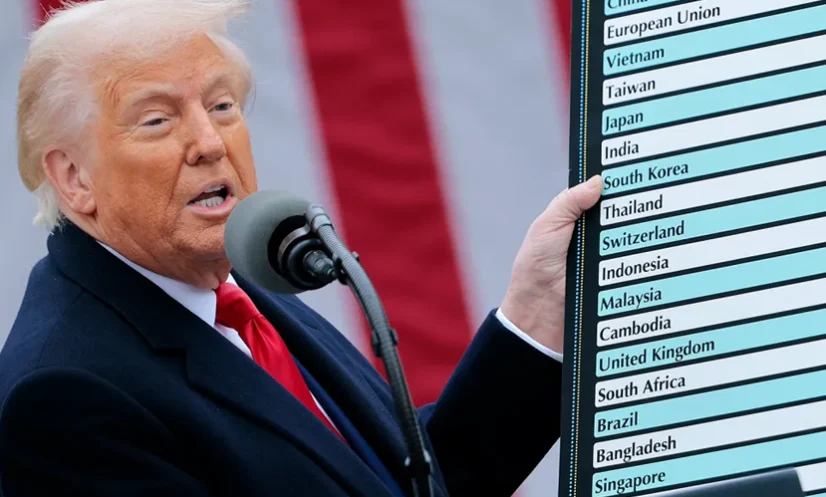
The United States will impose new tariffs of 10% and 12.5% on imports from 60 trading partners, including Bangladesh, from Friday, marking the latest trade action by President Donald Trump’s administration.
Under the new measure, Bangladesh will face a 10% tariff on goods exported to the US, alongside countries including India, Pakistan, Britain, Canada, Malaysia, Mexico, Cambodia and Indonesia. The European Union, Japan, South Korea, Taiwan and Switzerland will face combined tariff rates of 10% or 12.5%.
The tariffs, announced in a Federal Register notice on Thursday, will replace the temporary 10% global tariff introduced after the US Supreme Court struck down Trump’s earlier “reciprocal” tariffs in February. The new duties will take effect immediately after the temporary tariff expires at 12:01 a.m. EDT on Friday.
The Trump administration said the tariffs are aimed at pressuring trading partners to strengthen enforcement against goods produced with forced labour. Unlike the earlier tariffs imposed under emergency powers, the new duties are being introduced under Section 301 of the Trade Act of 1974, a legal framework considered less vulnerable to court challenges.
US Trade Representative Jamieson Greer said the United States has long enforced strict bans on imports made with forced labour and that other countries should adopt similar standards.
“The United States has had a forced labour import ban for nearly a century and rigorously enforces it. It’s well past time for our trading partners to do the same,” Greer said.
The tariffs will apply to about 99.4% of US imports, although several categories—including oil and gas, fertilisers, certain food products and goods already covered by national security tariffs such as steel, aluminium and automobiles—will remain exempt.
The remaining 38 countries on the list, including China, will face a 12.5% tariff. The Trump administration has accused China of benefiting from forced labour practices involving Uyghur minorities, an allegation Beijing denies.
Several countries criticised the move. Australia, Brazil and Norway described the tariffs as unjustified, while Canada said it would continue discussions with Washington over the issue.
Trade analysts said the new tariff structure largely mirrors the previous tariff levels while providing the administration with a stronger legal basis to maintain a broad tariff regime. They noted that Section 301 has survived earlier legal challenges, making the latest measures more difficult to overturn in court.
The new tariffs are expected to have implications for Bangladesh’s export sector, particularly the ready-made garment industry, which relies heavily on the US as one of its largest export markets. However, many competing apparel exporters, including India, Pakistan and Cambodia, will also be subject to the same 10% tariff, potentially limiting any major shift in competitive advantage.