


 Play store

Almost every country in the world runs a carbon deficit, emitting more greenhouse gases than its forests, wetlands and other natural ecosystems can absorb. The excess carbon accumulates in the atmosphere, contributing to global warming.
Only a handful of countries have managed to reverse that balance. According to climate analyses, just three countries—Bhutan, Suriname and Panama—are considered carbon negative, meaning their natural ecosystems remove more carbon dioxide than their economies produce.
What Does Carbon Negative Mean?
A carbon-neutral country balances its greenhouse gas emissions with an equal amount of carbon removal, resulting in net-zero emissions. A carbon-negative country goes one step further by removing more carbon than it emits.
Former Bhutanese Prime Minister Tshering Tobgay highlighted this distinction in a 2016 TED Talk, saying, “Bhutan is not carbon neutral. Bhutan is carbon negative.”
Bhutan: Forests at the Heart of Climate Success
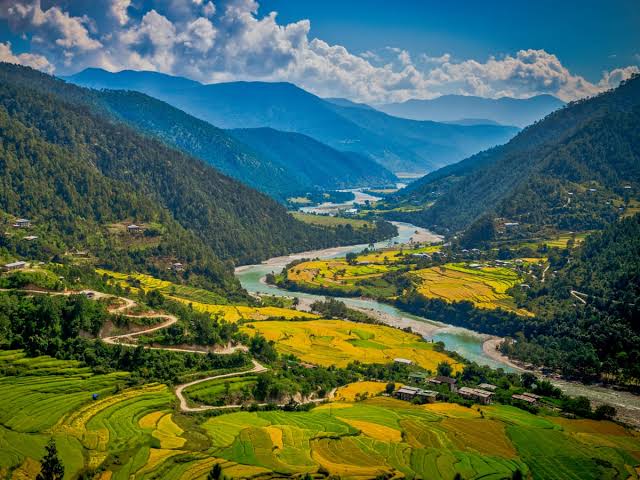
Nestled in the eastern Himalayas between China and India, Bhutan has a population of fewer than one million people. The country’s vast forests are the key to its climate achievement.
According to Bhutan’s latest greenhouse gas inventory, the country emitted about 1.74 million tonnes of greenhouse gases in 2022, excluding land-use changes. During the same period, its forests and other land-based ecosystems absorbed 11.45 million tonnes, resulting in net emissions of approximately minus 9.71 million tonnes of carbon dioxide equivalent.
More than 70% of Bhutan’s land is covered by forests, with the World Bank estimating forest cover at 72.3%. The country’s mountainous terrain, limited industrial activity and relatively small population help keep emissions low.
Bhutan has also made forest conservation a constitutional obligation. Article 5 of the Constitution requires that at least 60% of the country’s land remain under forest cover, ensuring that its forests continue to act as a massive natural carbon sink.
Suriname and Panama Join the Exclusive Club
South American nation Suriname and Central American country Panama are the only other countries widely recognized as carbon negative. Both benefit from extensive tropical forests that absorb more carbon than their economies emit.
Suriname is one of the world’s most heavily forested countries, with forests covering around 90% of its land area. Panama, meanwhile, has invested heavily in protecting its forests, which also support the Panama Canal watershed and biodiversity.
Climate researchers note that the exact list of carbon-negative countries can vary depending on accounting methods and revisions to estimates of land-use emissions and carbon removals. However, Bhutan, Suriname and Panama consistently stand out for maintaining net-negative greenhouse gas balances.
A Model for Climate Action
The experience of these three countries highlights the crucial role forests play in combating climate change. While their relatively small populations and limited industrial activity contribute to low emissions, long-term policies protecting forests have been equally important.
Their example demonstrates that conserving natural ecosystems can be as vital as adopting new technologies in reducing the impact of climate change, offering valuable lessons for countries seeking to achieve net-zero emissions.