


 Play store

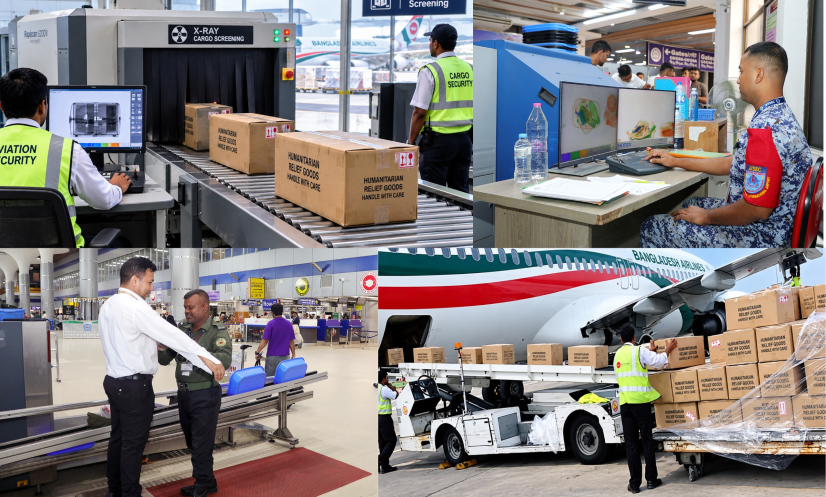
The aviation security performance of Bangladesh’s two international airports has improved in the latest security audit conducted by the UK Department for Transport (DFT), with Hazrat Shahjalal International Airport scoring 94% and Sylhet Osmani International Airport 98%.
Shahjalal scored 93% and Osmani 94% in the 2025 assessment, meaning their scores increased by one and four percentage points respectively over the previous year.
CAAB Assistant Director (Public Relations) Muhammad Kawsar Mahmud disclosed this on Sunday.
He said the DFT audit, which focuses on security arrangements for passengers and cargo bound for the UK, assessed various aspects of aviation security at Shahjalal and Osmani airports, including passenger, cargo and mail security.
A comparative analysis of the 2025 and 2026 results showed continued improvement in the airports’ security arrangements, he said. Progress was also recorded in cargo security, with 100% compliance achieved in the Additional Measures Assessment for cargo-related security requirements.
Kawsar Mahmud said the results reflected coordinated efforts by the relevant agencies to effectively implement prescribed security measures for passengers as well as cargo and mail.
He described the latest DFT assessment as an important indicator of Bangladesh’s aviation security capabilities and continued progress. Improvements in international assessments are expected to help strengthen confidence among passengers, airlines, businesses, importers and exporters, as well as domestic and international stakeholders, he said.
He said Bangladesh has been subject to additional security requirements under the European Union’s High Risk Cargo and Mail (HRCM) regime since 2017. As a result, additional security measures, processing time and costs are required for cargo and mail destined for Europe.
Bangladesh has already raised the issue of withdrawing the HRCM restrictions with the relevant authorities. Under EU rules, special security measures apply to high-risk cargo and mail, with risk determination linked to the EU’s risk assessment process.
The CAAB public relations official said the positive outcome of the latest DFT audit and the high level of compliance in cargo security could serve as supporting evidence of improvements in Bangladesh’s security arrangements. However, he said, withdrawal of the HRCM status remains subject to the relevant authorities’ own assessment and formal procedures.
He said the DFT audit results would also be important for preparations for the upcoming International Civil Aviation Organization (ICAO) Universal Security Audit Programme–Continuous Monitoring Approach (USAP-CMA) audit.
The ICAO audit is scheduled for October 26 to November 6, 2026, and will assess aviation security management and implementation at CAAB headquarters, Hazrat Shahjalal International Airport and Sylhet Osmani International Airport.
Kawsar Mahmud said preparations undertaken for the DFT audit and observations identified during the assessment had helped identify existing limitations and areas for improvement ahead of the ICAO USAP-CMA audit, allowing necessary measures to be taken.
CAAB Member (Security) Air Commodore Md Asif Iqbal said coordinated efforts by CAAB’s Aviation Security (AVSEC) Division, the respective airport authorities and other stakeholders had played an important role in the achievement.
He said overall supervision by the Ministry of Civil Aviation and Tourism and guidance from the CAAB chairman were also important throughout the process. Cooperation among CAAB’s various departments further helped prepare for the audit and effectively implement the required security measures.