


 Play store

The government’s long-delayed initiative to block illegal and unofficial mobile handsets through the National Equipment Identity Register (NEIR) is moving towards full implementation, with authorities adopting a simplified, consumer-friendly approach.
The system, which uses National Identity (NID) information and a central database to verify mobile devices, was officially launched on January 1, 2026, after a five-year delay following agreements signed by the Bangladesh Telecommunication Regulatory Commission (BTRC) in late 2020.
Full implementation had been delayed amid consumer concerns, cloned IMEIs and regulatory complexities. Mobile traders under the Mobile Business Community Bangladesh (MBCB) had also protested high official import duties of 57-60 percent, saying the tax structure encouraged the growth of the grey market.
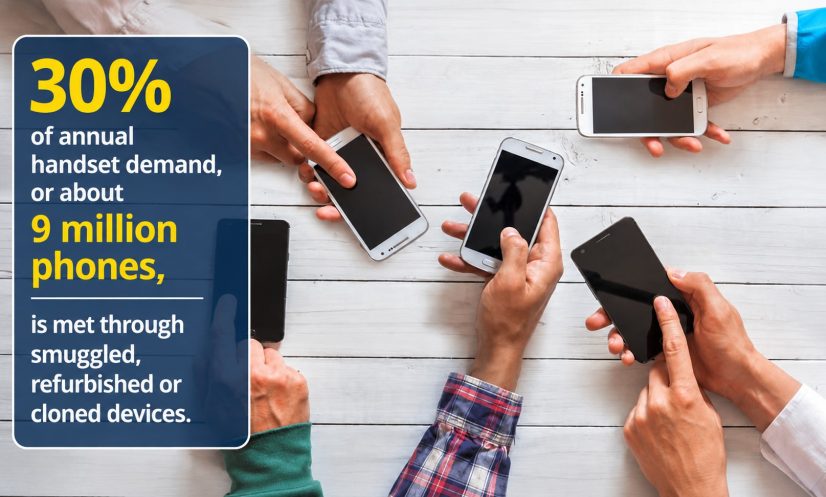
Local handset manufacturers, meanwhile, reported that nearly 30 percent of the country’s annual demand of around 30 million handsets was met through smuggled, refurbished or cloned devices.
Recent adjustments to the national budget, including reductions in handset import taxes, have helped narrow the price gap between officially imported and grey-market phones.
Under the BNP-led government, authorities are now moving to introduce a consumer-first “Basic NEIR” model.
Prime Minister’s Telecom and ICT Adviser Rehan Asif Asad said the government was prioritising a simplified ownership-transfer process to prevent consumers from facing difficulties when transferring handsets among family members and friends.
“Emphasis is being placed on the humane aspect of simplifying the ownership transfer process within NEIR so that no injustice occurs,” he said.
He said the system would allow hassle-free transfers of phones among family members, friends, parents and siblings. No active handset would be disconnected until the NEIR system became fully operational, he added.
Once fully operational, the system will identify tax-evaded and illegal handsets, including cloned and counterfeit devices. People bringing handsets from abroad will have to comply with NEIR regulations, while registration of legally imported phones will be streamlined.
The ultimate goal, Asad said, is to ensure smooth registration and continued usability of legally registered handsets in line with international practices.
Responding to a question from DigBanglaTech.news, BTRC Director General Brig Gen Md Aminul Haque said the regulator was ready to implement NEIR at any time.
“We are ready to execute NEIR at any moment. If modifications are instructed, it will take minimal time to implement,” he said.
President of the Mobile Operators and Industry Business (MOIB) Zakaria Shahid said the Basic NEIR approach would eliminate many of the problems associated with consumer-level registration and deregistration.
“There were massive repercussions during consumer-level registration and deregistration. Eliminating those to introduce a Basic NEIR marks a major milestone. The process can be fine-tuned later,” he said.
Bangladesh Mobile Phone Distributors Association Secretary General Abdullah Al Harun welcomed the government’s initiative, saying the association supports NEIR because it could increase government revenue.
“We welcome and support this government move because we favour NEIR. It will boost state revenue, and fine-tuning can happen incrementally after launch,” he said.
For general users, the proposed system means existing active handsets will remain unaffected, while registration of phones brought from abroad by relatives is expected to become easier.
To complete the transition, the regulatory authorities plan to collect feedback from local handset manufacturers, importers and retailers next month before finalising the implementation process.