


 Play store

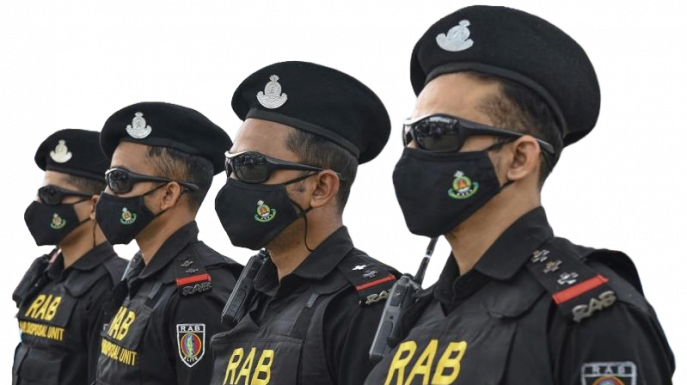
The government has moved to dissolve the Rapid Action Battalion (RAB) and replace it with a new specialised law-enforcement unit, the Special Response Battalion (SRB), under Bangladesh Police.
The Home Ministry has published a draft of the proposed Special Response Battalion Act, 2026 on its website for public consultation. The draft was released on August 4, with stakeholders invited to submit comments and feedback.
The proposed law would replace RAB’s existing legal framework while transferring its personnel, assets, resources and institutional responsibilities to SRB.
Under the draft, SRB would comprise officers and personnel from Bangladesh Police and other disciplined forces, appointed through posting, deputation or temporary attachment. Such deputation or attachment would generally last at least two years.
The new unit would be headquartered in Dhaka, with the government able to approve subordinate offices elsewhere. It would be organised into battalions, companies, platoons and sections.
SRB would be headed by a Director General appointed by the government from among serving Bangladesh Police officers holding at least the rank of Additional Inspector General. The DG would oversee the unit’s administrative, financial and operational affairs under the overall control of the Inspector General of Police.
The proposed SRB would be responsible for maintaining internal security and tackling serious crimes, including terrorism, organised crime, human trafficking, cybercrime, drug trafficking and the illegal trade in arms and explosives.
Its responsibilities would also cover crimes against women and children, kidnapping, murder, enforced disappearance and land grabbing, as well as providing assistance to other law-enforcement agencies.
The unit could file cases and conduct criminal investigations when directed by a court, the government or the Inspector General of Police.
Subject to the Code of Criminal Procedure and other applicable laws, SRB personnel would have powers to enter, search, seize and arrest in specified cases involving drugs, illegal arms and explosives, terrorism, human trafficking, organised crime and other cognisable offences.
However, arrested individuals and seized evidence would have to be handed over to the nearest police station without delay, along with a report to the appropriate authority.
The draft proposes a detailed disciplinary framework covering misconduct such as disobeying lawful orders, abandoning duty, misuse of government property, dereliction of duty, reporting for work while intoxicated and illegally collecting money.
A separate Complaint Redress Committee would handle complaints from citizens and grievances raised by SRB personnel. The proposed body would include representatives from the Home Ministry and Police Headquarters, senior SRB officials and a government-nominated member with at least 10 years of experience in human rights, law or judicial administration.
The committee would investigate complaints, recommend action when allegations are substantiated and examine claims involving undue influence, harassment, unfair treatment, promotions and postings. It would also submit quarterly reports to the government.
Under the draft’s transition provisions, RAB’s assets, funds, bank accounts, property, records, rights, liabilities and contractual obligations would be transferred to SRB.
All existing RAB officers, armed personnel and employees would become members of the new unit, with their existing service conditions remaining unchanged unless later amended under the new law.
Existing RAB cases, legal proceedings, departmental inquiries and disciplinary actions would continue, subject to the provisions of the proposed law. Until new regulations are introduced, the existing RAB Court Procedure and Departmental Proceedings Rules, 2005 would remain applicable with necessary changes.
The draft also requires mandatory training for SRB personnel and proposes a dedicated research unit at headquarters to analyse operational and investigative data.
If enacted, the legislation would represent a major institutional shift from RAB to SRB, while retaining much of RAB’s personnel, resources and responsibilities under a new framework operating within Bangladesh Police.