


 Play store

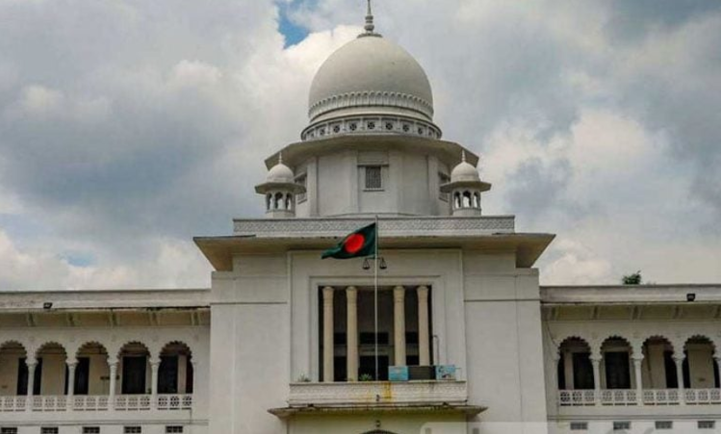
The High Court has observed that in cheque dishonour cases filed under Section 138 of the Negotiable Instruments Act, 1881, imprisonment of an accused is not warranted if the full amount owed under the cheque has been paid and the parties have reached a settlement.
The court said the primary objective of cheque dishonour cases is to ensure recovery of the outstanding money rather than punish or imprison the accused.
Justice Md Bashir Ullah of the High Court made the observations in a judgment in the case of Md Abdul Hannan Master vs the State and others on September 6.
The court cancelled the one-year jail sentence imposed on Abdul Hannan Master after he paid the full amount owed to BRAC Microfinance and reached a settlement with the lender.
However, the High Court upheld his conviction and reduced the fine from Tk 84,375 to Tk 28,125, equivalent to the amount mentioned in the dishonoured cheque.
The court also ordered that Tk 14,100 deposited earlier with the trial court be handed over to BRAC Microfinance after proper identification.
How the case began
According to case records, Abdul Hannan Master, a resident of Sirajganj, had taken a Tk 50,000 loan from BRAC Microfinance. He repaid Tk 21,875 and issued a cheque for the remaining Tk 28,125 from the Sirajganj branch of Islami Bank Bangladesh.
The cheque was presented for encashment on January 19, 2009, but was dishonoured on February 10 due to insufficient funds. A legal notice was subsequently served, but the outstanding amount was not paid, leading to the filing of a cheque dishonour case later that year.
The case was transferred to the Sirajganj District and Sessions Judge’s Court for trial in 2012. As the accused remained absconding, the trial was completed in his absence.
On March 19, 2013, the court convicted him under Section 138 of the Negotiable Instruments Act and sentenced him to one year of rigorous imprisonment and fined him Tk 84,375.
Settlement during appeal
Abdul Hannan Master later filed a criminal appeal with the High Court and sought bail. The High Court granted him one year’s bail on August 7, 2018.
While the appeal was pending, he paid the remaining amount to BRAC Microfinance. The two sides subsequently signed a settlement agreement on July 21 this year.
In its judgment, the High Court considered the circumstances of the case, the nature of the offence and the fact that the appellant had paid the full amount due under the cheque.
Although the court maintained his conviction, it cancelled the prison sentence and reduced the fine to Tk 28,125.
The court also directed the relevant authorities to hand over the Tk 14,100 deposited with the trial court to BRAC Microfinance after proper verification.
BRAC Microfinance lawyer Md Zisan Mahmud said the judgment reflected both legal justice and a humanitarian approach.
He said their primary objective was recovery of the outstanding money rather than unnecessarily punishing the accused. Since the appellant had paid the full amount and the parties had reached a settlement, BRAC had taken a positive position on waiving the imprisonment.
The lawyer said they had no objection to the High Court cancelling the jail sentence while retaining a fine equivalent to the amount stated in the cheque.