


 Play store

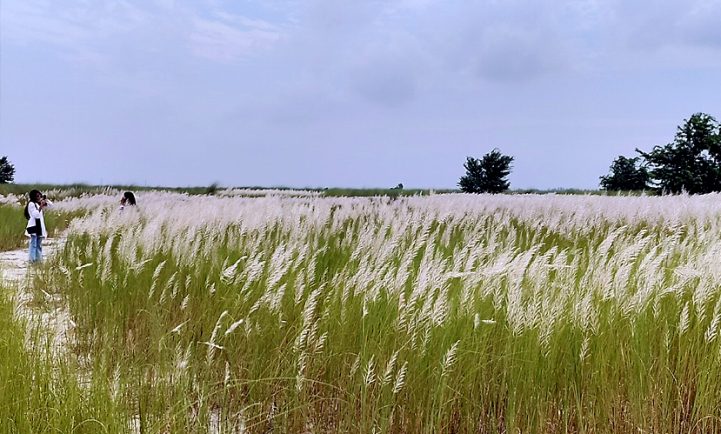
A vast stretch of white kash flowers has turned the southern bank of the Jamuna River in Sirajganj into a popular autumn destination, drawing nature lovers and visitors from nearby areas every day.
The Crossbar-3 embankment, locally known as China Embankment-3, at Char-Malshapara (Kataowabda) has become particularly attractive as kash flowers bloom across large sections of the nearly 1.75-kilometre-long structure.
The white flowers against the green landscape, combined with the river and open autumn sky, have created a scenic setting that is attracting families, young people and photography enthusiasts.
Visitors begin arriving in the morning, but crowds grow in the afternoon as people travel to the area by battery-run auto-rickshaws, private cars, microbuses, motorcycles and boats. Many spend time taking photographs and videos among the kash plants, while others enjoy boat rides on the Jamuna.
The kash flowers usually begin blooming towards the end of Bhadra and remain visible until Kartik, creating a seasonal attraction for around two to three months.
In the late afternoon, sunlight reflecting on the river adds to the scenery, with the white kash flowers appearing silvery as the sun moves towards the horizon.
Arifa Sultana, who visited the area with her family from Sirajganj town, said the large expanse of kash flowers had made the visit memorable.
“Wherever you look, there are white kash flowers. Seeing so many of them together is beautiful. It is peaceful here, and we had a wonderful time with the family,” she said.
Another visitor, Suraiya Khatun, said the area becomes particularly lively in the afternoon.
“Many people come to see the kash flowers. Young people take photographs and videos, while families also enjoy spending time here,” she said.
A K M Manzure Mawla, deputy director of the Sirajganj Department of Agricultural Extension, said kash plants naturally grow along riverbanks and around water bodies in Bangladesh.
“Kash flowers are not only aesthetically pleasing but also have practical uses. In the past, kash was used in house construction. It is still used for roofing betel-leaf gardens and as fuel,” he said.
He said the kash-covered Jamuna bank was attracting visitors from outside the district as well.
The seasonal bloom has provided residents with an opportunity to escape the noise of urban life and spend time close to nature. The combination of the river breeze, autumn light and swaying white kash flowers has turned the embankment into a temporary but increasingly popular recreational spot.
As the autumn season advances, the Jamuna bank is offering visitors a simple attraction: an expansive natural landscape where the river, green fields and white kash flowers come together to create a distinctive seasonal view.